City Guide
St. Anton am Arlberg
Autriche · Best time to visit: Dec-Apr, Jun-Sep.
Day-by-day plan
Choose your pace
Durée du voyage
09:00
Landmark
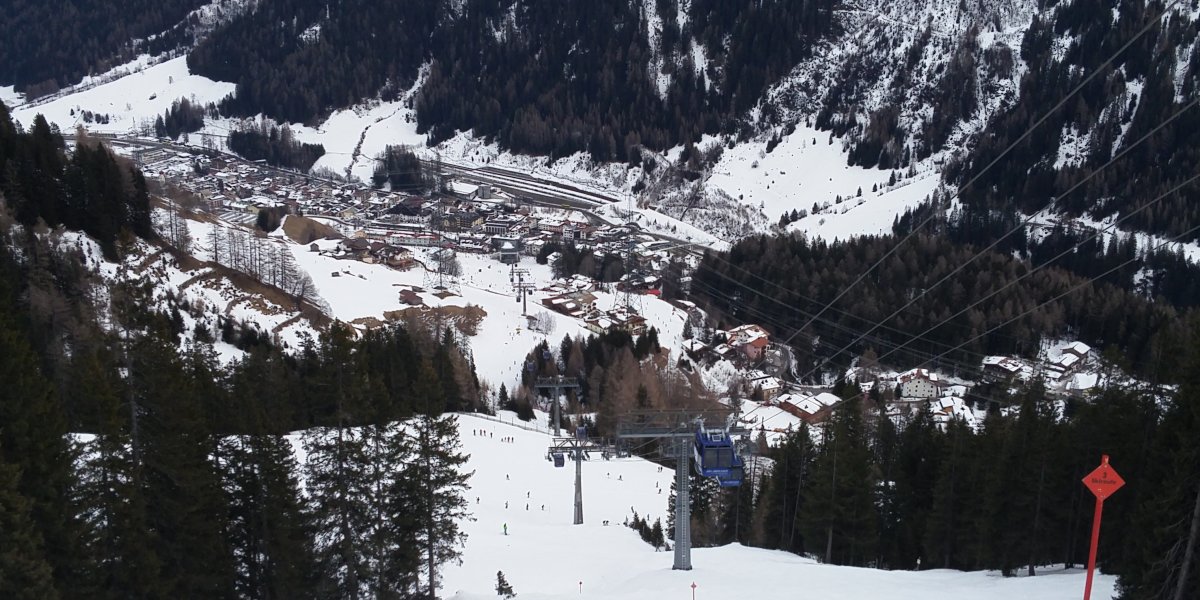
Start at the Galzigbahn base station, the most photographed piece of modern alpine architecture in Tyrol — its cabins rotate horizontally on a giant Ferris-wheel-style mechanism so you board without climbing a single stair. Take the first ride of the morning to catch the sun on the south face of the Verwall Range, transfer at Galzig to the Vallugabahn I panorama deck at 2660 m, then squeeze into the tiny four-person Vallugabahn II up to the 2811 m summit for the only true 360° view in the entire Arlberg. On a clear morning you see Germany, Switzerland, Italy and most of Tyrol in a single sweep; by noon the valley haze rolls in and flattens the panorama, which is why this must be the first thing you do today.
Tip: Reserve the Vallugabahn II slot online the night before — only four passengers per cabin, and clear-weather slots sell out by 10:00. Bring a windbreaker even in August: the summit deck is fully exposed and runs roughly 15°C colder than the village.
Open in Google Maps →12:15
Religious
Ride the cable car back down and walk three minutes east along Dorfstrasse — the white onion-domed steeple appears against the Verwall peaks the moment you clear the railway underpass. This 1593 parish church is the original heart of the village (the ski resort grew up around it, not the other way around), and the late-morning light hits the south facade at exactly the right angle for the postcard shot most visitors never bother to take. Step inside for one minute to glance at the Baroque ceiling frescoes — it is the only interior worth your time today.
Tip: Shoot the church from the small footbridge over the Rosanna brook 30 m south of the entrance — you get the steeple, the Alps and the river in one frame. The crowd shooting from the front parking lot completely misses this composition.
Open in Google Maps →12:45
Food
Cross back over the main road — Café Aquila is the lemon-yellow corner building 80 m west of the church, the bakery-café locals have used as their living room since the 1960s. Order a Speckbrot (cured Tyrolean ham on dark farmhouse bread, €8) and a Topfentascherl sweet-cheese pastry (€4), eaten standing at the wooden bar with a Kleiner Brauner espresso (€3) — the way ski instructors take their break between morning and afternoon classes. Total under €15 and you are back on the street in half an hour, which is exactly the speed this layover requires.
Tip: Skip the heated terrace out front — it carries tourist pricing and slower service. Stand at the wooden counter near the back bakery cases where the locals stand; the staff visibly speed up when they see you there.
Open in Google Maps →13:30
Neighborhood
From the café, step left and walk west along the pedestrianized Dorfstrasse — 300 m of car-free cobblestones lined with the chalets that hosted the world's first ski school in 1922. Stop at the Hannes Schneider bronze in front of the old post office: this is the man who invented the Arlberg technique here in 1907 and made every modern skier's parallel turn possible. Continue uphill on foot past MooserWirt and Krazy Kanguruh on the slope above — empty and silent in summer, but two of the loudest après-ski venues on earth from December through April.
Tip: The Schneider bronze and the original 1928 Arlberg-Kandahar trophy plaque outside Hotel Post are the only two genuinely historic stops on Dorfstrasse — everything else marketed as 'historic' is post-war reconstruction. Both are free and stand in front of buildings most tourists walk straight past.
Open in Google Maps →14:30
Park
From the Schneider memorial, continue west to the end of Dorfstrasse and follow the brown 'Verwalltal' signs south past the campsite — you cross the Rosanna once, pick up an unpaved forest road, and within ten minutes you have left the village entirely. The valley climbs gently along the stream through larch forest for 7 km to Lake Verwall, a turquoise reservoir at 1700 m that locals consider the real soul of St. Anton (the cable car summit is for tourists, this valley is where Tyroleans actually spend their summer Sundays). Round-trip is roughly 14 km on a flat, well-graded road — turn back at the lake by 17:30 and you walk home with the late sun raking down the western ridges.
Tip: Watch the scree slopes above the road in the last hour before sunset — ibex come down to drink, and the lower stretch is open to mountain bikers so keep right whenever you hear a bell. If your legs still feel fresh at the lake, push another 30 minutes south to Verwallhaus for a €4 glass of Almdudler on the wooden terrace before you turn around.
Open in Google Maps →19:30
Food
Walk the river path north for 15 minutes from the Verwall trailhead — you re-enter the village from the south and the Museum Restaurant stands directly in front of you, set inside the 17th-century Arlberg-Kandahar Haus where Hannes Schneider once lived. The dining rooms are the original wood-panelled Tyrolean parlours; order the Tiroler Gröstl (cast-iron skillet of beef, potato and onion topped with a fried egg, €22) and the house Marillenknödel apricot dumplings for dessert (€11), paired with a glass of Stiegl Goldbräu (€4.80). There are only 14 tables and every one is taken by 19:30 in any season — this is the perfect closing scene for a one-day visit, and a hard one to walk into without a reservation.
Tip: Ask explicitly for table 3 or 4 in the front Stube — the original tiled wood stove still works in winter and the window frames the Galzigbahn lights coming down the mountain. Avoid the kitschy 'Tyrolean folk' restaurants further down Dorfstrasse with the giant cowbell signs outside; their food is reheated, their schnitzels frozen, and prices run roughly 40% above what you pay here for a vastly better plate.
Open in Google Maps →Aller au jour
08:30
Landmark
From the village center, walk five minutes south across the Rosanna to the Galzigbahn base — the 2006 station pioneered the 'Ferris-wheel' cabin-loading system you're about to ride. The first stage lifts you to 2,085 m at Galzig, where you transfer to the tiny four-person Vallugabahn for the final climb to St. Anton's roof at 2,811 m. From the summit deck the Lechtal Alps stretch north, the Verwall range south, and on a clear morning you can see clear into Switzerland.
Tip: Ride the Galzigbahn at 08:30 opening — by 10:00 the Vallugabahn queue can swallow an hour because the cabin holds only four. East-facing summit gets dramatic pink-gold light before 10:00, and afternoon clouds frequently eat the view by 14:00; UV at 2,811 m is brutal, sunglasses are non-negotiable even when overcast.
Open in Google Maps →12:00
Food
After photos at Valluga, ride the Vallugabahn back to Galzig — the Verwallstube terrace is thirty seconds from the upper station, facing the Stanzertal valley. This is where locals lunch between runs: order the Käsespätzle with caramelized onions (€16) or the Kaiserschmarrn (€14), the imperial shredded pancake that Emperor Franz Josef famously demanded. Sit on the south terrace if there's sun — the Verwall panorama at your fork is the whole point.
Tip: Be seated by 12:15 — by 12:45 every terrace chair is gone. The Käsespätzle is the dish to order, not the over-marketed Tiroler Gröstl. Budget €25-35 per head; mountain prices are firm and the printed menu is the final word.
Open in Google Maps →14:00
Neighborhood
Take the Galzigbahn down and walk seven minutes east along the river into the pedestrian Dorfstrasse. At Hannes Schneider Platz, a bronze of the man himself — who founded the world's first organized ski school here in 1922 — anchors a street of Tirolean shutters, hand-painted house façades, and the legendary Strolz boutique. Mid-afternoon golden light turns the carved wooden balconies the color of honey.
Tip: Best photo of the village: stand by the wooden Mariastatue near the church and shoot west toward the Galzig massif — the lift cables are out of frame. Avoid buying ski gear on Dorfstrasse; prices run 30-40% above Innsbruck or duty-free Munich airport.
Open in Google Maps →15:00
Museum
From Hannes Schneider Platz, walk three minutes south-west to Villa Trier, the cream-colored 1912 alpine mansion the museum lives inside. The collection tells the story of Hannes Schneider's revolutionary Arlberg stem-turn — the technique that taught the world to ski — alongside hickory skis, the 1928 Hahnenkamm trophies, and silent film of the first downhill races. Ninety minutes here completely reshapes how you read the slopes you stood on this morning.
Tip: Closed Mondays year-round; winter hours 15:00-18:00, summer 14:00-18:00 — confirm before you walk over. The bottom-floor Apfelstrudel-and-coffee bar inside Villa Trier stays open even when the museum is shut, useful if you arrive on the wrong day.
Open in Google Maps →17:00
Entertainment
Walk south-west from the museum for twelve minutes — past the Galzigbahn and up the slope path until the bass and the yodel-techno guide you in. The MooserWirt calls itself 'the worst ski hut in Austria,' serves 7,000 schnapps shots a day in peak season, and the wooden floor literally trembles when 'Knock-knock-knock on Wood' drops at 17:30. This isn't dinner — it is the single ritual every visitor to St. Anton owes themselves.
Tip: Arrive by 16:30 to claim a bench before the 17:00 ski-bus crowd — once full, security closes the doors and you wait outside. Stick to half-liter beer (€5-6); the schnapps shots are €5 each and an evening's six-shot total ambushes the next morning. Closes at 20:00 sharp.
Open in Google Maps →19:30
Food
From MooserWirt, walk twelve minutes east back into the village — Floriani is on Dorfstrasse two doors past Hannes Schneider Platz. The kitchen does the most accomplished modern Tirolean cooking in town: try the slow-braised Arlberg lamb shank (€32) or the alpine char fillet with horseradish-potato mash (€28), each plated cleanly without the leaden touch most mountain restaurants apply. The candlelit timbered room and the warmth of the Kachelofen tile-stove are the deserved finale to a chaotic afternoon.
Tip: Reserve at least 24 hours ahead in ski season (+43 5446 22 33); Floriani fills nightly and walk-ins routinely get turned away. Ask for the table beside the Kachelofen if it's snowing — the wood-stove perfume with your wine is its own memory. Pitfall warning: the strip of restaurants directly at the Galzigbahn base sells fresh-arrival tourists €30 schnitzels and €9 beers; eat back in the village core where Tirolean families actually go, and ignore the costumed 'photo' mascots on the slope path — they expect €10 tips.
Open in Google Maps →08:30
Landmark
From the village center, walk ten minutes south-east across the Rosanna bridge to the Rendlbahn base — Galzig's south-facing sister-mountain and the locals' chosen escape from the crowds across the valley. The eight-person gondola lifts you to 2,030 m, where the Rendl Panorama trail crosses an open sun-soaked plateau aimed straight at the Verwall range and the Patteriol pyramid. This is St. Anton's quieter, warmer, photographer's side.
Tip: Even in mid-winter the south-facing summit terrace can be t-shirt warm by 11:00 — bring removable layers. Walk the gentle Hochalm circuit (2h, marked from the top station) rather than the more advertised summit trail; same views, a quarter of the people. In summer the Rendl Bike Park dominates — non-bikers should still take the panorama trail, which stays bike-free.
Open in Google Maps →11:30
Food
After the panorama walk, return to the Rendl top station — the Rendl Beach restaurant's wooden sun-deck is fifteen seconds away, and so is its row of canvas deck chairs facing the southern sun. Order the Tiroler Gröstl (€18) — pan-fried potatoes, smoked bacon, and a soft-yolked egg cracked at the table — and a Radler (€5), beer cut with lemonade and built for mountain afternoons. In summer the deck chairs are pure relaxation; in winter they're a sun-drenched theatre of skiers napping after schnapps.
Tip: The deck chairs are free but vanish after 12:30 — claim one before you order at the counter. Snow-glare at 2,000 m doubles your sunscreen dose, even with a high-SPF face cream this morning. Cards accepted but service is faster with cash.
Open in Google Maps →14:00
Park
Descend the Rendlbahn and pick up the signposted Verwallweg at the south side of the parking lot — the gravel path follows the Rosanna upstream into the wide Verwalltal valley. After roughly an hour of gentle gradient through larch forest and open meadow, the Verwallsee emerges: a small turquoise reservoir held in the spiked silhouette of the Patteriol massif. This is the alpine St. Anton the ski crowds never see, and the walk itself — water on your left, peaks ahead — is half the reward.
Tip: In winter (Dec-Apr) the trail is groomed for snow-shoeing — wear waterproof boots and rent poles in the village (€8/day at Sport Jennewein). If your legs are spent from Rendl, the Verwalltal-Taxi shuttle leaves from the Rendlbahn base every 90 min in summer (€6 one-way); in winter, the horse-drawn sleigh is the local favorite (€18, book at the tourist office).
Open in Google Maps →16:30
Religious
Walk or shuttle back into the village — the Pfarrkirche is one minute east of Hannes Schneider Platz, the white tower visible from anywhere on Dorfstrasse. The 1696 Baroque parish church holds delicate ceiling frescoes by Anton Falger and, beside the side altar, a ski-helmet ex-voto left by a 1924 avalanche survivor. Twenty minutes inside in the late-afternoon hush is the deliberate quiet counterweight to the day's altitude.
Tip: Light a candle at the side altar of St. Anthony — patron saint of lost things, and unofficially of lost skiers; the donation box (€1 per candle) is to the right of the door. Photography is permitted without flash; the best frame is the nave looking up at the Falger ceiling at around 16:45 when the western windows backlight the dust.
Open in Google Maps →17:30
Entertainment
Walk south-west toward the slope for twelve minutes — fifty meters above MooserWirt, the Krazy Kanguruh's red wooden façade and an Australian flag mark the village's other legendary après-ski. Founded in 1965 by a Kiwi ski bum, this is the original — rock and roll instead of MooserWirt's Schlager, a slightly older crowd, and a back terrace that looks down on the entire valley. Ninety minutes here, with the day's snow steaming off your boots, closes the weekend the way Hannes Schneider would have wanted.
Tip: Skip the front-room crush and climb to the upstairs back terrace if weather allows — fewer drunks, same DJ, and a view of village lights flickering on at dusk. Closes at 20:00; the slope-path walk back down is well-lit until 21:00 but treacherous in ski boots, so wear regular shoes.
Open in Google Maps →19:30
Food
From Krazy Kanguruh, walk fifteen minutes east back into the village — the Museum Restaurant occupies a separate dining wing of Villa Trier, the same 1912 mansion you toured yesterday. Chef Florian Werner's kitchen is the village's quietly serious address: try the venison ragout with porcini polenta (€34) or the trout from the Trisanna river with brown butter and almonds (€29). Antique skis on the wall, candle-lit oak panels, the smell of pine resin — this is the kind of farewell dinner that makes you book your return flight before the bill arrives.
Tip: Reserve 48 hours ahead in peak season (museum-restaurant.com or +43 5446 2475); the dining room is small and walk-ins are turned away even on quiet Tuesdays. Ask the sommelier for a glass of Gemischter Satz — a Vienna field-blend wine that pairs perfectly with the venison and isn't on the printed list. Pitfall warning: the bars on Dorfstrasse near the train station inflate prices sharply after 22:00 (a Stiegl that costs €4.50 at lunch can hit €9), and the 'wine cellar' touts in front of the Bahnhof are commission-only fronts for two overpriced lounges; for a real nightcap walk back to the Postkeller or Hotel Anton's lobby bar, both honest until midnight.
Open in Google Maps →
Trip builder
Plan this trip around St. Anton am Arlberg
Turn this guide into a bookable rail itinerary with FlipEarth.
Keep exploring
Related cities
More in the same country
FAQ
Frequently asked questions
How many days do you need in St. Anton am Arlberg?
Most travelers enjoy St. Anton am Arlberg in 1 days, with enough time for headline sights and a slower meal or museum stop.
What's the best time to visit St. Anton am Arlberg?
The easiest season for most travelers is Dec-Apr, Jun-Sep, especially if you want good weather and manageable crowds.
What's the daily budget for St. Anton am Arlberg?
A practical starting point is about €130 per person per day before hotels, then adjust based on museums, dining, and transport.
What are the must-see attractions in St. Anton am Arlberg?
A good first shortlist for St. Anton am Arlberg includes Galzigbahn to Valluga Summit.