City Guide
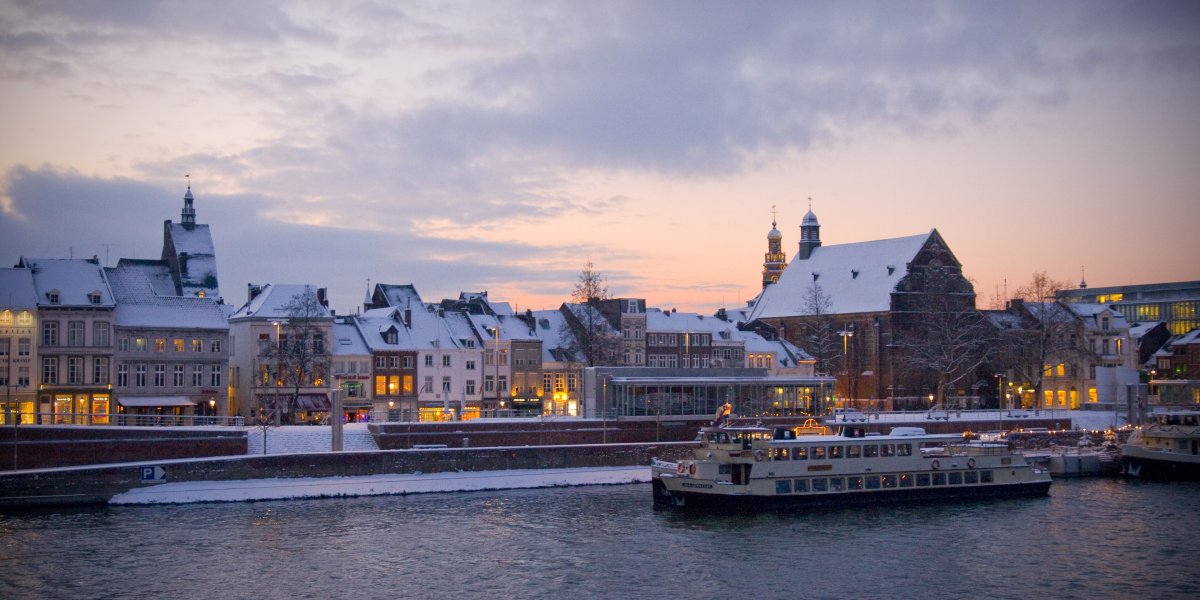
Maastricht
Pays-Bas · Best time to visit: Apr-Sep.
Day-by-day plan
Choose your pace
Durée du voyage
09:30
Religious
Walk out of Maastricht Centraal, cross the 13th-century Sint Servaasbrug — the oldest bridge in the Netherlands — and let the river carry you straight into the old town; a 12-minute walk lands you on a leafy square most travelers miss. Onze Lieve Vrouweplein is the city's quiet heart: a low Romanesque basilica with a fortress-thick facade of reddish stone, and a small Maria chapel where Maastrichtenaren still light candles every morning. Sitting under the plane trees here with a coffee is the first moment you realize this place feels nothing like the rest of Holland.
Tip: Take a coffee at Café Zondag's outdoor terrace and look up — the morning sun lands directly on the basilica's twin towers between 10:00 and 11:00, the only window when the stone glows orange. Step into the Maria chapel for two minutes (free, just inside the left entrance) — the wall of flickering candles is unexpectedly moving even for non-religious travelers.
Open in Google Maps →11:30
Landmark
Walk north up Stokstraat — the oldest street in Maastricht, lined with boutiques in restored 17th-century townhouses — for about 6 minutes; you'll pop out onto the wide cobbled Markt. The honey-stone Stadhuis sits dead-center like a wedding cake, designed by Pieter Post in 1664 with a grand external staircase that splits left and right. On Wednesday and Friday mornings the square fills with a working flower and produce market; the rest of the week the cobbles, the cafés, and the bronze statue of Minckeleers (the gas-lamp inventor) do the work.
Tip: Position yourself on the southeast corner of the square for the postcard angle — the Stadhuis frames best with the double staircase pointing toward you and the spire of Sint-Jan rising just behind. Skip the row of café terraces directly on the Markt; they exist to feed cruise passengers, never locals.
Open in Google Maps →12:30
Food
On the southwest edge of the Markt, look for the small shop with a permanent local queue — that's Frituur Reitz, slinging the best frites in Maastricht since 1909. Order 'een puntzak met stoofvleessaus' (€4.50) — a paper cone of double-fried Belgian-style frites topped with thick beef-stew gravy — and eat it standing on the cobbles like a real Maastrichtenaar. The whole lunch comes in under €6 and beats every sit-down spot in the center.
Tip: Ask for 'stoofvleessaus' — it's the southern Limburg classic and tourists almost always default to mayo and miss it. Hit it at 12:00 or 13:15 to skip the office-lunch wave between 12:30 and 13:00; cash speeds the queue.
Open in Google Maps →13:30
Landmark
Walk west from the Markt for 4 minutes through narrow lanes lined with chocolatiers and you step onto Vrijthof — Maastricht's grand stage and the heart of every festival, every André Rieu concert, every royal visit. The square is anchored by two churches standing shoulder to shoulder: the Romanesque Sint-Servaasbasiliek (the oldest church in the Netherlands, holding the relics of Saint Servatius) and the smaller blood-red Sint-Janskerk, whose ochre tower glows like fire in the afternoon sun. Together they look like nothing else in this country — pure medieval Burgundy in stone.
Tip: Stand on the south edge of the square facing north between 14:00 and 15:30 — both churches frame perfectly together with the red Sint-Janskerk tower as the focal point against the older basilica behind. A glass of Brand pilsner at Café Sint Servaes' terrace (€4) is the local way to take in the view; the kitchen here is tourist-priced, so drinks only.
Open in Google Maps →16:00
Shopping
Walk 3 minutes east from Vrijthof through Dominicanenplein and you find what is widely called the most beautiful bookstore on earth — Boekhandel Dominicanen, a working 13th-century Dominican church converted in 2006 into a three-story bookshop. Black steel walkways and shelving rise into the Gothic vaults; the original ceiling frescoes are still right above your head, slightly faded, slightly miraculous. At the back, where the altar once stood, sits the Coffeelovers café — order an espresso and sit at the cross-shaped reading table looking up.
Tip: Climb to the top mezzanine for the photograph — shoot down the central nave from the second-floor walkway with the Gothic vaulting overhead and the rows of shelves vanishing into the apse. Best light is between 16:00 and 17:00 when the western windows pour gold onto the stone; after that it flattens out fast.
Open in Google Maps →19:30
Food
From Dominicanen, walk 10 minutes south back down Stokstraat — slow, the shops are lit beautifully at dusk — slip into Sint Pieterstraat and you find Café Sjiek, where Maastrichtenaren have come for proper Limburg comfort food for over 30 years. Order 'Limburgs zuurvlees' with hand-cut frites (€19.50) — slow-braised beef in a dark sweet-sour gravy thickened with peperkoek and apple syrup, the dish that defines southern Dutch cooking, and Sjiek does the city's best version. Pair it with a Gulpener or Brand pilsner, both brewed within 30 km of where you're sitting.
Tip: Reserve a day ahead by phone (their online form is flaky) — Sjiek seats around 40 and locals get priority on weekends. Pitfall warning: avoid the dinner terraces on Vrijthof and the cruise-tour spots ringing the Markt — identical menus, double the price, food aimed at people who'll never return. Locals only sit on those terraces for an afternoon beer in the sun, never for a real meal.
Open in Google Maps →Aller au jour
09:30
Religious
Begin at Vrijthof, the city's grand stage of plane trees and red-shuttered cafés, and head straight to the basilica on its eastern flank. This is the oldest church in the Netherlands, raised over the 4th-century tomb of Bishop Servatius, who first brought Christianity to the Low Countries. Slip first into the quiet Romanesque cloister most rushing visitors skip, then climb to the Treasury where the gold reliquary bust of Servatius and the medieval Noodkist sit under candlelight.
Tip: Buy the combined Treasury and Church ticket at the side entrance on Keizer Karelplein, not the main one — same price, almost no queue. Be inside the Treasury before 11:00, before the church-tour groups arrive and the lighting feels less private.
Open in Google Maps →11:15
Shopping
From the basilica, cut north through the narrow Dominicanerkerkstraat — barely four minutes' walk and the Gothic facade of a 13th-century Dominican church appears at the end of it. Inside, the world's most beautiful bookstore: three storeys of black steel bookshelves rise into the original vaulted ceiling, with the choir frescoes still glowing above. The cruciform table in the back where you order an espresso is set on what was once the altar.
Tip: Climb to the top deck of the bookshelves for the view down the nave — it holds only ten people at a time and is free. The English-language fiction is on the second level beside the original organ pipes, easy to miss from the entrance.
Open in Google Maps →12:30
Food
Walk five minutes south down Bredestraat and onto Sint Pieterstraat — a quiet residential lane that locals consider the city's actual living room. Café Sjiek is a wood-panelled brown café guarded by Maastricht regulars; order the zoervleisj (€19), the Limburg horse-and-vinegar stew slow-cooked with apple syrup and ginger cookies, served with hand-cut fries. Pair it with a Brand pilsner or a glass of Pinot Blanc from the Apostelhoeve vineyard just outside town. Budget €25-30.
Tip: They take no reservations and the lunch rush hits at 12:30 sharp — arrive 12:15 or wait twenty minutes. Ask for a table in the front room with the leaded-glass windows; the back room is functional but lacks the worn-wood soul.
Open in Google Maps →14:30
Religious
Two minutes west of Sjiek opens Onze Lieve Vrouweplein, a leafy little square that feels more Provençal than Dutch — chestnut trees, café terraces, a Romanesque tower at the end. Before entering the nave, stop at the Sterre der Zee chapel just inside the doorway: the Star of the Sea, where Maastricht residents have left burning candles for nearly a thousand years. The interior is dark, hushed, and palpably older than anything Protestant Holland later built.
Tip: Light a candle at the Sterre der Zee shrine — it is the city's quiet ritual for safe travels and locals still do it daily. Exit through the small courtyard at the back: you'll step directly into the medieval Stokstraat quarter, the prettiest cobbled lane in the city, with the best limestone facades catching afternoon light.
Open in Google Maps →15:45
Landmark
From Stokstraat, follow Bredestraat south for seven minutes to Helpoort — the oldest surviving city gate in the Netherlands, twin-towered and unchanged since 1229. Climb the spiral stair to the small armoury museum on top, then follow the medieval walls left along the Jeker stream into the Jekerkwartier. The late-afternoon sun rakes the limestone here like nowhere else in the city, and the half-hidden bastions invite a slow loop rather than a march.
Tip: Continue along the inner wall into Faliezusterspark to the Pater Vinktoren — that's the secret photo angle: medieval walls mirrored in the Jeker with the basilica towers stacked behind. Skip the canal boat tours that dock by Helpoort; they are a slow 45-minute lap with canned commentary that misses everything you can see better on foot.
Open in Google Maps →19:30
Food
Two minutes from Helpoort down Sint Bernardusstraat sits Tout à Fait, a white-tablecloth bistro in a 17th-century townhouse — the kind of place locals book for anniversaries, not Instagram. The four-course menu surprise runs €69: expect Limburg-hill game, North Sea sole meunière, a Vacherin Mont d'Or still smoking from the binchotan, and a wine list weighted toward Mosel Riesling and Côte de Beaune. Service is unhurried in the European sense; plan three hours.
Tip: Book at least four days ahead via their website — the seven tables fill fast on weekends. Skip the à la carte and go straight for the 'menu surprise'; the chef cooks whatever came in that morning. Tourist trap warning: avoid the four restaurants directly on Vrijthof — they price for tour buses, the schnitzel is microwaved, and the same Limburg cheese plate costs €8 more than at Sjiek.
Open in Google Maps →09:30
Landmark
Walk south from your hotel along Sint Pieterstraat and the leafy Lage Kanaaldijk — fifteen minutes through Tapijn park to where Mount Saint Peter rises sharp out of the Maas valley. The star-shaped Vauban fortress (1701) sits on the cliff edge and gives you the single best panorama in Maastricht: the river curling north, Wyck on the far bank, the basilica towers silhouetted against the Belgian border just beyond. Crisp morning air at this elevation is the whole point of arriving early.
Tip: Take the 09:30 English guided tour and book online the night before — only one English slot runs each morning and on-site tickets often sell out. Skip the gift-shop coffee; the small terrace café on the rampart is half the price and stares straight down the river valley.
Open in Google Maps →11:00
Landmark
From the fort, follow the marked footpath downhill — five minutes through beech woods to the limestone wall where the Maastricht Underground entrance is carved. The North Caves are a 20,000-passage labyrinth left by 800 years of marlstone quarrying: Roman soldiers, medieval monks, and Dutch resistance fighters who hid Rembrandt's Night Watch here in 1942 all signed the walls. Tours run by lantern only; the cave holds a steady 10°C year-round, so bring a sweater even in July.
Tip: Book the 11:00 English tour ahead at maastrichtunderground.nl — Dutch-only tours are cheaper but you'll miss every story that makes the visit. Do not swap for the Zonneberg caves instead; they're longer but flatter, drier, and far less atmospheric. When the guide kills the lanterns mid-tour, keep one hand on the wall — it is genuinely the darkest dark most people will ever stand in.
Open in Google Maps →13:00
Food
Walk thirty minutes back along the Maas riverbank — past Tapijn, across Sint Servaasbrug (the oldest stone bridge in the Netherlands, 1280), and into Wyck. Bandito on Wycker Brugstraat is the neighbourhood's favourite lunch corner: sourdough toasties with Brabant ham (€10), a deep bowl of pumpkin-feta with truffle (€14), and the best flat white in the city. Quick, lively, and full of locals running between morning errands. Budget €18-22.
Tip: Sit at the window counter facing Wycker Brugstraat for first-class people-watching as Wyck wakes up after its slow morning. Ask for a slice of Limburgse vlaai from the counter — they rotate by season (apricot in summer, rice-and-cinnamon in autumn) and it is not on the menu.
Open in Google Maps →14:30
Museum
Walk south down Rechtstraat — the oldest paved street in the city, Roman in origin — ten minutes into the Céramique district, where Aldo Rossi's silver zinc-domed museum looms over the Maas like a lighthouse. The collection bridges medieval Limburg woodcarvings on the lower floors and contemporary masters (Bruce Nauman, Marlene Dumas, Luc Tuymans) above. The tower itself is the architecture: climb it for the city framed through Rossi's zinc oculus.
Tip: Start on the third floor with the old masters where the north-light is best and work down — the reverse of how most visitors do it, so you'll have the headline rooms to yourself. Closed Mondays. The on-site café has a Maas-facing terrace nobody seems to know about; enter via the museum lobby, not the street.
Open in Google Maps →17:00
Neighborhood
Walk back north up Rechtstraat — Wyck's main artery, a Roman road now lined with independent boutiques, vintage stores, ceramicists and lampshade ateliers that all roll their shutters down at 18:00. End at Sint Maartenskerk, the neo-Gothic church anchoring the north end of the quarter where Wyck's own community lights its candles each evening. The late-day light striking the red-brick facades along this lane is the photograph travellers actually take home.
Tip: Duck into Kantjil at Rechtstraat 71 for hand-folded Dutch-Indonesian spice packs — Maastricht's colonial pantry heritage shows up almost nowhere else as cleanly. Time the walk so you reach Sint Maartenskerk by 17:45 for the brief carillon — Wyck residents pause on the corner; do the same.
Open in Google Maps →19:30
Food
Five minutes south of Sint Maartenskerk on Plein 1992 sits Beluga Loves You — Maastricht's only Michelin-starred kitchen, a glass cube on the river with Hans van Wolde at the pass. Order the seven-course Loves You menu (€135) for North Sea turbot, smoked eel from the Maas itself, and the signature truffle ravioli that locals talk about for weeks. Wine pairings run €85; a glass of Pinot Gris from Belgian-Limburg's hidden vineyards is the move the sommelier will quietly approve.
Tip: Book three weeks ahead via their website — the eight river-facing tables sell out first and walk-ins are not a thing. Arrive at 19:00 sharp: the kitchen times the first course to the sunset over the Maas, and you only see it from inside. Tourist trap warning: avoid the floating 'cruise dinner' boats departing Maaspromenade after 19:00 — they're €70 for a microwaved rijsttafel on a slow loop, while every actual Wyck restaurant is five minutes' walk inland with food that came off a real stove.
Open in Google Maps →
Trip builder
Plan this trip around Maastricht
Turn this guide into a bookable rail itinerary with FlipEarth.
Keep exploring
Related cities
More in the same country
FAQ
Frequently asked questions
How many days do you need in Maastricht?
Most travelers enjoy Maastricht in 1 days, with enough time for headline sights and a slower meal or museum stop.
What's the best time to visit Maastricht?
The easiest season for most travelers is Apr-Sep, especially if you want good weather and manageable crowds.
What's the daily budget for Maastricht?
A practical starting point is about €120 per person per day before hotels, then adjust based on museums, dining, and transport.
What are the must-see attractions in Maastricht?
A good first shortlist for Maastricht includes Markt & Stadhuis, Vrijthof with Sint-Servaasbasiliek and Sint-Janskerk.