City Guide
Zaanse Schans
Países Bajos · Best time to visit: Apr-Sep.
Day-by-day plan
Choose your pace
Duración del viaje
09:00
Landmark
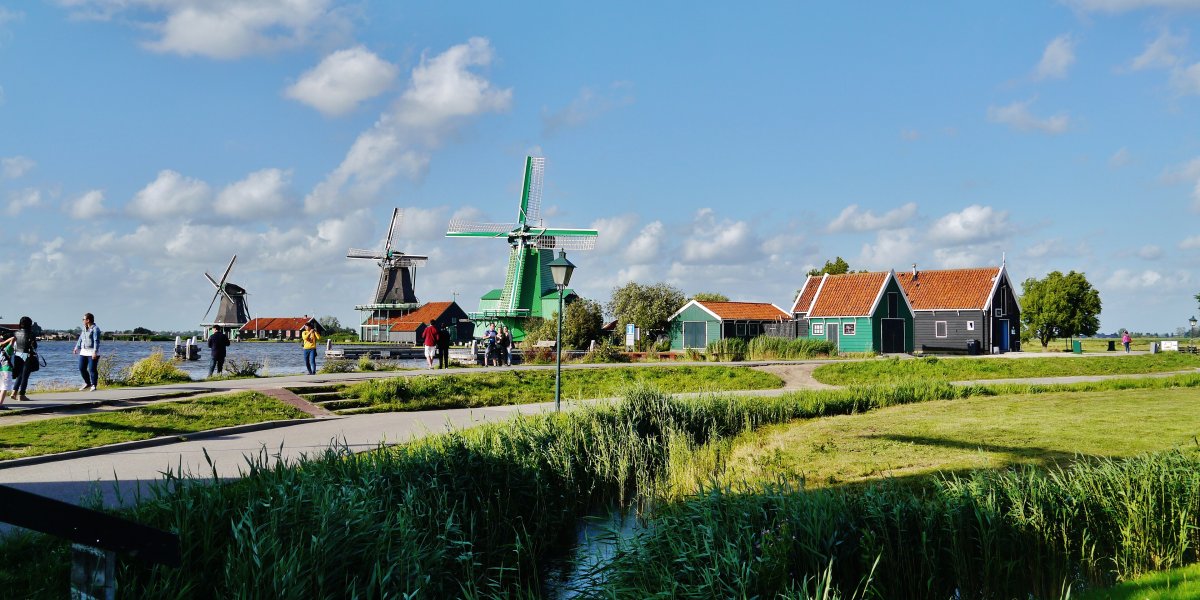
Exit Koog-Zaandijk station, turn left along the small canal and walk five minutes north — the green wooden Julianabrug is your portal into the village, and all six windmills line up to your right the moment your feet touch the dike. Cross slowly: this is the only spot where the entire row sits perfectly framed before you, and at 9am the bridge is yours alone.
Tip: Tour coaches start arriving at 10:30 and don't thin out until 4pm. Cross the bridge at 09:00 sharp, then walk to the dike's southern end and shoot looking north — Het Jonge Schaap anchors the line and you'll have zero strangers in frame.
Open in Google Maps →09:30
Landmark
From the bridge, follow the grass dike straight ahead — De Huisman (mustard) appears in two minutes, then De Gekroonde Poelenburg, De Kat, De Zoeker, Het Jonge Schaap, and De Bonte Hen unspool along 800 metres of cobbled path. Each one still grinds, saws, or presses something for a living — the only working industrial windmill row left on earth, and the morning wind almost always has the sails turning.
Tip: De Kat is the world's last operating paint mill — stand at the base on the river side and watch the giant wooden gears drive the pigment stones inside the open shed. Don't pay €5.50 to climb in (cramped ladder, and the linseed-oil fumes up top are overwhelming); the free ground-level view shows the whole mechanism, and the back of Het Jonge Schaap is where you'll smell fresh sawn oak.
Open in Google Maps →12:00
Food
From De Bonte Hen, walk south on the inner footpath past the goat meadow — De Kraai's black-tarred wooden frontage sits four minutes ahead, directly on the river. Dutch pancakes are the local fast food: thin, plate-sized, savoury or sweet, on your table in 10-12 minutes. Take the window bench and you'll watch De Kat's sails turning while you eat.
Tip: Order 'spek met kaas' (bacon and cheese, €12.50) or 'appel-kaneel' (apple-cinnamon, €10.50) — both arrive in under 15 minutes. Skip the loaded dessert pancakes (25+ min) and the poffertjes platter (sweet but soulless). Cash is faster than card here at peak.
Open in Google Maps →13:15
Landmark
Walk two minutes south through the village green — Catharina Hoeve's dairy barn sits directly beside the Wooden Shoe Workshop, the twin icons of Dutch souvenir lore. Inside the dairy, free samples of aged Gouda, smoked, cumin, and truffle are laid out continuously; next door, a craftsman carves a finished clog from a wet poplar block in under five minutes flat.
Tip: Try the 'oude Gouda' (aged 3 years, sharp and crystalline) and the truffle Gouda — both are free at the tasting counter and far better than the rubbery young cheese sold around Amsterdam Centraal. The clog demo runs every hour on the hour; stand front-left for the lathe-spray shot. Skip the printed-name souvenir clogs (€25, factory-made) — the rough-finished traditional pair (€15) is the real handmade product.
Open in Google Maps →15:00
Neighborhood
Cross back over Julianabrug and turn left along Lagedijk — the historic Zaandijk lane of 17th-19th century green-gabled wooden houses runs two kilometres south, hugging the Zaan all the way. Continue into Zaandam to the Czaar Peterhuisje, the unassuming wooden cottage where Peter the Great studied shipbuilding in 1697, then loop back north along the east bank past the Inntel Hotel's stacked-house facade to end the day where you began.
Tip: Push past the well-known Honig Breethuis to Czaar Peterhuisje (Krimp 23, Zaandam, €5) — the brown wooden house is the cornerstone of modern Russian shipbuilding, and Catherine the Great built the brick shell around it in 1895 to protect it. Lagedijk numbers 76-92 are the most photogenic stretch, green with white trim and improbably narrow gables; late-afternoon side-light off the river is the moment, and you'll see almost no other tourists past house 30.
Open in Google Maps →18:30
Food
Returning to Zaanse Schans via the east bank, De Hoop op d'Swarte Walvis sits at the village's south edge — a 17th-century merchant warehouse moved here intact, with low oak beams, candlelit tables, and river-facing windows. After the tour buses have gone, the place feels like the village's own dining room, with North Sea sole, Zaanse mustard, and game from the surrounding polders driving the menu.
Tip: Reserve a window table for 18:30 — the late summer sunset hits the windmill row across the water from 19:00 to 19:45 and the dining room glows. Order the North Sea sole meunière (€38), the dish that built the restaurant's reputation, with the Zaanse mustard soup (€11.50) to start. Two area scams to dodge: the riverboat 'sunset dinner cruises' (€25 for plastic-tray food and zero atmosphere) and the souvenir clog shops by the car park, which mark up 40% over the in-village workshop. Walk three minutes back across Julianabrug — Koog-Zaandijk station runs to Amsterdam Centraal every 15 minutes until 23:30.
Open in Google Maps →
Trip builder
Plan this trip around Zaanse Schans
Turn this guide into a bookable rail itinerary with FlipEarth.
Keep exploring
Related cities
More in the same country
FAQ
Frequently asked questions
How many days do you need in Zaanse Schans?
Most travelers enjoy Zaanse Schans in 1 days, with enough time for headline sights and a slower meal or museum stop.
What's the best time to visit Zaanse Schans?
The easiest season for most travelers is Apr-Sep, especially if you want good weather and manageable crowds.
What's the daily budget for Zaanse Schans?
A practical starting point is about €85 per person per day before hotels, then adjust based on museums, dining, and transport.
What are the must-see attractions in Zaanse Schans?
A good first shortlist for Zaanse Schans includes Julianabrug & Zaanse Schans Entrance, Kalverringdijk Windmill Row, Catharina Hoeve Cheese Farm & Wooden Shoe Workshop.