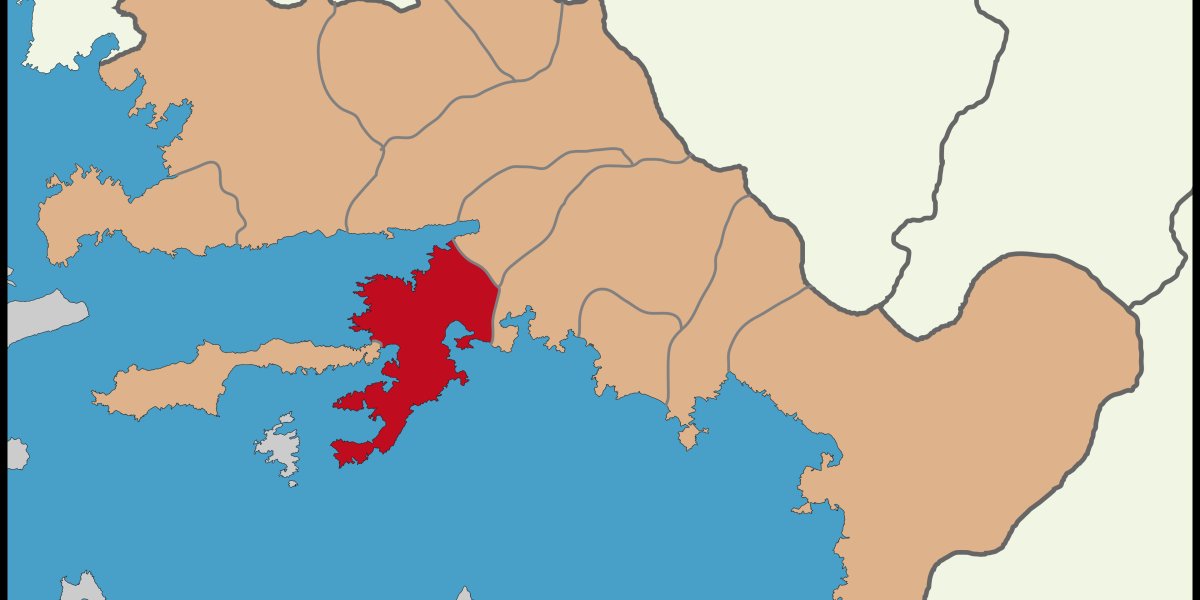
City Guide
Marmaris
Türkei · Best time to visit: May-Oct.
Day-by-day plan
Choose your pace
Reisedauer
08:30
Neighborhood
Take the İçmeler dolmuş from Marmaris Otogar (15 min, ~25 TL) and start at the quiet western end of the bay where the water is at its clearest. The 8 km coastal path traces pine-backed headlands and limestone coves, opening views of Marmaris's natural amphitheatre with the castle silhouette appearing on the horizon long before you reach it. Morning light pours in from the east — the only hour the bay's signature turquoise actually looks the colour of the postcards.
Tip: Board the İçmeler dolmuş at Atatürk Square's western stop, not the central station — fewer locals, faster boarding. Get off one stop before the village centre at the headland with the lone umbrella pine; the photo of both bays at once is taken from the rocks 30 m below the road, not from the road itself.
Open in Google Maps →12:00
Food
Walk inland from the Uzunyalı palm promenade — 7-minute walk through the Tepe district to where the dolmuş drivers and bank clerks eat. Köfteci Yusuf is a Bursa-born grill chain that does one thing perfectly: hand-shaped lamb-and-beef köfte over charcoal, served with bulgur pilaf, white-bean piyaz and chilled ayran. Twelve minutes from order to plate, zero tourist menu, the price you'd pay in Bursa.
Tip: Order the "Yusuf köfte porsiyon" (≈180 TL) with piyaz and an ayran — that's the full Turkish working lunch. Skip the dessert case; the kazandibi is mass-produced. Avoid every restaurant on the Long Beach waterfront with a photo menu — same dish at 3× the price.
Open in Google Maps →13:00
Landmark
After lunch return to the bay and walk the full Kordon eastward — 2 km of marble pavement, date palms, and gulets moored hull-to-hull all the way to the old town. The promenade ends at the bronze statue of Mustafa Kemal Atatürk gazing across the harbour, the photo every Turkish family takes on holiday in Marmaris. Afternoon sun behind you means the bay's reflections light up the statue from below — exactly the angle the local photographers wait for.
Tip: The cleanest shot of Atatürk with the bay behind is from the south-east corner of the square, kneeling, with the lamp-post just out of frame — at 14:30 in summer the light is sidelong and forgiving. Refuse the horse-carriage drivers; the 30-minute "tour" they offer costs five times the dolmuş and goes nowhere you can't walk in 20 minutes.
Open in Google Maps →15:00
Landmark
Continue east 6 minutes from the statue and the modern town vanishes — cobbled lanes climb the rock, bougainvillea spills over whitewashed walls, and you're suddenly in Eski Mahalle, the only stretch of Marmaris that still looks 500 years old. Süleyman the Magnificent rebuilt the castle here in 1522 to stage his siege of Rhodes; skip the small archaeology museum and head straight for the free upper rampart, where the entire crescent bay drops away beneath you. Descend through the Grand Bazaar's tunnel-lit lanes — leather, lokum, copper, Turkish tea sets — the warm low light between 15:30 and 16:30 is when the white walls turn honey-coloured for photography.
Tip: Enter the castle precinct through the back gate on Tepe Mahallesi Sokak — the front gate has a 15-min ticket queue, the back terrace (same view, no ticket needed if you skip the museum) is empty. The narrow stepped lane called Hacı Mustafa Sokağı, west of the castle, has the single best old-town photo in Marmaris: blue door, draped vines, castle wall above.
Open in Google Maps →17:30
Neighborhood
Descend the castle's eastern stairs and cross the small canal bridge — 8-minute walk along the new harbour into one of the Mediterranean's largest yacht marinas. Superyachts from Monaco and Antibes overwinter here; you walk almost a kilometre of teak gangways with the pine hills behind glowing salmon-pink in the late light. In May-September the sun drops behind the western headland directly down the bay — the same coastline you walked at sunrise, now closing the loop.
Tip: The best sunset angle is from the marina's outer breakwater (walk past the chandlery to the very end) — yachts in the foreground, bay and pine ridge behind, no street lights in the frame. The marina's inner-row restaurants charge 40-60% more than the same dishes one row back; always check the menu price before sitting down.
Open in Google Maps →19:30
Food
Walk 3 minutes west along the marina's main quay to Pineapple, whose terrace overhangs the water exactly where the gulet captains tie up at end of day. The grilled sea bass (levrek ızgara, ~480 TL) is the headline, but the eight-piece cold meze platter — humus, ezme, haydari, fava, sigara böreği, stuffed vine leaves — is what the Turks at the next table will be ordering. A glass of cold rakı with melon and beyaz peynir is the only correct beginning.
Tip: Reserve a terrace table by phone the same morning for 19:30 — walk-ins after 20:30 face a 40-minute wait. On the walk back through town, refuse every "free shot" tout on Bar Street (Barlar Sokağı): the free drink obliges a 600-800 TL cocktail tab, and the "bill confusion" is the most reported Marmaris scam — stay on the Kordon promenade instead, it's the same distance back to the centre.
Open in Google Maps →Zu Tag springen
09:00
Museum
Begin the moment the doors open — the citadel perches above Kaleiçi and at this hour the bay below is still glass, fishing boats just heading out. Suleiman the Magnificent rebuilt these walls in 1522 as the launchpad for his Rhodes campaign, and seven small galleries inside tell that story through maritime archaeology and Ottoman household rooms. The roof walk gives you the postcard view of Marmaris Bay before any cruise crowd arrives.
Tip: Buy tickets at the lower gate, then climb straight to the upper bastion first — most tour groups walk counter-clockwise, so this leaves the bay-view terrace empty for photos. Closed Mondays.
Open in Google Maps →10:45
Neighborhood
Step out of the lower castle gate and you are already inside Kaleiçi — a slow drift through the bazaar lanes past Ottoman stone houses with vine-shaded balconies, ceramic stalls, and the 250-year-old plane tree (Tarihi Çınar) by the inner harbor. Pause inside the small Ibrahim Aga Mosque (1789) — shoes off, scarves provided — then weave through Sariana Sokak and 39. Sokak, photogenic and quiet by day. This is where the town was a fishing village before mass tourism arrived.
Tip: Walk Sariana Sokak first, then 39. Sokak. Carpet sellers are persistent; 'sadece bakıyorum' (just looking) is respected. Skip stalls labelled 'Turkish Viagra' — tourist-targeted; real spice prices live at the rear of the covered bazaar.
Open in Google Maps →12:30
Food
Three-minute walk from the bazaar exit toward Atatürk Caddesi — this small family-run ev yemekleri (home cooking) is where local shopkeepers actually eat at noon. Cafeteria-style: point at what looks good in the steam table of daily stews and casseroles. Order the manti (tiny dumplings under yogurt-garlic sauce, ~7 EUR) and the kuru fasulye (white-bean stew with lamb, ~5 EUR).
Tip: Order at the counter, then climb to the small upstairs room — cooler, quieter, and the cherry-juice pitcher there is free. Lunch service ends sharp at 14:30; arriving by 13:00 means full steam-table selection.
Open in Google Maps →14:30
Landmark
Five-minute walk down to the seafront — the Atatürk Statue points across the bay toward Rhodes, visible on clear days. From here the palm-lined Kordon promenade runs west along Long Beach (Uzunyalı) — 4 km of fine pebble shore backed by pine hills. Walk a stretch toward the Sailor Monument (Denizci Heykeli), then double back; this is the angle from which postcard photographers shoot Marmaris.
Tip: The seafront strip is where 'Turkish ice cream show' vendors gather — fun once, but the show is the product, not the ice cream. For real dondurma, walk 200 m west to Mado and order dövme dondurma with pistachio.
Open in Google Maps →16:30
Landmark
Walk east along the Kordon for 15 minutes — Netsel is one of the most upscale marinas on the Aegean, super-yachts moored against the backdrop of pine hills. The deeper you walk in, the larger the vessels. Find a bench on the eastern breakwater for sunset — the sun drops behind the western hills and bathes the bay in copper light around 19:00 in summer, 17:30 in shoulder season.
Tip: Best sunset photo: stand on the southeast pier walkway and frame the masts against the pine ridge. Around 18:30 in summer the marina swans gather near the central wooden bridge — feeding is discouraged by the harbor master.
Open in Google Maps →19:30
Food
Eight-minute walk back into the Old Town labyrinth from the marina — Ney occupies a 250-year-old Ottoman stone house with carved wooden ceilings, hanging lanterns, and a tiny rooftop terrace just three tables wide. The menu is Ottoman palace cuisine. Order the hünkar beğendi (lamb cubes on smoked eggplant purée, ~22 EUR) and the Çerkez tavuğu (Circassian chicken under walnut sauce, ~14 EUR).
Tip: Reserve in advance for the rooftop terrace — only three tables, with a view over the rooftops to the illuminated castle. PITFALL: any restaurant with a tout outside grabbing tourists by the sleeve marks up 40-60%; they cluster along Bar Street and the main marina drag — never follow one in.
Open in Google Maps →09:00
Landmark
A 1h 15min drive east from Marmaris brings you to Dalyan — a riverside town where the Dalyan Çayı winds in great reed-bound loops toward the sea. Board a wooden river boat at the town dock; within ten minutes the limestone cliff opens before you with six 4th-century-BC Lycian rock tombs carved straight into its face. The kings of ancient Kaunos rest behind those temple façades, and at 10:00 the rising sun lights the carved columns directly.
Tip: Sit on the right side of the boat heading upstream — the tombs are on the western cliff. Don't pay extra for 'private tomb tours' sold on the dock: the tombs are sealed and viewed only from the river. 10:00-11:00 is the photographer's hour.
Open in Google Maps →10:30
Landmark
The boat continues 15 minutes upstream to dock at Çandır — a 5-minute footpath through olive groves leads to the gates of Kaunos. Founded in the 9th century BC, the city once watched over a harbor that has since silted into farmland. Climb the Roman theater (5,000 seats, acoustically perfect — try a clap from centre stage), the Doric temple of Apollo, and the Byzantine basilica.
Tip: The acropolis trail is steep — 20 minutes one-way — but the summit gives a panorama of Iztuzu Beach in one direction and the rock tombs in the other. Bring water; there is no shade on the climb. Whisper at the small flat stone at the front of the theater and the back row hears you.
Open in Google Maps →12:30
Food
Boat back across to Dalyan town and walk one minute along the river-bound Kordon — Saki Bistro sits on stilts directly over the water. Order the grilled levrek (sea bass, ~18 EUR — caught in the river that morning) and the Dalyan kebabı (lamb-stuffed eggplant in tomato sauce, ~14 EUR). Herons fish in the reeds three meters from your table.
Tip: Reserve the front-row deck before noon — kingfishers dive close enough to splash you. Avoid the touristy restaurants on the main square; they cater to tour-bus groups and charge double for the same river fish.
Open in Google Maps →14:00
Entertainment
A 25-minute river-boat ride from Dalyan crosses the southern arm of Lake Köyceğiz to Sultaniye — sulfuric mud pools fed from below, where Cleopatra herself reportedly bathed. The ritual: smear black mud over every limb, dry in the sun for 15 minutes, rinse in the open pool, then soak in the 40°C thermal spring. Locals swear by it for rheumatism and skin.
Tip: Bring an old swimsuit — the mud stains permanently and any white fabric is finished. Shower facilities are basic; pack your own soap and small towel. The thermal soak pool gets crowded after 16:00; you want to be in by 14:30.
Open in Google Maps →16:30
Park
A short river boat or 25-minute minibus from Dalyan brings you to Iztuzu — a 4.5 km spit of golden sand separating the Dalyan delta from the Mediterranean. This is one of the last nesting beaches in the Mediterranean for the loggerhead sea turtle (Caretta caretta); from May to October eggs are laid here at night, and the nests are wire-fenced and numbered. Walk to the lagoon end where the river meets the sea — flamingos sometimes wade the shallows at dusk.
Tip: After 17:00 the day-trip boats leave and the beach empties — you'll have the sand mostly to yourself for sunset around 19:00 in summer. Visit DEKAMER Turtle Hospital at the eastern entrance (free, donations welcome) — they rehabilitate injured loggerheads. PITFALL: the entire beach closes to walkers after 20:00 in nesting season; the wardens fine offenders, and the 'sunset turtle-spotting boat tours' sold on Dalyan dock are barred from coming this close to the nests — they go in circles offshore. Walk the beach yourself instead.
Open in Google Maps →20:30
Food
Drive 1h 15min back to Marmaris — Fellini sits on the eastern edge of Netsel Marina, terrace opening directly onto the moored yachts and the lights reflecting on the bay. The kitchen is Italian-Mediterranean with a strong fish program. Order the wood-fired Florentina pizza (~12 EUR) and the grilled octopus with potato (~24 EUR), with a chilled glass of Çankaya, a dry Turkish white from Cappadocia (~6 EUR).
Tip: Reserve the table closest to the dock edge — superyacht crews hose down their decks at sunset, the whole scene is cinematic. Check the bill: some marina restaurants quietly add a 10% 'table charge' not printed on the menu — Fellini does not, but it is a Marmaris-wide trick worth knowing.
Open in Google Maps →
Trip builder
Plan this trip around Marmaris
Turn this guide into a bookable rail itinerary with FlipEarth.
Keep exploring
Related cities
More in the same country
FAQ
Frequently asked questions
How many days do you need in Marmaris?
Most travelers enjoy Marmaris in 1 days, with enough time for headline sights and a slower meal or museum stop.
What's the best time to visit Marmaris?
The easiest season for most travelers is May-Oct, especially if you want good weather and manageable crowds.
What's the daily budget for Marmaris?
A practical starting point is about €120 per person per day before hotels, then adjust based on museums, dining, and transport.
What are the must-see attractions in Marmaris?
A good first shortlist for Marmaris includes Atatürk Square & Kordon Palm Promenade, Marmaris Castle & Grand Bazaar (Eski Mahalle).