City Guide
Sibenik
Croatie · Best time to visit: May-Oct.
Day-by-day plan
Choose your pace
Durée du voyage
09:00
Religious
Step onto Trg Republike Hrvatske and the cathedral fills the open square directly in front of you — no warm-up, no preamble. A UNESCO masterpiece built 1431-1535 entirely of interlocking limestone slabs quarried on Brač and Korčula — no wood, no brick, no mortar in the ribbed dome, a structural technique unique in Europe. Walk slowly along the apse to see the famous frieze of 71 carved human heads — real Sibenik citizens from the 1400s, each face individual, the world's earliest civic portrait gallery in stone.
Tip: Stand at the back-left corner of the square for the iconic three-quarter angle that catches both the carved heads frieze and the ribbed dome in one frame — at 09:00 the morning sun lights the south facade and dome cleanly, and the square is nearly empty before cruise tour groups arrive around 10:30.
Open in Google Maps →10:30
Landmark
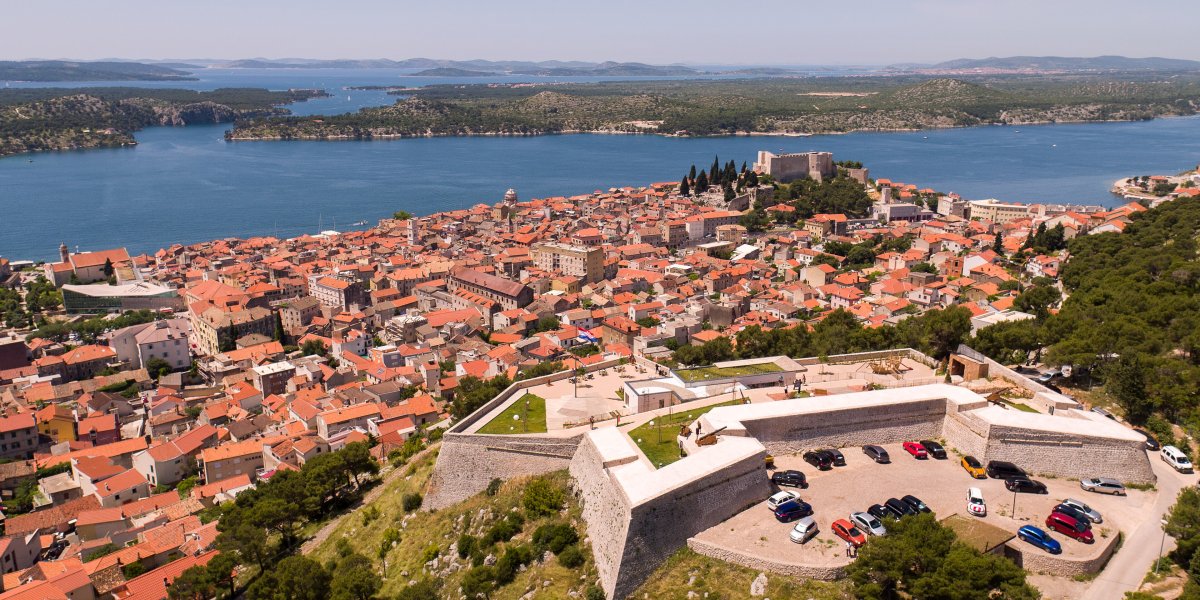
Exit the cathedral square through the narrow stone alley behind Pelegrini restaurant and climb the medieval stepped lanes for 7 minutes — you emerge at the fortress's stone-arched gate. Sibenik's 15th-century crown perches 70 meters above the harbor, its ramparts wrapping a sunken open-air stage used for summer concerts. Walk the full perimeter walkway for a clean 360° sweep — red-tile rooftops tumbling down to the water, the cathedral dome glowing white below you, St. Nicholas Fortress sitting on its island out in the channel, and the green throat of the Krka estuary opening to the Adriatic.
Tip: Climb to the seaward bastion (left side as you enter the upper level) and shoot between 11:00 and 11:30 — the angle catches old town roofs, the cathedral dome, and the turquoise harbor with St. Nicholas Fortress in one frame, and the sun is still low enough to keep the limestone from blowing out white.
Open in Google Maps →12:30
Food
Descend the fortress steps back into the old town — 6 minutes down polished stone stairs and you arrive at the waterfront Riva, where the bistro's outdoor tables face the harbor. Locals' fast-casual lunch spot, food on the table within 25 minutes — grilled sardines with blitva (Dalmatian chard and potato) around €10, seared tuna steak around €16. Sea breeze, paper-and-cloth tablecloths, no menu theatrics.
Tip: Order the grilled sardines with blitva — the classic Dalmatian fishermen's noon meal — and ask for a glass of house Pošip white wine (€4). Locals drink Pošip at lunch and Babić at dinner; ordering the other way around marks you instantly as a tourist.
Open in Google Maps →14:00
Neighborhood
Walk inland from the waterfront, duck into the first narrow stone passageway you find, and within three minutes you're inside a labyrinth of nine stepped alleys all paved in the same gleaming limestone as the cathedral. Climb gently to Trg Četiri Bunara (Four Wells Square), a 15th-century cistern plaza ringed by four ornate stone wellheads, then thread your way to the Medieval Mediterranean Garden of St. Lawrence Monastery — a hidden cloister of herb beds and stone benches tucked behind an unmarked black wooden door on Ulica Andrije Kačića Miošića. The garden is the quietest 400 square meters in the city.
Tip: Push open the unmarked black wooden door on Ulica Andrije Kačića Miošića (€2 entry) — the cloister is nearly empty most afternoons. Sit on the bench under the lemon tree near the rosemary beds for ten minutes; the monastery cats often appear, and you'll hear nothing but church bells and bees.
Open in Google Maps →16:30
Landmark
From the garden, climb the Šubićevac steps for 12 minutes — a steep stone stairway flanked by faded ochre houses with laundry on the lines — ending at the fortress's wooden ramp gate. The youngest of Sibenik's four fortresses (built 1646 against the Ottomans), smaller and quieter than St. Michael's but holding the single best sightline back onto the cathedral dome and the old town rooftops at sunset. A cantilever wooden terrace juts out over the cliff edge as a natural photo platform.
Tip: Arrive by 17:00 and claim the left corner of the wooden cantilever terrace — at around 17:45 (May-October) the golden hour lights the cathedral dome amber while the harbor below turns silver. Skip the on-site augmented-reality binoculars (gimmicky and €5 wasted) and the overpriced Šibenska Torta slice at the kiosk — a better version waits at dinner.
Open in Google Maps →19:30
Food
Walk back down through the old town for 10 minutes — by now the alley lanterns are lit and the polished limestone glows underfoot. A 14-seat stone-walled konoba on a narrow lane two minutes from the cathedral, beloved by locals for charcoal-grilled whole sea bass (around €28 for two to share) and slow-cooked Dalmatian pašticada with handmade gnocchi (€18). The room is loud, the house Babić red is poured generously, and the owner usually drops by your table to ask how the fish was.
Tip: Reserve for 19:30 by phone earlier in the day (they speak English); after 20:00 there is zero walk-in chance. Order the pašticada plus one shared whole grilled fish with a half-litre of Babić — two people land around €60 total. Avoid the photo-menu restaurants directly on the main Riva (Obala palih omladinaca) with waiters flagging down passersby — they are 50% pricier, serve frozen fish, and the real konobas are all tucked one block inland.
Open in Google Maps →
Trip builder
Plan this trip around Sibenik
Turn this guide into a bookable rail itinerary with FlipEarth.
Keep exploring
Related cities
More in the same country
FAQ
Frequently asked questions
How many days do you need in Sibenik?
Most travelers enjoy Sibenik in 1 days, with enough time for headline sights and a slower meal or museum stop.
What's the best time to visit Sibenik?
The easiest season for most travelers is May-Oct, especially if you want good weather and manageable crowds.
What's the daily budget for Sibenik?
A practical starting point is about €100 per person per day before hotels, then adjust based on museums, dining, and transport.
What are the must-see attractions in Sibenik?
A good first shortlist for Sibenik includes St. Michael's Fortress, Barone Fortress.