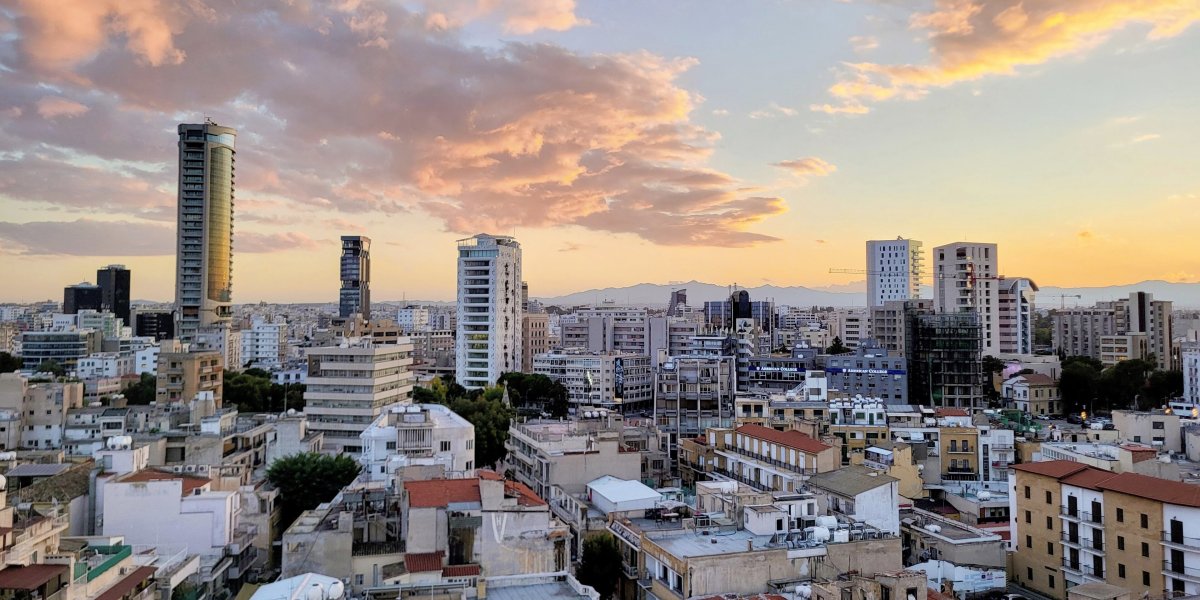
City Guide
Nicosia
Chypre · Best time to visit: Mar-May, Sep-Nov.
Day-by-day plan
Choose your pace
Durée du voyage
09:00
Landmark
Start at the grandest of the eleven Venetian bastions before the day's heat sets in — a 1567 sandstone gate carved through twelve meters of wall, now a small arts venue but breathtaking on the outside. Climb onto the grass-topped Caraffa Bastion next door for a 360-degree sweep across to the Pentadaktylos mountains in the north, where a giant Turkish flag is laid out in painted rocks on the hillside — your first glimpse of the divide before you have walked a single block. Then take the perimeter path west along the ramparts; the eastern stretch is silent in the morning, with cats sleeping on the stones and the city walls glowing honey-gold.
Tip: Approach from outside the walls along Athinas Avenue — the eastern facade with its honey sandstone and Latin inscription is what you came to photograph, and it is flat-lit and crowd-free before 10:00. The morning sun is directly behind you from this angle; an hour later it swings overhead and the carved coat of arms goes flat.
Open in Google Maps →11:00
Neighborhood
From the Famagusta Gate, walk west on Patriarchou Grigoriou for ten minutes through the Chrysaliniotissa quarter — ochre houses, dripping bougainvillea, schoolchildren cutting through alleys, grandmothers on doorsteps; this is the residential heart most day-trippers never see. You emerge at the cream-and-buff Neo-Byzantine facade of the Archbishop's Palace, then a 2-minute walk north drops you into Faneromeni Square, the social living room of old Nicosia, anchored by the 19th-century Faneromeni Church on one side and the bullet-pocked Liberty Monument on the other. The Green Line is one street to the north — you can see a UN watchtower peeking over the rooftops.
Tip: Look up on Faneromeni Street: the buildings above the shopfronts still carry 1974 bullet holes around the upper windows — most people walk past staring at their phones and miss it. Take the parallel Onasagorou Street back south instead of Ledra: same direction, neoclassical facades, zero souvenir shops.
Open in Google Maps →12:30
Food
Cross Faneromeni Square diagonally to the south side — Mattheos sits under an old carob tree, recognizable by the charcoal smoke drifting across the square and the lawyers in robes spilling out of the courthouse next door. It is a half-century-old workmen's taverna where the menu is whatever is grilling that day; lokmades and lawyers, bricklayers and judges share the same shaded tables. Order the sheftalia (Cypriot caul-fat sausage, around €6) and a half-portion of saganaki halloumi (€5), and ask for the kleftiko if it is on — slow-cooked lamb that falls off the bone (€12).
Tip: Arrive by 12:15 to get the shaded outdoor table under the carob — by 13:00 every legal robe in town is fighting for it. Cash only, no card machine, and the kitchen shuts at 15:00 sharp; do not sit down at 14:50 expecting a meal.
Open in Google Maps →14:30
Landmark
Walk north out of Faneromeni Square onto Ledra Street for six minutes — the city's pedestrian spine, lined with chain shops until it abruptly dead-ends at sandbags, a UN buffer strip, and a small wooden cabin. Show your passport at the Greek-Cypriot booth, walk thirty meters across the no-man's-land past faded murals and rolls of barbed wire, hand it over again at the Turkish-Cypriot booth, and you have stepped into a different country in under two minutes. Two blocks east, the Büyük Han ('Great Inn') opens out — a 1572 Ottoman caravanserai with a small domed mescit floating on slender columns in the cobbled courtyard, ringed by 67 vaulted cells now housing potters, calligraphers and a single pomegranate tree.
Tip: The crossing is open 24/7 and free for EU, UK and US passports — bring the physical passport, an ID card will not work going north. Inside the han, climb the narrow stone stairs in the southwest corner up to the upper gallery: it is the only angle where the entire octagonal mescit fits in one frame, and almost nobody finds it.
Open in Google Maps →16:00
Religious
Step out of Büyük Han's east gate and walk three minutes through spice-scented lanes toward the two minarets spiking above the rooftops. The Selimiye Mosque is the strangest building in Cyprus: a 13th-century French Gothic cathedral — St. Sophia, built by the Lusignan kings of Jerusalem in exile — with two slender Ottoman minarets bolted onto its flying buttresses in 1570. Slip off your shoes and step inside (free, modest dress); the columned nave is now an emerald carpet, afternoon light pours through the rose window, and the contradiction of the place lands you in the chest. Afterwards the Bandabuliya covered market sits one block south, a still-functioning Ottoman-era hall of butchers, mounds of sumac and red pepper, hanging dried okra and trays of fresh lokum.
Tip: Time it for after the mid-afternoon prayer call (around 15:30 in summer, 14:30 in winter) — wait fifteen minutes for worshippers to leave and you will have the interior almost to yourself, with the low western sun firing through the western rose window. In Bandabuliya, the spice stall at the far western end will let you taste the sumac and dried mint before buying, and his prices are a third of the airport's.
Open in Google Maps →19:00
Food
Walk three minutes back west to Büyük Han — at dusk the courtyard fills with candlelight from Sedirhan's tables and the mescit's little dome floats above you on its slender arches like a lantern. This is the most atmospheric meal in the divided city: a full Turkish-Cypriot meze, fifteen to twenty small plates, anchored by şeftali kebab (peach-shaped lamb kebab wrapped in caul fat — different beast from the Greek-side sheftalia you had at lunch) and köfte off the charcoal. Order the full meze for around €25 a head; a half-liter of Efes is €4, and the strong Turkish coffee at the end is the right way to close the day.
Tip: Reserve a courtyard table for after 19:30 — the natural light is gone by 20:00 and the candles take over, which is when the han is at its most cinematic. Crossing back south to the Greek side afterwards is safe and pleasant; the Ledra checkpoint runs all night. Pitfall warning: do NOT eat at the streetside spots flagged 'authentic Cypriot' on Ledra Street's southern half — they charge €18 for a frozen souvlaki and a Greek salad with vinegar from a bottle. Anywhere worth eating in old Nicosia, on either side, is one street back from Ledra.
Open in Google Maps →Aller au jour
08:30
Museum
Start your morning ten minutes' walk west of the old city, where Museum Avenue bends past the Municipal Gardens — the cypress-lined approach is half the pleasure. Inside is the single greatest archaeological collection on the island: the 2,000 terracotta figurines from Ayia Irini standing shoulder-to-shoulder, the gilded Aphrodite of Soloi, and Bronze Age idols older than the pyramids. Two hours covers the highlights without the rush.
Tip: Arrive at 08:00 sharp — the first hour is yours alone before the school groups roll in around 10:00. Skip the chronological route and head straight to Rooms 4 and 5 (the Ayia Irini terracottas) — that's the photograph you'll remember. Closed Mondays.
Open in Google Maps →11:00
Landmark
Exit the museum, walk east through the Municipal Gardens for 10 minutes, then enter the Venetian walls through Pafos Gate and follow Ledras toward the heart of the old city. The street ends abruptly at a UN-monitored checkpoint — sandbags, blue helmets, and a line that divides Europe's last partitioned capital. Climb the Ledra Observatory on the 11th floor of the Shacolas Tower (one block south) for the only legal aerial view of both halves of the city.
Tip: The Shacolas observatory closes at 17:00 and is empty before noon — go now, not after lunch. Bring your passport even if you don't plan to cross today; you'll want it tomorrow morning and the queue starts forming by 10:00.
Open in Google Maps →12:30
Food
Two minutes south of the checkpoint, tucked into a pedestrian lane off Onasagorou Street. This is where civil servants and university lecturers eat — a souvlaki-and-meze house with paper tablecloths and a wood-fired grill you can smell from the corner. The pork souvlaki plate (€12) and grilled halloumi (€6) are the order; ask for the homemade tzatziki on the side.
Tip: No reservations — arrive by 12:30 or wait 40 minutes after 13:15. Skip the printed menu and order the daily meze (€18); it comes with a complimentary glass of zivania the owner pours himself if you make eye contact at the bar.
Open in Google Maps →14:30
Museum
Walk two blocks north on Onasagorou, then right onto Hippocrates Street — five minutes through the prettiest restored Ottoman houses in the south. The museum traces 6,000 years of Nicosia inside a 19th-century townhouse: medallions from the Lusignan court, sepia photographs of the 1974 invasion, and a basement room dedicated to the Green Line that no other museum in Cyprus has dared to assemble.
Tip: Free entry, and it's air-conditioned — perfect for the 14:00 heat. Start in the basement and work upward; the chronology runs in reverse and most visitors miss the 1974 room entirely. Closed Mondays.
Open in Google Maps →16:30
Neighborhood
Step out of the museum and walk west along Hippocrates for three minutes until the sandstone bulk of Panagia Faneromeni Church appears — the largest church inside the walls, and the social hub of old Nicosia. The square's plane trees throw long shadows by 17:00; cafés set out wicker chairs, students drink frappés, and the call to prayer drifts in from Selimiye Mosque across the line. Wander the surrounding lanes — Aischylou, Lefkonos, Trikoupi — to find the shuttered Ottoman façades and the street art that has bloomed on every dead-end wall.
Tip: The light at 17:30 hits the church's eastern façade gold — stand on the corner of Onasagorou and Phaneromenis for the shot. Avoid Pieto's and the other heavily-touristed bars on Faneromeni square itself; the better wine bars are one street back on Trikoupi.
Open in Google Maps →19:30
Food
Walk one minute east of Faneromeni Square to the unmarked corner door on Lefkonos Street — locals call it 'the Faneromeni taverna' and no sign is needed. Run by the same family for 40 years, the kitchen serves what the family eats: rabbit stifado (€14), tava lamb baked in clay pots (€13), and the city's best moussaka (€11). The handful of outdoor tables under the lemon tree are the prize.
Tip: Reserve the same morning by phone (they don't take online bookings) and ask for an outdoor table. Pitfall warning for this district: the cafés directly on Ledra Street within 100 m of the checkpoint will charge €6 for a Greek coffee that costs €2 one block away — never sit down at the first place with an English menu and photos of the food.
Open in Google Maps →09:00
Landmark
Cross at the Ledra Street checkpoint at 09:00 sharp (passport stamp takes 90 seconds), then walk north on Arasta Street for four minutes — the souk smell of cumin and grilled lamb tells you you've changed countries. Büyük Han is the finest surviving Ottoman caravanserai in the Eastern Mediterranean, a two-storey sandstone courtyard built in 1572 with a tiny domed mosque floating in the middle on six pillars. The shaded arcades now house silversmiths, weavers and a coffee house under the staircase.
Tip: Climb to the upper gallery immediately — the courtyard photograph from the second-floor northwest corner at 09:30 (light raking across the central mosque) is the shot. By 11:00 the courtyard fills with tour groups; you'll have it almost alone now.
Open in Google Maps →10:30
Religious
Leave Büyük Han by the north gate and walk three minutes through Asma Altı Sokağı — a covered lane of fabric stalls and old men playing tavla. The mosque rises suddenly: it is the 13th-century Gothic Cathedral of Saint Sophia, where Lusignan kings were crowned, with two slim Ottoman minarets bolted onto its French rose window. Inside, whitewashed Gothic ribs vault over a red carpet pointed toward Mecca — there is nothing else like this building in Europe.
Tip: Enter through the small side door on the south transept, not the main entrance — the imam keeps it open between prayer times and the queue skips you straight in. Women must cover shoulders and hair; scarves are lent free at the door. Avoid 12:15-13:15 (Friday prayer) — non-Muslim visitors are turned away.
Open in Google Maps →12:30
Food
Walk five minutes back south to Büyük Han — Sedirhan occupies the entire ground-floor northern arcade of the caravanserai itself, with tables spilling onto the courtyard's cobbles. The kitchen does Turkish-Cypriot home cooking the way grandmothers did: şeftali kebab (lamb-and-parsley sausage wrapped in caul fat, €9), molohiya stew (€8), and the best künefe in Nicosia (€5). Eating under a 450-year-old vault is the meal.
Tip: Pay in Turkish lira if you can — the euro price is rounded up by 20%. Order the şeftali kebab and molohiya; skip the 'meze platter' which is reheated. Cards work but the WiFi for chip-and-pin is unreliable; carry 800 TL or €25 in cash.
Open in Google Maps →14:30
Shopping
Two minutes' walk east of Büyük Han, the green-shuttered façade of the 1932 Municipal Market opens onto a single sun-lit hall under iron trusses. This is where north Nicosia actually shops — pyramids of pickled caper leaves, sacks of dried okra, halloumi the size of paving stones, and the spice stall at the back with 40 open hessian sacks. Less polished than Athens or Istanbul, more honest than either.
Tip: Buy mahleb (cherry-stone spice for Cypriot bread, €3 for 100g) and pestil (dried mulberry sheets, €4) from the back-left stall run by Mehmet — they survive customs in your hand luggage and exist nowhere else. Closed Sundays and after 16:00.
Open in Google Maps →16:30
Neighborhood
Exit the market west on Mahmut Pasha Street and walk eight minutes through the quietest streets in any divided capital — pastel-painted Ottoman houses with overhanging cumba balconies, fig trees splitting the cobbles, and almost no one. Pass the 16th-century Arabahmet Mosque (free to enter, removed shoes), then continue to Dervish Pasha Mansion, a restored ethnographic museum (€2). The late afternoon light on the lime-washed walls is the soft-gold travel photographers come here for.
Tip: Stand at the corner of Salahi Şevket and Tanzimat Streets at 17:30 — the perspective down the row of striped façades toward the minaret is the postcard shot, and you'll get it without a single car in frame. The quarter empties completely after 18:00; if anyone offers to 'guide' you, refuse politely.
Open in Google Maps →19:30
Food
Walk ten minutes north from Arabahmet via Mehmet Akif Avenue — the street widens and lights come on as you approach the diplomatic quarter near Kyrenia Avenue. Niazi's has been the city's best charcoal grill since 1949: an unbroken parade of mezze plates lands on your table (hummus, ezme, cacık, smoked aubergine — fifteen in total), followed by full kebab (€18) — lamb chops, şeftali, adana, all on the same skewer. Cross back to the south through the Ledra checkpoint after — it stays open 24 hours.
Tip: Book a table by phone the same afternoon (+90 392 228 2160) — walk-ins after 20:00 wait an hour. Order full kebab for two people only; half kebab is plenty for one and saves you €8. Pitfall warning for the north side: never change money at the booths inside the checkpoint — their rate is 12% worse than the ATMs on İsmet İnönü Square, which dispense Turkish lira from any Visa card.
Open in Google Maps →
Trip builder
Plan this trip around Nicosia
Turn this guide into a bookable rail itinerary with FlipEarth.
Keep exploring
Related cities
More in the same country
FAQ
Frequently asked questions
How many days do you need in Nicosia?
Most travelers enjoy Nicosia in 1 days, with enough time for headline sights and a slower meal or museum stop.
What's the best time to visit Nicosia?
The easiest season for most travelers is Mar-May, Sep-Nov, especially if you want good weather and manageable crowds.
What's the daily budget for Nicosia?
A practical starting point is about €80 per person per day before hotels, then adjust based on museums, dining, and transport.
What are the must-see attractions in Nicosia?
A good first shortlist for Nicosia includes Famagusta Gate & the Venetian Walls, Ledra Street Crossing & Büyük Han.