City Guide
Namur
Belgique · Best time to visit: May-Sep.
Day-by-day plan
Choose your pace
Durée du voyage
09:00
Religious
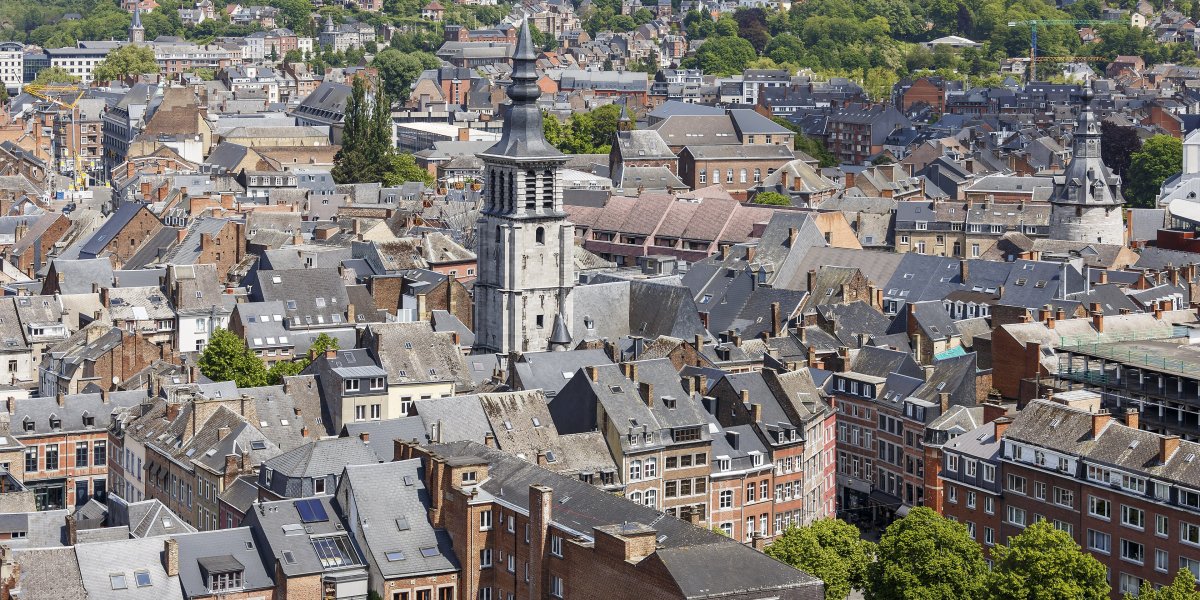
From Namur station, walk south on Avenue de la Gare for 8 minutes — the bone-white dome rises between rooftops just before Place Saint-Aubain opens up. This is Belgium's only Italianate domed cathedral (1751-1772), designed by the Milanese architect Pisani — a freak of late-baroque grace dropped into a sober Walloon stone town. The morning sun comes from the east and hits the façade head-on, lifting every cornice and pilaster into sharp relief.
Tip: Step inside for two minutes — the heart of Don John of Austria, the Habsburg general who commanded at Lepanto, is interred in the pillar to the right of the altar with only a small Latin plaque. Almost nobody notices. The weekend market sets up on the square after 09:30, so arrive earlier for a clean photo of the façade.
Open in Google Maps →10:00
Neighborhood
Exit the cathedral, cross the square diagonally, and slip down rue du Collège — Saint-Loup is two minutes away, its dark stone façade tucked between ordinary houses like a secret. Inside (if it's afternoon), columns of red, pink, and black marble create a space Baudelaire called 'terrifying and delicious' after a fever-vision visit in 1864. From there, weave north up rue du Collège to rue de Fer, then west through Place d'Armes to the Tour Saint-Jacques belfry — the only UNESCO-listed belfry in Wallonia.
Tip: Saint-Loup's interior is only open weekdays 14:00-17:00 — at this hour the door is shut, but stand in the entry passage and look up: the marble vault is visible through the inner grille. On rue Saint-Loup, the guildhouse stone carvings from the 1650s survive at eye level on the third building from the corner — local kids walk past them daily without seeing them.
Open in Google Maps →12:30
Food
From the belfry, walk one block south down rue des Brasseurs — Place Maurice Servais opens up after 3 minutes, with François' striped awning on the west side. A working brasserie since the 1930s, the kind of place city-hall clerks and lawyers still claim a window booth at noon. Order the boulettes à la liégeoise (15€) — meatballs in dark sirop de Liège sauce, the unofficial dish of Wallonia — or the lighter vol-au-vent (17€) if you've got a climb ahead. A Brasserie de Namur draught (4€) closes the loop. Budget 18-22€.
Tip: Arrive 12:15 to grab a terrace seat — the square fills by 12:45 and the inside room is darker. Skip dessert; you'll regret the carbs on the Route Merveilleuse switchbacks in 45 minutes. Ask for the espresso 'serré' (short pull) to wake yourself up before the climb.
Open in Google Maps →13:45
Landmark
Walk south from Place Maurice Servais down rue des Brasseurs, cross Pont du Musée over the Sambre, and Le Grognon — the rocky spur where the Sambre meets the Meuse — sits dead ahead. The Route Merveilleuse switchbacks up from there; allow 20 minutes to the first rampart, then another hour to roam the Esplanade and the Donjon viewpoint. One of Europe's largest fortresses (80 hectares), continuously rebuilt by Spanish, Dutch, Austrian and French engineers across four centuries. Afternoon light comes from the southwest, painting the two rivers in different shades of grey-green.
Tip: Skip the paid Terra Nova interior — the ramparts and panoramic walks are free and infinitely better. The free public elevator at rue Notre-Dame goes both ways, but only use it for the descent; climbing the Route Merveilleuse on foot is half the experience — every switchback widens the view of the rooftops below. The only drinking fountain is at the Esplanade; the café there charges 4€ for water, so bring a half-liter from town.
Open in Google Maps →17:00
Landmark
Descend from the Esplanade via the eastern footpath through Parc Reine Fabiola — 15 minutes of zigzag under old chestnut trees brings you down to the Meuse quay, with the five arches of Pont de Jambes a few hundred meters north. The bridge (medieval foundations, rebuilt 1955 after WWII damage) is where Namur reveals its postcard self: Citadel cliff on the left, cathedral and belfry on the right, slow river barges sliding underneath. Late afternoon turns the limestone cliff gold against the slate roofs.
Tip: For the canonical photo, stand at the third pier of Pont de Jambes counting from the old-town side — that's the exact spot where the cathedral dome and the Citadel ramparts align in a single frame. Locals jog the riverside path at this hour, so the bridge is busy; the benches on the Jambes bank, just past the bridge, are emptier and shaded by plane trees.
Open in Google Maps →19:30
Food
From Le Grognon, walk north on rue des Brasseurs for 6 minutes — Place Saint-Aubain reopens and Henry's red awning sits directly below the cathedral dome you photographed at sunrise. Open since 1923, this is the brasserie generations of Namurois have come to for promotions, retirements and political arguments. Brass, mirrors, white tablecloths, unembarrassed Belgian cooking: stoofvlees à la Leffe (24€), filet de bar with sauce mousseline (29€), the cheese soufflé that has been on the menu since the 1970s (26€). Pair with a Bertinchamps Hiver draught from a Namur farm brewery.
Tip: Book the 19:30 slot 24 hours ahead on their site — walk-ins after 20:00 wait 30+ minutes. Request a front-window table: the cathedral floodlights come on at 21:00 and the view through the glass is a postcard you didn't expect. Two Namur traps to avoid: (a) the cluster of restaurants directly under Pont de Jambes on the Jambes side runs 'tourist menus' at 30% markup for visibly worse food — locals never eat there; (b) parking 'attendants' at the Citadel sometimes suggest a 5€ tip — it isn't required, you've already paid the meter.
Open in Google Maps →Aller au jour
09:30
Landmark
The Citadel of Namur sprawls across the rocky promontory where the Sambre meets the Meuse — four kilometres of ramparts and one of Europe's largest fortresses, layered with a thousand years of Vauban and Habsburg engineering. Walk the western ramparts first for the rivers laid out below, then duck into Terra Nova for the 30-minute orientation film that decodes the maze of walls. Morning is essential: by noon the sun moves behind the citadel and the city below loses all its detail.
Tip: Walk up via the Mediaeval Route footpath next to Place du Grognon (25 minutes, free) instead of riding the cable car — the climb gives you the slow-reveal city view that everyone else only photographs from the top. The cable car lines back up by 11:00 anyway; save the ride for the descent at the end of your visit.
Open in Google Maps →12:00
Landmark
Exit Terra Nova and follow the cobbled Route Merveilleuse 400m east along the ramparts — to your left, Jambes and the Meuse Valley open up below the wall. Guy Delforge's atelier hides inside the citadel's 17th-century military cellars, the only artisanal perfume house in Belgium still composing scents by hand from natural extracts. The 45-minute vaulted-cellar tour lets you blind-smell the raw materials before the perfumer composes — it's genuinely educational, not a sales pitch.
Tip: Book the 12:00 tour through their website the night before — walk-ins are turned away once tour groups arrive. The 'Eau Boréale' is the perfumer's signature and isn't sold outside this cellar; the 30ml travel size (38€) is the smart buy rather than committing to the full bottle.
Open in Google Maps →13:15
Food
Take the cable car down from Place Reine Fabiola to Grognon (5 minutes), then walk 4 minutes west along Rue des Brasseurs — the Sambre runs at your shoulder with the citadel rising behind you. Le Temps des Cerises is a 30-seat bistro tucked behind the old fish market, where a husband-wife duo serve Walloon classics on white linen without any pretension. The Meuse trout comes whole with brown butter and capers; the Blanche de Namur in their fridge is the local wheat beer.
Tip: Order the trout meunière with Meuse capers (24€) and a glass of Blanche de Namur (4€). Skip à la carte at lunch — the 22€ midi formule with a starter, main and coffee is the same kitchen at two-thirds the price. Arrive 13:00 sharp; by 13:30 you'll wait for a table.
Open in Google Maps →14:45
Museum
Step out of Le Temps des Cerises and walk 3 minutes down Rue Fumal — a quiet cobbled lane ending at the courtyard of an 18th-century townhouse. The Félicien Rops Museum holds the largest collection of the Namur-born Belgian Symbolist who scandalized 1880s Paris with his erotic and macabre etchings; the 'Pornocrates' (a blindfolded woman led on a leash by a pig) is the icon. Give it 90 minutes — the upstairs galleries trace his evolution from political caricaturist to dark mystic, and they are what makes the visit.
Tip: Buy your ticket online to skip the small queue, then ask at reception for the bilingual audio guide (free, passport deposit) — the 'Pornocrates' and 'La Tentation de Saint Antoine' rooms make no sense without it. Closed Tuesdays. The museum bookshop has the only authoritative English Rops monograph in the city.
Open in Google Maps →16:30
Religious
From the Rops Museum, walk 2 minutes down Rue du Collège, past the old Jesuit college façade on your right. Saint-Loup is a Baroque jewel-box of black, pink, and red marble columns under a sandstone vault carved with cherubs and sunbursts — Baudelaire called it 'sinister and gallant.' It is small, but you must come at the close of afternoon, when the west windows turn the dark marble briefly molten.
Tip: Slip 2€ into the donation box near the entrance — it triggers the upper-vault lights for five minutes, and the carved sandstone above the nave is what you actually came to see. Photographs without flash from the side aisle (not from the central nave) give the cleanest angle on the marble columns against the pale vault.
Open in Google Maps →19:30
Food
From Saint-Loup, 4 minutes south to Place Maurice Servais and the citadel cable car — the last ascent for diners runs at 19:30 in summer. L'Espièglerie sits inside Château de Namur, the 1930s hotel on the citadel hill, with a western terrace looking down over the river confluence — the city's most cinematic dinner view. The kitchen does refined Walloon: Ardennes pigeon (38€), Meuse trout (32€), and a five-course tasting (75€) that closes the day with the appropriate grandeur.
Tip: Reserve a terrace table at 19:45 specifically — the maître d' won't volunteer the view side unless you ask, and sunset over the confluence lasts only about 25 minutes. PITFALL WARNING for the citadel area: ignore the 'panoramic' kiosk cafés near the cable car upper station charging 8€ for an espresso with a sliver of view — the real panorama is either through dinner here or from the free public Donjon terrace 300m east, where you can sit on the wall.
Open in Google Maps →09:30
Religious
The Cathedral of Saint-Aubain is Belgium's only proper late-Baroque Italianate cathedral, a salmon-pink rotunda completed in 1772 with a soaring oval dome modeled on the Roman churches Pope Benedict XIV admired. Enter at the south door on Rue du Collège — the main façade is often still locked at 09:30 in shoulder season but the side aisle opens earlier. The relics of Saint Aubain rest in the crypt below the high altar; the heart of Don John of Austria, the hero of Lepanto, is buried here too.
Tip: Stand in the south transept around 10:00 — the morning sun comes through the high oval drum windows and pools on the marble floor in a way no afternoon visitor sees. The Diocesan Museum next door (4€, separate entrance on Place du Chapitre) holds Treasure pieces the cathedral itself can't display safely.
Open in Google Maps →10:45
Landmark
From the cathedral's north door, head up Rue de l'Ange and turn into Rue du Beffroi — a 5-minute walk through the city's main pedestrian artery, lined with chocolatiers and bookshops. The Belfry of Namur (Tour Saint-Jacques) is a stout 14th-century watchtower turned 18th-century belfry, UNESCO-listed alongside Belgium's other belfries; you'll see it from outside since the interior opens only by guided tour. Then wander Place d'Armes and the medieval Halle al'Chair behind it — the morning sun catches the gabled houses on the square's north side.
Tip: The Hôtel de Croïx (Rue Saint-Jean 8, 80m from the belfry) is a free hidden townhouse-museum almost no tourist enters — 18th-century rooms with the original Louis XVI paneling. The Belfry's best photo angle is the northeast corner of Place d'Armes looking back, not from directly below the tower where you can't fit it in frame.
Open in Google Maps →12:30
Food
Loop back south down Rue de l'Ange to Place Saint-Aubain (4 minutes) — the cathedral's pink façade comes back into view as you turn the corner. Brasserie François is the Namur classic on the square: red awnings outside, brass-and-mirror interior, white-aproned waiters who have been here for decades. The 'boulets sauce lapin' (Walloon meatballs in dark beer-and-prune sauce, 22€) is the must-order; the tomate-crevettes (tomato stuffed with cold North Sea grey shrimps, 17€) is the proper warm-weather starter.
Tip: Sit at a window table on the Place Saint-Aubain side — not the inner brasserie room. The cathedral light through the windows is the photo, and the square's lunchtime bustle outside is the better theatre. Order a Blanche de Namur on tap (5€), not the bottled imports the tourist tables drift toward.
Open in Google Maps →14:15
Museum
From Brasserie François, walk 6 minutes north along Rue de Fer — the city's main shopping street, with Art Nouveau ironwork above the doorways. TreM.a (Musée des Arts anciens du Namurois) is a small museum hiding the most important medieval treasure in Belgium: the works of Hugo d'Oignies, the 13th-century goldsmith whose chalices, book covers, and reliquaries are UNESCO Memory of the World pieces. The filigree and his tiny enameled hunting scenes will stop you in your tracks.
Tip: Walk past the regional ceramics on the ground floor and head straight upstairs to the Treasure room — that's the actual reason this museum exists. Ask at reception for the magnifying glasses on loan; without them you'll miss half the engraving on the Phylactery cross. The afternoon attendant speaks excellent English and will open the side cabinets on request.
Open in Google Maps →16:15
Neighborhood
From TreM.a, head south down Rue de Fer and Rue Saint-Jacques — an 8-minute walk through the medieval grid that drops you back at Place du Grognon, the spit of land where the Sambre and Meuse actually meet. Climb the small viewpoint terrace for the postcard angle on the citadel face, then walk 200m east to cross L'Enjambée, the curved 2020 cycle-and-pedestrian footbridge over the Meuse. Late afternoon light hits the citadel face from the west — this is the hour you take the photograph.
Tip: Cross L'Enjambée at 17:30 in summer (16:30 in winter) — that's when the low sun lights the citadel's full face. Most visitors photograph from Pont de Jambes 300m downstream; the Enjambée sits 200m upstream of the confluence and gives a sharper angle with no traffic noise behind you. Walk the curve slowly — the bridge sways gently and the locals time their crossings to feel it.
Open in Google Maps →19:30
Food
Walk back west from L'Enjambée across the Grognon, 6 minutes through Place du Théâtre into the old town — the lamplight on the cobblestones is the evening's quiet payoff. La Petite Fugue is the Namurois's reservation-only bistro on the small Place Chanoine Descamps: ten tables, candlelit, run by a chef who trained in the Ardennes. The rabbit braised in Blanche de Namur with prunes and the venison carpaccio are the signatures; expect a slow, three-hour dinner with a serious natural-wine list.
Tip: Book at least two days ahead, especially Friday or Saturday — they seat one full turnover a night. Ask for table 4 or 5 (window onto the small square) and order the rabbit in Blanche de Namur; they only make eight portions. PITFALL WARNING for the old town: the chocolate shops on Rue de l'Ange charging 60€/kg are mostly resellers — proper Belgian artisans like Galler and Defroidmont sell at half that price 200m further down Rue de Fer at the real boutiques.
Open in Google Maps →
Trip builder
Plan this trip around Namur
Turn this guide into a bookable rail itinerary with FlipEarth.
Keep exploring
Related cities
More in the same country
FAQ
Frequently asked questions
How many days do you need in Namur?
Most travelers enjoy Namur in 1 days, with enough time for headline sights and a slower meal or museum stop.
What's the best time to visit Namur?
The easiest season for most travelers is May-Sep, especially if you want good weather and manageable crowds.
What's the daily budget for Namur?
A practical starting point is about €110 per person per day before hotels, then adjust based on museums, dining, and transport.
What are the must-see attractions in Namur?
A good first shortlist for Namur includes Citadelle de Namur via Route Merveilleuse, Pont de Jambes & Meuse Confluence.