City Guide
Mystras
Grèce · Best time to visit: Apr-Jun, Sep-Oct.
Day-by-day plan
Choose your pace
Durée du voyage
08:30
Landmark
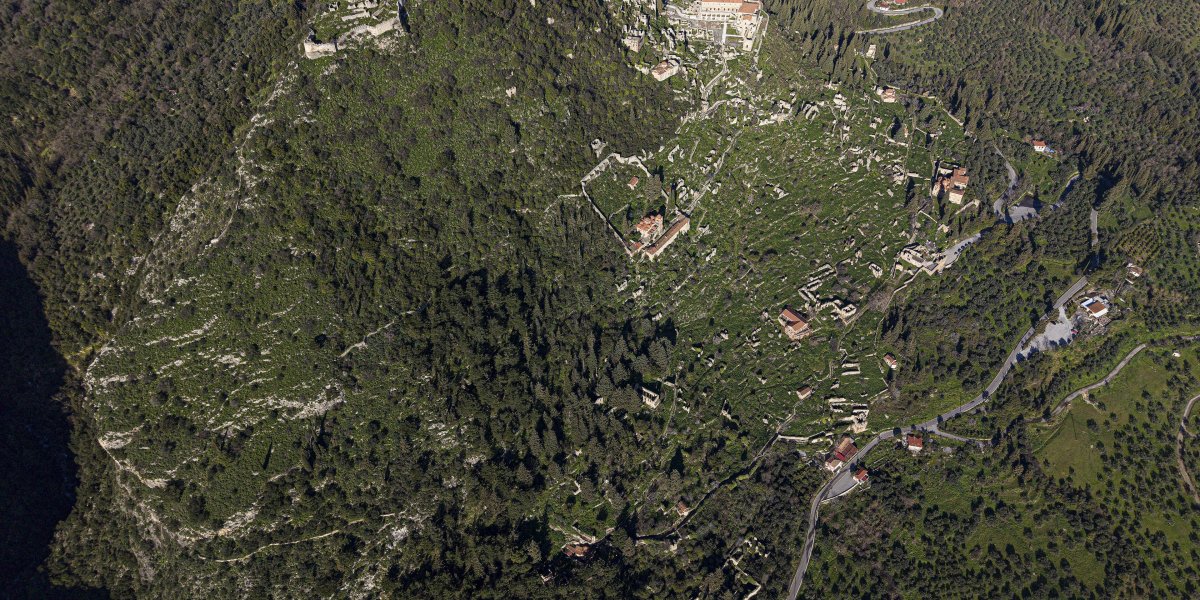
From the taxi drop-off at the Upper Entrance (Άνω Είσοδος), the gate creaks open at 08:30 sharp — fifteen minutes of stone-paved switchbacks through pine and wild oregano bring you to the keep at 620 m, the highest point of the entire site. Built in 1249 by the Frankish prince Guillaume de Villehardouin before the Byzantines took it back in 1262, this castle is where Mystras began. From the eastern rampart the whole ruined city falls away in layers below you down to the Spartan plain, with Mt. Taygetos snow-streaked behind. The wind up here smells of thyme and stone — there is nothing else.
Tip: Start at the Upper Entrance, not the Lower — your single €12 ticket works for both, and from up here you walk DOWNHILL through the entire site instead of climbing it. The 10:30 coach groups all start at the bottom; you will have the castle to yourself for the first ninety minutes. Stand on the eastern rampart at 08:55 for raking morning light across the ruins below.
Open in Google Maps →10:30
Landmark
Descend the way you climbed, then bear right at the marked junction following 'Άνω Χώρα' — twenty minutes weaving down through the Upper Town, past the shattered shell of Agia Sofia (the Despots' private chapel) where you can pause for a window-frame photo of Mt. Taygetos. The palace itself is the only surviving secular Byzantine palace in all of Greece, an L-shaped four-story complex of brick-and-stone bifora windows straight from a Byzantine illuminated manuscript. Fully reopened in 2018 after a fifteen-year restoration. This is where the last Byzantine emperor, Constantine XI Palaiologos, was crowned in 1449 before riding north to die at the walls of Constantinople four years later.
Tip: Shoot the long north wing from the far edge of the empty plateia in front — late morning light hits the façade head-on with no shadow, and the four stories stack against the mountain in a single clean silhouette. Skip the restored interior halls; they are empty of furniture and frescoes, and the magic of this building is entirely in its exterior profile.
Open in Google Maps →12:00
Religious
From the palace take the cobbled lane sloping southeast — ten minutes past the broken house of the Despoina and through a small grove of olives. You will smell incense before you see the gate. Pantanassa has been continuously inhabited by Orthodox nuns since 1428, the only building in Mystras that never went silent. The Late Byzantine church fuses a Greek-cross plan with a Gothic bell tower — the last masterpiece of an empire that knew it was ending. At the gate a black-robed sister will press a square of homemade loukoumi and a thimble of rose water into your hand.
Tip: You MUST be here before 13:30 — the nuns close the gates for siesta from 13:30 to 17:00 (in winter 14:00 to 15:30). Cover shoulders and knees; the basket of wrap-skirts at the door runs out by noon. Drop a euro in the candle box and one of the sisters will smile — that is the closest you will get to 1453.
Open in Google Maps →13:00
Food
Continue downhill past the Perivleptos turn-off to the Lower (Main) Gate — fifteen minutes through fig trees and the broken garden walls of vanished houses. From the lower car park, follow the tarmac road eight hundred meters down to Neos Mystras village square; the taverna sits on the left under a single huge plane tree. Checked oilcloth, plastic chairs, the matriarch barking orders into the kitchen. The chorta (wild boiled greens dressed only with lemon and Laconian olive oil, €5) and the pork souvlaki wrapped in grilled pita with tzatziki (€4) hit the table in ten minutes flat. A small carafe of village rosé costs €4.
Tip: Order the chorta — the wild greens were gathered on the slopes you just walked, and it is the dish locals actually eat while tourists order moussaka. Skip the moussaka at lunch; it is reheated from a tray. Save the slow Greek classics for tonight.
Open in Google Maps →15:30
Religious
Walk back up the tarmac road to the Lower Gate (fifteen minutes, gentle uphill), re-enter on your morning ticket, and take the eastern path along the cliff edge — ten minutes through a corridor of cypresses. The monastery appears as if carved directly out of the rock face: half cave, half church, the dome perched against the cliff like a swallow's nest. Inside, the 14th-century frescoes survive almost intact, and the Dormition of the Virgin on the western wall is widely held to be the single greatest fresco of the Late Byzantine world. By mid-afternoon the whole gorge has fallen into deep shade — a gift after the unshaded morning climb.
Tip: Step out to the small rock platform twenty meters southeast of the gate and shoot the dome from below — the afternoon sun is behind the cliff now, silhouetting the cross against the rock face in clean black on gold. The 'best fresco photo angle' signs taped near the inner door were put up by a postcard vendor; ignore them. The exterior shot is the iconic one anyway.
Open in Google Maps →19:30
Food
Exit the Lower Gate at last light (last entry 19:30 in summer; confirm at the ticket booth this morning) and stroll the kilometer back down to Neos Mystras village. Chromata sits on a stone terrace facing the slope you just descended, and the moment the site floodlights flick on the ruined city above you glows amber against the dark mountain. The kitchen does modern Laconian — start with saganaki cheese flamed in mastic liqueur (€9), follow with slow-roasted lamb kleftiko sealed in parchment paper with potatoes that drank the lamb's juices (€19), finish with an orange spoon-sweet over thick Greek yogurt and local thyme honey (€5). A glass of Nemea Agiorgitiko red, €6.
Tip: Reserve the night before — there are only six terrace tables and all six face the floodlit ruins. Arrive at 19:30 to catch the exact moment the floodlights snap on (sunset + 20 minutes in summer). Order the lamb kleftiko by 19:45; it needs forty-five minutes in the parchment. The local trap to avoid: taxi drivers from Sparta routinely quote day-trippers €25–€30 one-way to Mystras — the real metered fare is €12–€15. Insist on 'taxímetro, parakaló' (meter, please) before you sit down, and the price drops by half. The same goes for the souvenir kiosks by the lower gate selling 'hand-painted Byzantine icons' — every one is a factory print from outside Greece. If you want a real keepsake, buy a small bottle of olive oil from the village kafeneio across from Chromata; it was pressed in November from the trees on the Mystras slope.
Open in Google Maps →
Trip builder
Plan this trip around Mystras
Turn this guide into a bookable rail itinerary with FlipEarth.
Keep exploring
Related cities
More in the same country
FAQ
Frequently asked questions
How many days do you need in Mystras?
Most travelers enjoy Mystras in 1 days, with enough time for headline sights and a slower meal or museum stop.
What's the best time to visit Mystras?
The easiest season for most travelers is Apr-Jun, Sep-Oct, especially if you want good weather and manageable crowds.
What's the daily budget for Mystras?
A practical starting point is about €120 per person per day before hotels, then adjust based on museums, dining, and transport.
What are the must-see attractions in Mystras?
A good first shortlist for Mystras includes Kastro of Mystras (Frankish Castle), Palace of the Despots (Anaktoro ton Despoton).