City Guide
Lausanne
Suisse · Best time to visit: May-Sep.
Day-by-day plan
Choose your pace
Durée du voyage
09:00
Religious
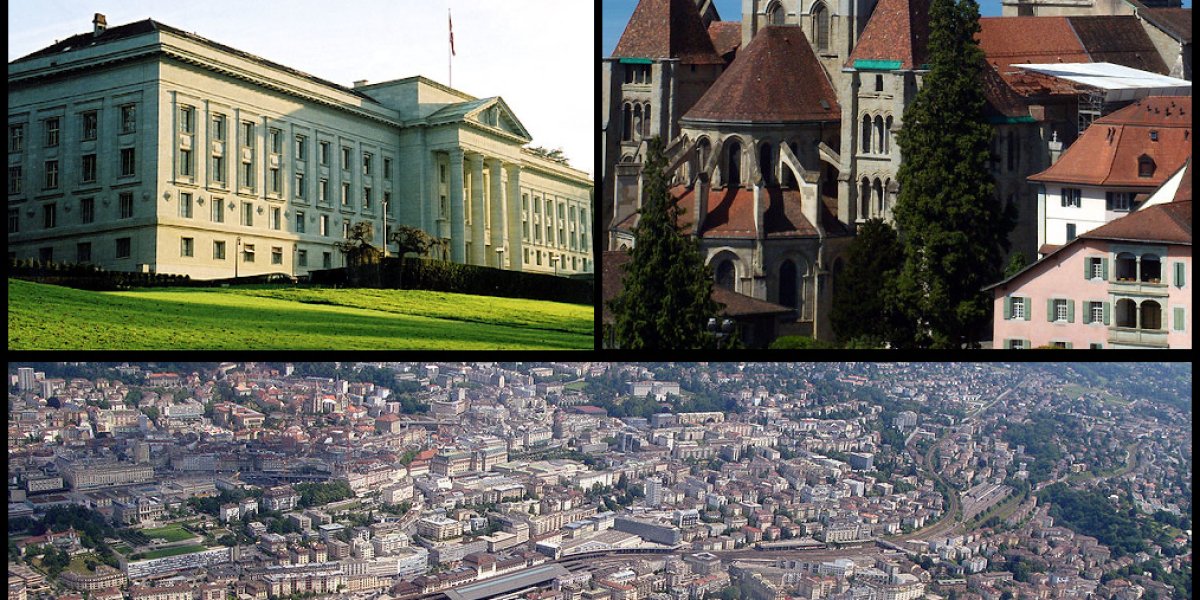
Start the day where Lausanne literally starts — on its highest stone. Switzerland's finest Gothic cathedral has stood here since 1275, its great rose window cut from glass that has watched Calvin, Voltaire and Byron walk underneath it. Step inside the moment the doors open at 09:00: for the first half hour you have the nave to yourself, and the eastern sun threads through the stained glass to lay coloured lozenges across the stone floor. Climb the 153-step bell tower before the first cruise group arrives — from the top the whole city tumbles toward the lake, with the French Alps across the water, and this single view becomes the map you'll walk for the rest of the day.
Tip: Go up the bell tower before 10:00 — the staircase is single-file and clogs the moment a tour group arrives. The South Rose Window (13th c., one of Europe's finest) is best read from the southern transept around 09:30, when the sun strikes it head-on; from any other spot the colours go flat.
Open in Google Maps →11:00
Neighborhood
Exit the cathedral square and turn left down cobbled Rue Cité-Devant; in 200 metres you reach the top of a covered wooden staircase that has joined upper town to lower town since 1719, its dark roof beams smelling of three centuries of rain. Descend slowly — the steps spit you out into Place de la Palud, the medieval heart, framed by the painted Hôtel de Ville and the Fountain of Justice with her blindfold and her sword. Time your arrival for the top of the hour: an animated clock on the eastern wall sends wooden figures — a count, a knight, four cantonal bears — parading past in a two-minute ritual that catches every first-time visitor by surprise.
Tip: Don't stand at the front gaping up at the clock — you'll wreck your neck and miss the mechanism. Sit on the broad stone steps of the Hôtel de Ville directly opposite; that's the bench locals take, and you see the figures cleanly from the side as they cycle past.
Open in Google Maps →12:15
Food
Cross Place de la Palud, walk thirty seconds north up Rue de la Madeleine, and turn onto Rue des Terreaux — this is the original Holy Cow!, founded in Lausanne in 2009 and Switzerland's homegrown answer to the gourmet burger. The 'William Tell' (19 CHF) carries Gruyère AOP aged twelve months, caramelised Vaud onions and bread baked the same morning two streets away; the rosemary frites (5 CHF) were designed specifically to cut the cheese's richness. Order at the counter, take a window stool with a Feldschlösschen draught, and you're back on the road in forty minutes — exactly the time the lake side of the day needs.
Tip: Be in the queue by 12:15 — Lausanne office workers descend in force at 12:45 and you'll otherwise lose twenty minutes. Skip the standard cheddar build; the William Tell is the only burger here that uses the local Gruyère and is the one dish that justifies eating at a chain on a Lausanne day trip.
Open in Google Maps →13:30
Park
Walk south down Rue du Grand-Chêne, drop into Flon, and from there the M2 metro carries you to Ouchy-Olympique in four minutes (3.70 CHF) — or take the full 25-minute downhill walk through Avenue d'Ouchy if the legs are still fresh. You enter the Olympic Museum's terraced sculpture garden from above and step down through three levels of bronze athletes mid-leap, Olympic torches from every Games since Helsinki 1952, and the eternal flame burning since 1993. The museum interior is for another visit; today the gardens, the lake and the Alps do all the work, and the museum's lakeside café terrace is the perfect mid-afternoon pause.
Tip: The single best photograph in Lausanne is from the top terrace looking south-west: a bronze sprinter in the foreground, the five Olympic rings mid-frame, Lake Geneva and the snow-capped Dents du Midi behind. Ninety percent of visitors stop at the rings — climb thirty more steps up the staircase to find the elevated angle that layers all three planes at once.
Open in Google Maps →16:00
Park
Exit the Olympic Park through its south gate, cross Quai d'Ouchy, and you are at the water. Turn west: the paved promenade runs three flat kilometres through palms, roses and rowing-club piers all the way to Vidy beach, where Lausanne locals paddleboard after work and Mont Blanc shows itself on clear afternoons. Walk to Vidy and back, then cut east past the Château d'Ouchy to Place de la Navigation — the whole stretch faces south across Lake Geneva to Évian and the French Alps, and it is the only direction in Lausanne where the sun sets over open water. Time the return so you reach the Château d'Ouchy around 18:30, when western light gilds the far shore and the lake turns mercury.
Tip: On the lakeshore opposite Hôtel d'Angleterre a small bronze plaque marks the spot where Lord Byron, weather-trapped in 1816, wrote 'The Prisoner of Chillon' over three rainy days. It's easy to walk past — slow down between the hotel entrance and the boat dock and look down at the kerb stones.
Open in Google Maps →19:30
Food
From Place de la Navigation it's a two-minute walk inland to the corner of Place du Port — Café du Vieil Ouchy has held this spot since 1928 with red shutters, a wood-panelled dining room and a terrace that faces the marina without facing the tourist crush. Order filets de perche meunière (32 CHF), small fillets of Lake Geneva perch browned in butter and lemon, with frites and a 1dl glass of Chasselas from the Lavaux terraces ten kilometres east. This is the dish that defines Lac Léman cooking, and after a day of walking down a mountain you'll understand exactly why locals come back here week after week for it.
Tip: Avoid every restaurant on the immediate waterfront of Quai d'Ouchy — they charge a 20–30% surcharge for the same Léman perch and the fillets arrive reheated, not pan-finished. Phone Vieil Ouchy that morning to reserve the terrace for 19:30; by 20:30 in summer every seat is taken and walk-ins are turned away by 20:00.
Open in Google Maps →Aller au jour
09:00
Religious
Arrive at the cathedral doors right at 09:00, when the soaring Gothic nave is still almost empty and tour groups haven't yet rolled in for the 10:00 wave. Climb the 232-step bell tower the moment it opens at 10:00 — from the top, the red-tiled rooftops of the old town tumble down to Lake Geneva with the Savoy Alps floating on the far shore. This is the only cathedral in Europe that still keeps its medieval night-watchman tradition: every hour from 22:00 to 02:00, the guard calls the time from this tower.
Tip: The tower opens at 10:00 sharp — be at the south-transept door by 09:55 to be first up. Inside, sit in the south aisle between 09:30 and 10:30: that's when the morning sun pours through the famous 13th-century rose window and prints its colors on the stone floor.
Open in Google Maps →11:00
Neighborhood
Exit the cathedral's west door and descend the covered wooden Escaliers du Marché — a creaking 13th-century staircase that drops you straight into the medieval lower town in four minutes. Place de la Palud is the beating heart of old Lausanne, anchored by the Renaissance Justice Fountain and the painted-shutter Hôtel de Ville. On the wall of no.20 a small mechanical procession of historical figures slides out at the top of every hour — locals don't stop, but it's worth a pause.
Tip: Time your arrival to a sharp top-of-the-hour (11:00 or 12:00) — the animated clock procession runs only once an hour and lasts under a minute. On Saturday mornings the entire square fills with a flower and Vaudois cheese market before noon — the alpine raclette wedges at the back stall are real farmhouse, not supermarket.
Open in Google Maps →12:30
Food
From the southwest corner of Place de la Palud, follow Rue Saint-François 200m downhill to Place Saint-François. Café Romand has been serving Vaudois classics since 1951 in wood-panelled booths that haven't changed in decades. Order the papet vaudois (leek-and-potato stew with saucisson, 26 CHF) — the dish that defines this canton — or the malakoffs (deep-fried Gruyère fritters, 22 CHF for three), an Old Vaud specialty you'll find nowhere outside French-speaking Switzerland.
Tip: Ask for a 'banquette' — the original 1950s wooden alcove booths along the wall that locals book a week ahead. Arrive at 12:15 to beat the office crowd that floods in at 12:30. Budget 35-50 CHF per person with a glass of Chasselas from Lavaux.
Open in Google Maps →14:00
Museum
Head north along Rue Pichard for five minutes back toward Place de la Riponne — the Florentine-Neo-Renaissance façade of Rumine fills the entire east side of the square. Built in 1906 from a Russian aristocrat's bequest, the palace houses five free museums under one roof: archaeology, geology, zoology, numismatics, and a hand-illuminated medieval manuscript hall. Skim the geology gallery for the giant Lavaux fossils, then head upstairs to the cantonal manuscript hall for the real treasure.
Tip: Entry to all five museums is completely free, yet most tourists never step inside. The grand marble staircase under the central dome is one of the most photographed interior spots in Switzerland — shoot from the second-floor landing looking up for the perfect symmetry. Closed Mondays.
Open in Google Maps →16:00
Museum
Descend Rue Centrale into the Flon district (10-min walk), then continue south to the train station — Plateforme 10 is the long sandstone wedge directly behind it. Switzerland's newest cultural quarter, opened in 2022, gathers the MCBA fine-arts museum, Photo Elysée and Mudac design museum into a single former locomotive shed. The MCBA's permanent collection runs from Vallotton (Lausanne's own son) to Soutine and Ernst — by 16:00 the school groups are gone and you can have whole rooms to yourself.
Tip: Don't bother with the 25 CHF combined Plateforme 10 ticket for a 2-hour stop — the MCBA alone (15 CHF) is plenty. The third-floor roof terrace is free to enter even without a museum ticket and gives the widest possible angle on the Alps across the lake.
Open in Google Maps →19:30
Food
Climb back up through Flon to Rue de l'Ale (15-min uphill walk). Pinte Besson, opened in 1780, is the oldest pinte (wine tavern) in Lausanne — vaulted stone cellar, communal wooden tables, no piped music, no English menus on the wall. Order the moitié-moitié fondue (Gruyère + Vacherin Fribourgeois, 32 CHF) and a half-litre of Chasselas from a Lavaux producer (22 CHF). This is where Lausanne students have eaten fondue since their grandparents were students.
Tip: Avoid the half-dozen 'fondue restaurants' clustered along Escaliers du Marché and around the cathedral — they charge 45+ CHF for half the cheese and serve pre-frozen bread. Pinte Besson doesn't take reservations after 19:00; arrive at 19:00 sharp or expect a 30-min wait outside. Cash strongly preferred.
Open in Google Maps →09:00
Museum
Take the M2 metro from Lausanne-Gare to Ouchy-Olympique — four minutes downhill — and exit straight onto the lakefront. The museum opens at 09:00, and the first 90 minutes are when you'll have the Athens-to-Tokyo torch gallery and the gold-medal collection almost to yourself, before the cruise-ship coach tours arrive around 10:30. Start on the top floor (Olympic Spirit) and work down — the curators designed the route this way, but most visitors do it backwards and miss the emotional arc.
Tip: Book online the night before for a 1 CHF discount and a fast-track entry that skips the 20-minute queue that builds by 10:00. The level-2 terrace café has the best free Lake Geneva panorama in Ouchy — but don't eat there (28 CHF for a sandwich); save your appetite for the town.
Open in Google Maps →11:30
Park
Exit the museum's east gate and follow the lakefront promenade east for eight minutes — you'll pass swans, a sculpture garden and the old Tour Haldimand watchtower before the golden Thai Pavilion appears among the cedars. It was a 2009 gift from the King of Thailand commemorating 75 years of diplomatic ties — Thailand chose Lausanne because King Bhumibol grew up here as a child. Continue past it to the Tour Haldimand for the eastern view down the lake toward the Lavaux vineyards.
Tip: The pavilion's gilded roof is photographed best with morning light from the southeast (10:00-12:00) — by afternoon it falls into shadow. The park is free and almost empty of tourists; grab a coffee from the museum café and take the bench under the cedars facing the Alps.
Open in Google Maps →13:00
Food
Backtrack ten minutes west along the lakefront promenade to Place de la Navigation, the small square right at Ouchy harbor. Le Lacustre is the lakeside brasserie locals actually use — order the filets de perche meunière (Lake Geneva perch fillets in lemon butter, 38 CHF) caught that morning, paired with a glass of Aigle Chasselas. Take a table on the terrace facing the harbor, never inside.
Tip: Filets de perche from Lake Geneva are the must-order dish in Ouchy — but check the chalkboard for 'perches du lac' (real, local) versus 'perches d'élevage' (farmed, imported from Eastern Europe). At Le Lacustre they're always lake-caught in summer. Budget 50-60 CHF with wine.
Open in Google Maps →14:30
Entertainment
From Le Lacustre's terrace it's sixty seconds to the CGN embarcadère — board the early-afternoon paddle steamer (the 'Italie' or 'Vevey') for the Lavaux loop to Cully and back. These are genuine 1908 Belle Époque steamboats, restored and still steam-powered — the brass engine room is open to passengers, and you can stand over the railing and watch the pistons turning. The route hugs the UNESCO Lavaux vineyard terraces, the only angle from which their stacked stone walls reveal their full scale.
Tip: Pay the 15 CHF supplement for first class — you get the open upper deck at the bow with no railing in your photo of the prow cutting through the lake. Sit on the starboard (right) side for vineyard views in both directions: the sun is southeast on the way out, southwest on the way back.
Open in Google Maps →16:30
Landmark
Step off the boat — the Château d'Ouchy stands 100m away, a neo-medieval keep that's actually a hotel today but whose 12th-century watchtower still squares off against the lake. Circle the square between the château and Place de la Navigation, then walk west along Quai de Belgique past the rose gardens for the long view back toward Évian on the French shore. The late-afternoon light turns the Savoy Alps the soft pink locals call 'l'heure rose.'
Tip: The Beau-Rivage Palace terrace looks like the obvious sunset photo spot, but the cleaner angle is from the small public jetty next to the CGN ticket office — wider Alps view and no service charge to sit there as long as you like.
Open in Google Maps →19:30
Food
Walk three minutes inland from the harbor to Place du Port. Café du Vieil-Ouchy is the family-run pinte that has fed Ouchy fishermen and dock workers for over a century — no lake view, but the best moitié-moitié fondue (34 CHF) and rösti maison (28 CHF) in the lower town. The vaulted cellar dining room with its blackened wooden beams is the room you want, not the street-side bar.
Tip: Avoid every lakefront restaurant on Quai d'Ouchy with a multilingual 'Tourist Menu' board out front — they all charge 55 CHF for the same farmed perch that Café du Vieil-Ouchy serves fresh for 32. Reserve for 19:30 by phone the day before, or walk in at 19:00 sharp. Closed Sundays.
Open in Google Maps →
Trip builder
Plan this trip around Lausanne
Turn this guide into a bookable rail itinerary with FlipEarth.
Keep exploring
Related cities
More in the same country
FAQ
Frequently asked questions
How many days do you need in Lausanne?
Most travelers enjoy Lausanne in 1 days, with enough time for headline sights and a slower meal or museum stop.
What's the best time to visit Lausanne?
The easiest season for most travelers is May-Sep, especially if you want good weather and manageable crowds.
What's the daily budget for Lausanne?
A practical starting point is about €110 per person per day before hotels, then adjust based on museums, dining, and transport.
What are the must-see attractions in Lausanne?
A good first shortlist for Lausanne includes Cathedral of Notre-Dame of Lausanne, Escaliers du Marché & Place de la Palud, Holy Cow! Gourmet Burger (Terreaux).