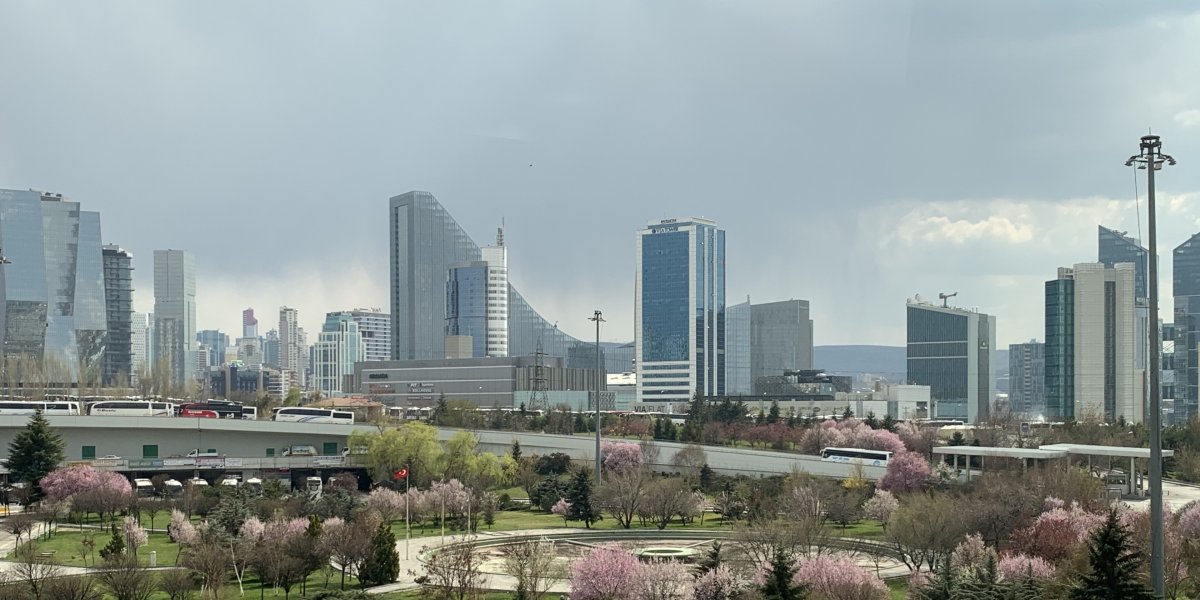
City Guide
Ankara
Turquie · Best time to visit: Apr-Oct.
Day-by-day plan
Choose your pace
Durée du voyage
09:00
Landmark
Arrive at 09:00 sharp as the gates open — before the coach-loads of school groups roll in. Walk the full 262-meter Lion Road lined with 24 Hittite-inspired stone lions; the long approach was deliberately designed so the limestone mausoleum unveils itself slowly as you climb. The ceremonial plaza could hold 15,000 mourners, and at this hour it feels like your private cathedral to the founder of modern Turkey.
Tip: Be at the columned Hall of Honor at 09:55 to film the on-the-hour changing of the guard head-on — the rifle drills are silent and white-gloved, and the morning light hits the colonnade from behind you. Walk the Lion Road twice (once arriving, once departing) to feel both halves of the architects' choreography; skip the basement War of Independence Museum since you have no time for interiors anywhere today.
Open in Google Maps →11:30
Religious
Exit Anıtkabir's east gate and walk southeast through the quiet Maltepe streets for about 25 minutes — the dome appears between apartment blocks long before you arrive. Kocatepe is the largest mosque in Turkey, a 1987 building drawn in pure 16th-century Ottoman style with four 88-meter minarets that anchor the entire modern skyline. Circle the courtyard — no interior needed — and shoot the silhouette from the front steps where the elevation makes it loom against the open sky.
Tip: Stand at the southwest corner of the marble courtyard for the cleanest portrait angle — the central dome and all four minarets line up against open sky with no apartment blocks in frame. Avoid Friday 12:30–14:00 when Jumu'ah prayer fills the complex and tourists are politely turned away from the steps.
Open in Google Maps →12:45
Food
Walk north from Kocatepe through Kızılay's pedestrian streets for about 15 minutes — this is where modern Ankara works, eats, and protests. Aspava has been an Ankara institution since the 1950s; the döner is sliced from a man-sized lamb spit, and the dish to order is the İskender — thin döner over crisp bread, drowned in tomato butter and cold yogurt (~180 TRY / 6 EUR). Add an ayran and a plate of pickled chilies. Total ~8 EUR.
Tip: Skip the table queue by ordering at the counter — say "İskender ve ayran" and the waiter waves you to any free seat. The pickled chili plate (turşu biber) is free and the most important table item; ask "acı biber, lütfen" for the hot green ones. Ignore any taxi driver who insists Aspava is closed and offers a "better place" — walk in the front yourself.
Open in Google Maps →13:45
Religious
From Aspava walk north along Atatürk Bulvarı for 15 minutes into Ulus, the old commercial heart of Ankara — the early Ottoman portico appears suddenly beside the Roman ruins. The 15th-century mosque of Hacı Bayram, founder of the Bayrami Sufi order, leans directly against the wall of the Temple of Augustus and Rome — a stone palimpsest where Roman emperor-worship, Byzantine church, and Sufi mosque inhabit the same footprint.
Tip: Walk to the east face of the temple to find the Monumentum Ancyranum — the most complete surviving copy of Augustus's autobiography, carved into the wall in Latin and Greek. It is arguably the single most important Roman inscription anywhere and most tourists pass it without looking up; afternoon light hits the carved face directly and makes the letters legible for photography.
Open in Google Maps →15:00
Landmark
From Hacı Bayram walk east up the cobbled bend of Hisarparkı Caddesi for 12 minutes — you'll pass the bronze portico of the Museum of Anatolian Civilizations (housed in a restored 15th-century Ottoman bedesten, worth circling for the exterior alone) and slip through the outer Hisar gate. Inside, the citadel is a working medieval neighborhood: narrow lanes of restored Ottoman wood houses, washing on the lines, cats on every wall. Climb to the Şark Kulesi (Eastern Tower) on the highest point for the panoramic view across Ankara's seven hills, timed for golden hour.
Tip: Take the outer northern wall to the Şark Kulesi and arrive about 30 minutes before sunset — the sun drops behind Anıtkabir, placing your morning highlight on the horizon and lighting the whole steppe copper-orange. The wall ledges have no railings; wear closed shoes and don't lean on the parapet stones (some are loose). Pitfall warning: never accept "free tea" invitations from the carpet shops on the inner citadel lane — it is a four-hour high-pressure sales pitch and prices run 3–5x what you'd pay at the Bakırcılar copper bazaar at the foot of the hill.
Open in Google Maps →19:00
Food
Walk two minutes down the lane from the Eastern Tower — Zenger Paşa is carved into the citadel wall itself, a 19th-century Ottoman mansion whose wooden balconies hang directly over the illuminated city below. This is where Turkish prime ministers bring foreign guests; the rooms are hung with sepia photographs and old Anatolian kilims. Order the gözleme rolled and griddled on the saç in front of you (~90 TRY / 3 EUR) and the mantı — tiny lamb dumplings drowned in garlic yogurt and red-pepper butter (~280 TRY / 9 EUR). Budget 25–35 EUR per person.
Tip: Reserve a day ahead and ask explicitly for an upper-floor window table — the view across the Hatip valley to the lit Kocatepe dome is the best dinner panorama in the city and ground-floor tables miss it entirely. Order the local Kavaklıdere Yakut red — it is grown on the same Anatolian plateau you see out the window. When leaving, refuse any "100 TRY flat" offer from taxis waiting at the citadel gate and insist on the meter ("taksimetre, lütfen") — the real fare back to Kızılay is a third of what they quote tourists.
Open in Google Maps →Aller au jour
09:00
Landmark
Take the Ankaray metro to Tandogan and walk 8 minutes up the cypress-lined Lion Road — the slow ceremonial approach is part of the design, with twenty-four basalt Hittite lions watching as you climb. Arriving right at opening means the vast travertine courtyard is still empty: you can stand alone before the Hall of Honor before the school buses flood in around 10:30. Don't skip the subterranean War of Independence Museum — Ataturk's personal library, his 1935 Lincoln, and the actual room where he died in Dolmabahce are reconstructed here.
Tip: Bring your passport — security checks ID at the gate. The honor guard rotates exactly on the hour; if you want clean photos of the sarcophagus chamber, slip in five minutes before the changing, watch from the side, then have the marble hall to yourself when the crowd follows the soldiers out.
Open in Google Maps →12:00
Food
From Anitkabir's east gate, the Maltepe metro is a 6-minute walk; ride two stops to Kizilay and surface into Ankara's busiest square. Kebabistan is two minutes from the exit — an old-school grill house where civil servants and university students share long communal tables under whirring exhaust fans. The Adana kebab arrives still smoking on a wooden board with grilled tomato, charred long pepper, and warm lavash; the lentil soup with a squeeze of lemon is the local pre-meal reflex.
Tip: Order the Adana acili (8 EUR) and the mercimek corbasi (2 EUR) — that is the canonical Ankara worker's lunch. They do not reserve and they do not need to; tables turn in 35 minutes. Skip the ayran from the bottle and ask for the foamy churned one in a copper cup.
Open in Google Maps →14:00
Religious
Walk south from the restaurant for 12 minutes up Mithatpasa Caddesi — the four pencil minarets pierce the skyline long before you reach the base. Completed in 1987, Kocatepe is the largest mosque in Turkey, deliberately built in classical Ottoman style as a modern echo of Sinan's masterpieces. Step inside in the lull after midday prayer: the floor is empty, the dome's gold script catches the high afternoon sun through stained glass, and the silence under that 48-meter ceiling is what you came for.
Tip: Enter through the women's door on the eastern flank — the queue at the main entrance is for visiting Gulf tourists and moves slowly. Cover scarves are provided free in a wooden box; ignore the men hawking them outside for 5 lira. Photography is allowed but no flash and no shots of people praying.
Open in Google Maps →15:30
Neighborhood
Walk south down tree-lined Tunali Hilmi Caddesi for 15 minutes — this is Ankara's elegant boulevard, all bookshops, vinyl stores, and the kind of patisserie where diplomats' wives meet at 4pm. Kugulu Park sits at the southern end: a small pond of white and black swans (the original 1958 pair was a gift from Cologne) framed by plane trees. The bench on the western edge under the willow is where Ankara students have been writing breakup poetry for fifty years.
Tip: Stop at Liva Pastanesi on Tunali Hilmi for a cup of hot salep (4 EUR) — the orchid-root drink dusted with cinnamon is an Ottoman winter classic that's served year-round here. The chestnut vendor at the park's south gate is the real one; the other carts near the metro charge tourists triple.
Open in Google Maps →17:30
Landmark
From Kugulu Park, walk south through the leafy Cankaya embassy quarter for 25 minutes — you'll pass the German and French ambassadors' residences and the gated lane up to the Presidential Cankaya Mansion. Atakule's 125-meter shaft rises at the end of Cinnah Caddesi; the observation deck faces west, and you want to be up there by 18:00 in summer (17:00 in winter) for the moment the sun drops behind Anitkabir's silhouette. From this height you finally read the city: a basin ringed by bare ochre hills, the citadel a dark crown to the north.
Tip: The ticket is 350 lira and includes one drink at the rotating cafe — order the Turkish coffee and let the floor make one slow revolution (40 minutes) so you see both sunset and the lights coming on. Avoid the shopping mall at the base; it's a tired 1990s relic and the food court is a tourist trap. Save your appetite for Trilye.
Open in Google Maps →19:30
Food
Walk 20 minutes north back up Cinnah toward Kavaklidere — Trilye sits on a quiet side street behind the Sheraton, a converted 1960s villa with a leafy courtyard. In a landlocked capital 400 km from any coast, Trilye has somehow been Ankara's most beloved seafood restaurant for thirty years; the fish arrives by morning truck from Izmir and Bodrum and is laid out raw on ice for you to choose. Ministers, ambassadors, and visiting CEOs all come here — the wood-paneled main room hums with the quiet confidence of regulars.
Tip: Reserve through their site at least a day ahead — walk-ins on weekends are turned away. Order the grilled levrek (sea bass, 28 EUR) and the octopus salad starter; skip the meze parade unless you're four people. A glass of Kavaklidere Cankaya white (this very neighborhood's namesake wine) is the local pairing.
Open in Google Maps →09:00
Museum
Take a 12-minute taxi up to Ulus and climb the cobbled lane to a restored 15th-century Ottoman bedesten — the covered market is the museum building itself, which is half the point. Inside, the chronological loop walks you from a 9000-year-old reconstructed Catalhoyuk house wall to the Hittite stone reliefs of Yazilikaya. The orthostat of the lion-headed god from Aslantepe and the bronze sun-disk standards from Alacahoyuk are the icons; arriving at opening means you have them alone for the first 40 minutes.
Tip: Buy the audio guide (3 EUR) — most labels are bilingual but skip the cultural context that makes the Hittite hall click. The famous Catalhoyuk "mother goddess" figurine is in a small case in the prehistoric room, often overlooked; she's the size of a fist, not a statue, and that's the point.
Open in Google Maps →11:30
Landmark
Exit the museum and walk uphill for 8 minutes through narrowing lanes — Roman column drums repurposed as Byzantine wall blocks, repurposed again as Seljuk corner stones, stick out of the citadel walls like archaeological striations. Enter through the Hisar Kapisi and climb the inner ramparts to the Sark Kulesi (eastern tower): this is the highest point in central Ankara and the view sweeps from Anitkabir's pale dome on the western horizon to the rust-red roofs of old Ulus directly below. Inside the walls, the ochre houses of Hamamonu-style restorations now hold tiny carpet ateliers and saffron shops.
Tip: The stairs up the eastern tower have no railing and are pure 9th-century Byzantine masonry — go slowly and don't do this in rain. The carpet shops inside the walls will offer you tea; accept it without obligation, but never let yourself be led into a back room — the actual handmade kilim shop worth visiting is Sengor at the citadel's main gate, with a printed price book.
Open in Google Maps →13:00
Food
Two minutes inside the citadel walls, a 600-year-old Ottoman mansion with bay windows leans out over the city — the dining room on the top floor has the same panorama you just earned from the tower, but with a copper tray of food in front of you. The walls are hung with antique kilims, old kettles, and sepia photographs; the family has been serving here for three generations. The mantı (Turkish ravioli in garlic yogurt) is hand-folded that morning, and the gozleme is rolled at a low table by a woman in headscarf at the entrance.
Tip: Request a window table on the top floor when you arrive — they will say it's reserved, but if you show up at 13:00 sharp on a weekday one is usually free. Order the mantı (12 EUR) and one spinach-cheese gozleme to share (6 EUR). Skip the "Ottoman tasting menu" — it's portion-shrunk for tour groups.
Open in Google Maps →14:30
Religious
Walk down the citadel's western slope for 15 minutes through Hamamonu's pastel-painted Ottoman lanes until you reach a plaza where two epochs touch: the marble walls of a Roman temple of Augustus (built 25 BC) stand directly against the brick flank of a 15th-century mosque honoring the Sufi saint Haci Bayram Veli. The Latin inscription of the Res Gestae — Augustus's own funeral autobiography — is carved into the temple's inner wall in the longest surviving copy anywhere in the empire. Pilgrims tie ribbons to the iron railing; the contrast of imperial Rome and folk Anatolian devotion in one courtyard is the whole story of Anatolia in 50 meters.
Tip: The Res Gestae inscription is on the north interior wall of the temple — most visitors miss it because the entrance is fenced. Walk around to the side facing the mosque and look between the bars; it's there, in clear capital Latin. Friday between 12:00 and 13:30 the mosque is full for prayer and you cannot enter, so the afternoon timing is deliberate.
Open in Google Maps →16:00
Landmark
Five minutes' walk north up Cankiri Caddesi: a fenced archaeological park drops you suddenly back into 3rd-century Ancyra, where the foundations of a vast Roman bath complex stretch out like the negative space of a vanished city. The hypocaust pillars that once held the heated floor stand in neat rows like petrified forest; you can walk among them on raised metal catwalks. Late afternoon light rakes across the brick at a low angle and is the only time the layout actually reads as a building rather than a field of stones.
Tip: The site closes at 17:00 — arriving by 16:00 gives you the place almost entirely to yourself as the tour groups have all left for hotel check-in. The far northeast corner has a row of fragmentary Latin inscriptions from the city's senatorial families; the labels are in Turkish only, but Google Lens works fine through the fence.
Open in Google Maps →19:00
Food
From the baths, walk 8 minutes south down Ataturk Bulvari to a corner that has not changed since 1928: Bogazici is the oldest lokanta in Ankara, the kind of glass-fronted home-cooking restaurant where the day's twenty stews sit steaming in steel trays and you simply point. Lawyers from the nearby courts, taxi drivers, and grandmothers all eat at the same formica tables. Order the kuru fasulye (white beans in tomato), the karniyarik (stuffed eggplant), and a wedge of fresh bread — this is what Turkish home food actually tastes like, before kebab houses colonized the foreign imagination.
Tip: Order at the steam-table counter, not the menu — point to what you want, the cashier gives you a numbered chit, you sit, and food arrives in 4 minutes. Two dishes plus rice plus salad plus bread plus ayran totals about 12 EUR. Ulus empties fast after dark — finish dinner by 20:30 and taxi back to your hotel rather than walking; the streets south of Ulus square attract drunks and the persistent "my cousin has a carpet shop" hustlers who target evening tourists.
Open in Google Maps →
Trip builder
Plan this trip around Ankara
Turn this guide into a bookable rail itinerary with FlipEarth.
Keep exploring
Related cities
More in the same country
FAQ
Frequently asked questions
How many days do you need in Ankara?
Most travelers enjoy Ankara in 1 days, with enough time for headline sights and a slower meal or museum stop.
What's the best time to visit Ankara?
The easiest season for most travelers is Apr-Oct, especially if you want good weather and manageable crowds.
What's the daily budget for Ankara?
A practical starting point is about €60 per person per day before hotels, then adjust based on museums, dining, and transport.
What are the must-see attractions in Ankara?
A good first shortlist for Ankara includes Anıtkabir (Atatürk Mausoleum), Ankara Citadel (Hisar).