City Guide
Andorra la Vella
Andorre · Best time to visit: May-Oct, Dec-Mar.
Day-by-day plan
Choose your pace
Durée du voyage
09:00
Landmark
Begin where Andorra began: a cobbled square holding Casa de la Vall — the 1580 stone manor that served as the country's parliament for over 300 years — and the squat Romanesque Església de Sant Esteve next to it. The early sun rakes across the slate roofs at exactly the angle every postcard uses, and the medieval lanes are still empty before the Spanish coaches roll in from La Seu d'Urgell. This is the entire historic core of a European capital, and walking it slowly takes twenty unhurried minutes.
Tip: Approach Casa de la Vall from Carrer de la Vall, not from Plaça Príncep Benlloch — the lower stone staircase frames the manor against the bare mountain wall, the exact composition every Andorran postcard uses. Be in the square before 10:30, when the first day-trip buses arrive.
Open in Google Maps →11:00
Landmark
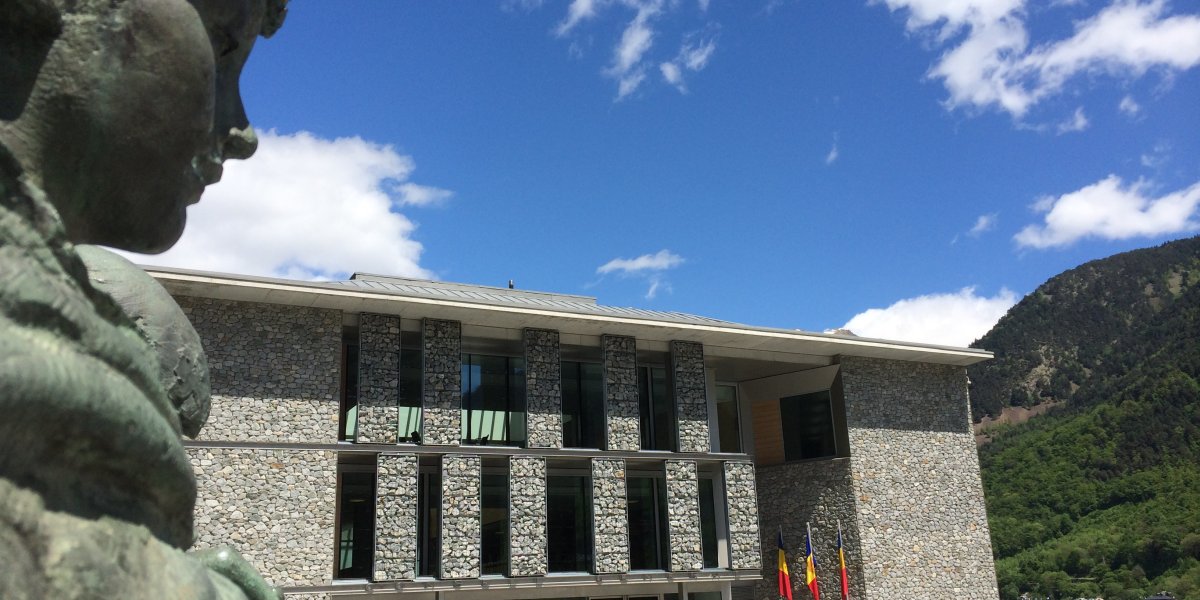
From Casa de la Vall, walk 80 m north on Carrer del Bonaventura Armengol to the glass facade of the Govern d'Andorra building and take the free public lift inside up to the fifth floor — 90 seconds, no ticket, no questions. You step out onto Plaça del Poble, a wide open rooftop terrace that locals treat as their living room, with the Pyrenees walling the valley on three sides. This is the only single-frame photograph that captures the entire city silhouette in one shot.
Tip: Stand at the east-facing balustrade for the photo — late morning sun is behind you, lighting the valley walls in warm gold. The small Cafè del Poble on the terrace pulls a serious €2.50 cortado; locals stop here between errands and almost no visitor knows it exists.
Open in Google Maps →12:30
Food
Descend back to street level and walk 200 m south along Carrer Doctor Vilanova to Avinguda Príncep Benlloch. Papanico is the unmarked corner where bank workers, shop owners and government clerks actually eat — sticky tabletops, no English menu, just the bonafide grandmother-style Catalan cooking we came to the Pyrenees for. Order the trinxat (€11), a crisp golden cake of mountain cabbage and potato studded with pork belly, with a glass of Pyrenean vermouth (€3); budget €18-22, done in fifty minutes flat.
Tip: Arrive at 12:30 sharp — Papanico takes no reservations, and by 13:15 every table is full of locals. Skip the printed menu and ask for the chalkboard 'plat del dia' (€13 with bread, water, and dessert) — it's always traditional and always the best thing in the room.
Open in Google Maps →14:00
Shopping
Leave Papanico east, cross the small bridge at Plaça Rebés, and Avinguda Meritxell opens in front of you — Andorra's spine of duty-free retail, 1.2 km of unbroken shopfronts descending along the river. Major brands run 25-30% below Spanish prices on electronics, perfume, cosmetics and spirits, and the tobacconists near the western end stock single-malt Scotch unavailable elsewhere on the Iberian Peninsula. Halfway down, at Plaça de la Rotonda, the bronze sags of Salvador Dalí's Noblesse du Temps — a melting clock draped over a tree — interrupt the commerce; this is the most economically symbolic 1.2 km in the country.
Tip: Andorra has no VAT but a small 4.5% IGI already included in sticker prices. At any electronics or perfume counter, ask for the 'Tax Free' form to claim that 4.5% back at the French or Spanish border crossing. Photograph the Dalí from its south side with Avinguda Meritxell receding behind it — the only angle where the sculpture and the city read together in one frame.
Open in Google Maps →17:00
Landmark
Continue east past Plaça de la Rotonda; Avinguda Meritxell becomes Avinguda Carlemany as you cross into Escaldes-Engordany, and after 400 m you reach Pont de Paris. Look up — seven life-sized iron figures by Catalan sculptor Jaume Plensa sit cross-legged atop seven tall columns flanking the bridge: Set Poetes, the most photographed installation in the country. Beyond them, Caldea's mirrored cathedral-tower rises 80 m above the valley floor — a 1994 silver pyramid that has become Andorra's unintentional icon; arrive in daylight and linger until 18:30 in winter (19:30 in summer) for the moment the columns and tower switch their lights on against the dark mountain wall.
Tip: Don't enter Caldea unless you've reserved 3+ hours — the spa is wonderful but slow, and a half-hour visit isn't a thing. For the iconic Caldea photograph, walk 50 m south of Pont de Paris to the small pedestrian bridge over the Valira d'Orient — the silver tower reflects in the river at exactly the angle Caldea uses in its own marketing.
Open in Google Maps →19:30
Food
From Caldea, walk 8 minutes west back along Avinguda Carlemany, then 100 m south onto Carrer Doctor Vilanova. Borda Pairal 1630 occupies a 17th-century stone borda — a former cattle barn — kept exactly as it was, with rough granite walls, exposed timber beams, and an open central fireplace burning real logs through every season. Order the cordero al horno (slow-roasted milk-fed lamb shoulder, €24) and a side of trinxat with crisped pork belly (€9); budget €40-55 per person with a glass of red Empordà.
Tip: Call to book around lunchtime and specifically ask for the upstairs dining room — the timber-beam ceiling and proximity to the fireplace make it a different restaurant entirely from the ground floor. PITFALL: the restaurants directly facing Caldea — the ones with laminated multi-language menus and photographs of the food on the door — charge double for frozen mediocre cooking; they survive on day-trippers who don't know better. Always walk at least 300 m west of Caldea before sitting down to eat.
Open in Google Maps →Aller au jour
09:30
Landmark
Start in the lanes of the Barri Antic, where cobbled streets climb above the modern shopping spine. Casa de la Vall, the 1580 stone manor that served as Andorra's parliament until 2011, sits at the top of the Old Town with its slate roof and defensive tower. Inside, the Sala del Tribunal de Corts still keeps its original 16th-century frescoes and the famous Cabinet of Seven Keys — the country's archives were locked behind seven separate doors, one per parish, and only opened when all seven coregents were present.
Tip: Reserve the free guided tour 24 hours ahead at visitandorra.com — it's the only way inside, and the 09:30 Catalan/Spanish slot is by far the quietest (afternoon English tours fill with bus groups). After the visit, climb the narrow side stairs to the upper terrace for a free shot over the slate rooftops of the Barri Antic — the angle isn't on any postcard.
Open in Google Maps →11:00
Religious
Leave Casa de la Vall and descend the cobbled Carrer de la Vall — a 3-minute downhill walk brings you out onto the tiny Plaça del Príncep Benlloch, where Sant Esteve's pale stone bell tower rises above the geraniums. This is the oldest Romanesque structure in the capital (11th-12th century); the semicircular apse you can still trace from outside is the original, and inside the round-arched nave is starkly simple, lit only by narrow slit windows. Stand back across the plaza and you can read the three layers of the building like rings on a tree — Romanesque base, baroque additions, recent restoration.
Tip: The Romanesque apse is best photographed from the small Carrer Bonaventura Armengol behind the church — late morning sun rakes across the curved stone and the original 12th-century lombard arcades cast clean shadows that disappear by midday. Avoid Sunday mornings (mass blocks the interior visit); weekday late morning is open and almost empty.
Open in Google Maps →12:30
Food
Walk one block downhill to Avinguda Príncep Benlloch — Papanico's red awnings and packed pavement terrace mark the spot where Andorran civil servants, shopkeepers and weekend ski-trippers all converge for lunch. The kitchen sends out generous Catalan-Andorran tapas: the trinxat de la Cerdanya (cabbage-and-potato pancake with crisped pancetta, €14) is the must-order, the croquetes de bolets (wild-mushroom croquettes, €9) is the follow-up, and the €18 menú del migdia includes a quarter of red wine and is what locals actually eat on weekdays.
Tip: Arrive at 12:30 sharp — the local wave hits at 13:15 and the terrace fills with no reservations possible. Ask for a table on the upper deck overlooking the avenue. Order the porró (the traditional Catalan glass jug from which you pour wine into your mouth without touching it) only if you're confident — pulling it off without dribbling is harder than it looks, and the waiters will tease.
Open in Google Maps →14:30
Shopping
From Papanico, cross the plaça and walk east — Avinguda Príncep Benlloch becomes Avinguda Meritxell, the tax-free spine of the country. Two kilometers of pavement lined with electronics, perfumes, tobacco and Pyrenean ski gear, all carrying just Andorra's 4.5% IGI (against 21% in Spain and 20% in France). Halfway down, at Plaça de la Rotonda, pause at La Noblesse du Temps — Salvador Dalí's 1989 bronze of a melting clock draped over a gnarled tree, gifted to the country he adored for its mountain light. It's a four-meter sculpture you can walk under, with the green Riu Valira running behind.
Tip: For electronics, Pyrénées department store has the deepest stock and prices 25-30% cheaper than France, but Andorra Telecom and FNAC across the street are sometimes cheaper still — comparison-shop before committing. Keep all receipts: returning to Spain or France you must declare goods above €300 per traveler, so spread larger purchases. Dalí's sculpture catches the best light around 16:00 when the sun hits the bronze from behind and the melting clock glows amber against the river.
Open in Google Maps →16:30
Entertainment
Continue east along Avinguda Carlemany — 10 minutes from the Dalí rotunda the silver-mirrored pyramid of Caldea rises 80 meters above the river, designed by Jean-Michel Ruols to mimic an iceberg dropped in the valley. Inside, 6,000 m² of sulphurous spring water at 70°C feed an outdoor lagoon with mountain views, a Roman bath under stone columns, an Indo-Roman bath, a hammam, jacuzzis under stained-glass cupolas, and a circuit you flow through over three slow hours. Sunset (around 21:00 in summer, 17:30 in winter) is the moment — the pyramid lights amber and the outdoor pool steams against the darkening peaks.
Tip: Book the 16:30 entry online (€48 for 3 hours, €5 cheaper than walk-in) — by 17:00 the locker rooms back up with the ski-day crowd. Bring your own flip-flops; the rentals are slippery and uncomfortable. The single must-do is the outdoor lagoon at twilight; head there 30 minutes before sunset and swim out to the corner facing south toward the Pic de Carroi. Skip the Likids family pool unless you have kids — it's noisy and shallow and eats time.
Open in Google Maps →20:30
Food
A 12-minute taxi (€8) or 25-minute walk south on Carretera de la Comella brings you to Borda Estevet — a 19th-century stone borda (cattle barn) converted into Andorra's most celebrated traditional restaurant, with low blackened beams, an open wood-fire grill at the back of the room, and the smell of grilled lamb the moment the door opens. Order the xai a la brasa (wood-fire-grilled spring lamb, €28) and the trinxat amb cansalada (cabbage-potato cake with thick pork belly, €16), and finish with a coca de recapte. The escudella i carn d'olla — Andorra's national winter stew of meatballs, sausages and chickpeas (€19) — appears only October to April.
Tip: Reserve at least 2 days ahead by phone (+376 864026) — Saturdays sell out a week out. Ask for 'una taula a la sala de la xemeneia' (a table in the fireplace room) for the warmest atmosphere; the back terrace is fine in July but the room is the experience. Skip the Bordeaux markups on the wine list and order a bottle of Catalan Priorat (€32) — staff will steer you well. PITFALL: Avoid the photo-menu restaurants clustered along Avinguda Meritxell and at the Pas de la Casa border — they serve frozen escudella to tour buses; the real bordes are always a little outside town like this one, with no menu in five languages.
Open in Google Maps →09:00
Religious
Begin with a 25-minute riverside walk south along the Riu Valira (or a 7-minute L2 bus from Plaça Guillemó) — the path follows the green river out of the modern centre and into the village of Santa Coloma, where the road narrows, vines climb the stone walls, and Pyrenean farmhouses appear. The Església de Santa Coloma is the oldest church in Andorra (9th century), pre-Romanesque, with the country's only cylindrical lombard bell tower and a tiny single-nave interior. The original 12th-century frescoes of the Apocalypse were detached and shipped to Berlin in 1930, and a precise digital projection now restores them onto the apse walls during guided visits.
Tip: The church only opens for guided tours (Tue-Sat at 10:00, 11:30, 12:30, 16:00, 17:30 in summer — reserve via cultura.ad, €5). The 10:00 slot is the only one that includes the bell-tower climb to see the original blocked-up windows from the inside. Best exterior shot of the cylindrical tower: walk 30 meters down Camí de la Solana to the west — you frame the tower against the Pic d'Enclar with nothing modern in the picture.
Open in Google Maps →10:30
Museum
A 2-minute walk back to Avinguda d'Enclar brings you to Espai Columba — a discreet glass-and-stone visitor centre opened in 2017 to house the church's original Romanesque frescoes. The detached 12th-century paintings (recovered from German private collections in 2007 after decades of negotiation) are mounted on a reconstructed apse at the original scale and angle, so you stand exactly where a 12th-century pilgrim stood. A quiet 360° projection re-creates how the church interior looked around 1130, when the colors were fresh and the gold leaf still caught the candlelight.
Tip: Ask the receptionist for the free English audio loop — it walks through the iconography of the Maiestas Domini (Christ in Majesty) panel, which is the centerpiece and otherwise looks abstract. Photograph from the upper viewing platform facing the apse: flash is forbidden but the indirect lighting is generous, and the angle reproduces how the fresco was meant to be seen from below by the standing congregation.
Open in Google Maps →12:00
Landmark
Leave Espai Columba and follow Avinguda d'Enclar south, then drop down to the river via the riverside Camí Ral footpath — 15 minutes of walking past dry-stone walls and grazing horses brings you to the Pont de la Margineda, Andorra's largest medieval bridge. The single 9.20-meter granite arch was built in the 14th-15th century to carry the Camí Ral — the royal mule road between France and Spain — over the Valira. It's closed to cars; you cross it on the original cobbles, and the river beneath flows pale green from snowmelt, still cold even in August.
Tip: The classic photo is from the small gravel beach on the southern side — climb the stone steps just past the bridge and shoot upstream so the arch frames the Pic d'Enclar in the distance. Midday sun flattens the keystone's shadow; aim for arrival around 12:00 when there's still definition. Walk under the bridge on either bank to see the original toll mark carved into the springer stone — most visitors miss it entirely.
Open in Google Maps →13:30
Food
From the bridge, retrace the riverside path north for 25 minutes (or grab a €7 taxi) back into the Barri Antic — Can Benet sits halfway up the cobbled Antic Carrer Major, in a 17th-century stone house with whitewashed walls and a single narrow iron staircase to the upper dining room. The kitchen cooks Andorran mountain food without compromise: the truita de carreroles (wild-mushroom omelette, €15) and the carn a la pedra (raw beef cooked at your table on a 400°C volcanic stone, €26) are what to order. The €22 weekday menú comes with a quarter of the house Priorat tinto.
Tip: Ask for the upstairs window table over the cobbled lane — it's the smallest room and the most atmospheric, and unbooked the staff will sometimes give it to you if you ask warmly in Catalan or Spanish. The carn a la pedra is theatre as much as food: ask the waiter to bring all three salts (mountain herb, smoked, fleur de sel) before the meat lands on the stone, otherwise you only get coarse salt. PITFALL: Avoid any restaurant on Avinguda Meritxell advertising 'menú turístic' with photographs — the Old Town is five minutes uphill and infinitely better for the same price.
Open in Google Maps →15:30
Landmark
Step out of Can Benet, walk up the Antic Carrer Major for two minutes and through the iron gate into Plaça del Poble — the unexpected rooftop plaza built directly on top of the Govern d'Andorra building, with a panoramic terrace open to the public 24/7. The view sweeps across the whole capital in the valley below: the Pic de Carroi rises directly opposite, and the snake of Avinguda Meritxell pulses red and white at dusk. The plaza itself is where school kids skateboard and grandfathers play pétanque — it's the real living room of the city, not the marketed Old Town just below it.
Tip: Stay until the sun sets behind the Pic de Carroi — about 21:00 in summer, 17:30 in winter — when the whole valley turns amber and then deep violet. The eastern corner of the terrace, by the rusted-iron sculpture, has the cleanest sight line straight down Meritxell as its lights come on. Grab a small bottle of Andorran Cava from the Carrefour Express on Meritxell beforehand — drinking it on the plaza is legal and what locals do, and it costs €4 against €18 for the same wine in any bar with a view.
Open in Google Maps →20:00
Food
A 4-minute walk back down through the Antic Carrer Major brings you to La Borda Pairal 1630 — a 17th-century manor house turned restaurant, with original ceiling beams, a working stone hearth, and a wine cellar quarried into the bedrock under the dining room. This is dinner-night-out Andorran: order the cassola d'enciam (warm winter salad with house-cured sausages and pine nuts, €18), the cabrit rostit (slow-roasted suckling kid goat with rosemary potatoes, €34), and a glass of Andorran rosé from Casa Beal. The country has fewer than ten commercial vineyards and most of their bottles never leave the valley; the list lets you taste three or four.
Tip: Book the cellar room (sala del celler) at least 3 days ahead by phone (+376 869999) — it seats only 14 around a single long oak table and is the warmest, most atmospheric room in Andorra la Vella. Order the gratacul (rosehip liqueur) to finish — it's the traditional Pyrenean digestif, intensely floral, and almost never appears outside Andorra. PITFALL: Skip the 'Andorran' restaurants attached to the big hotels on Avinguda Meritxell — they're optimized for ski-tour group dinners and lean on frozen pre-made stews; the meal you'll remember from this country is always hidden inside a stone house in the Old Town, just like this one.
Open in Google Maps →
Trip builder
Plan this trip around Andorra la Vella
Turn this guide into a bookable rail itinerary with FlipEarth.
Keep exploring
Related cities
FAQ
Frequently asked questions
How many days do you need in Andorra la Vella?
Most travelers enjoy Andorra la Vella in 1 days, with enough time for headline sights and a slower meal or museum stop.
What's the best time to visit Andorra la Vella?
The easiest season for most travelers is May-Oct, Dec-Mar, especially if you want good weather and manageable crowds.
What's the daily budget for Andorra la Vella?
A practical starting point is about €120 per person per day before hotels, then adjust based on museums, dining, and transport.
What are the must-see attractions in Andorra la Vella?
A good first shortlist for Andorra la Vella includes Casa de la Vall & Església de Sant Esteve, Plaça del Poble Rooftop Mirador, Pont de Paris (Set Poetes) & Caldea Silver Tower.