City Guide
Obidos
Portugal · Best time to visit: Apr-Oct.
Day-by-day plan
Choose your pace
Duración del viaje
09:00
Landmark
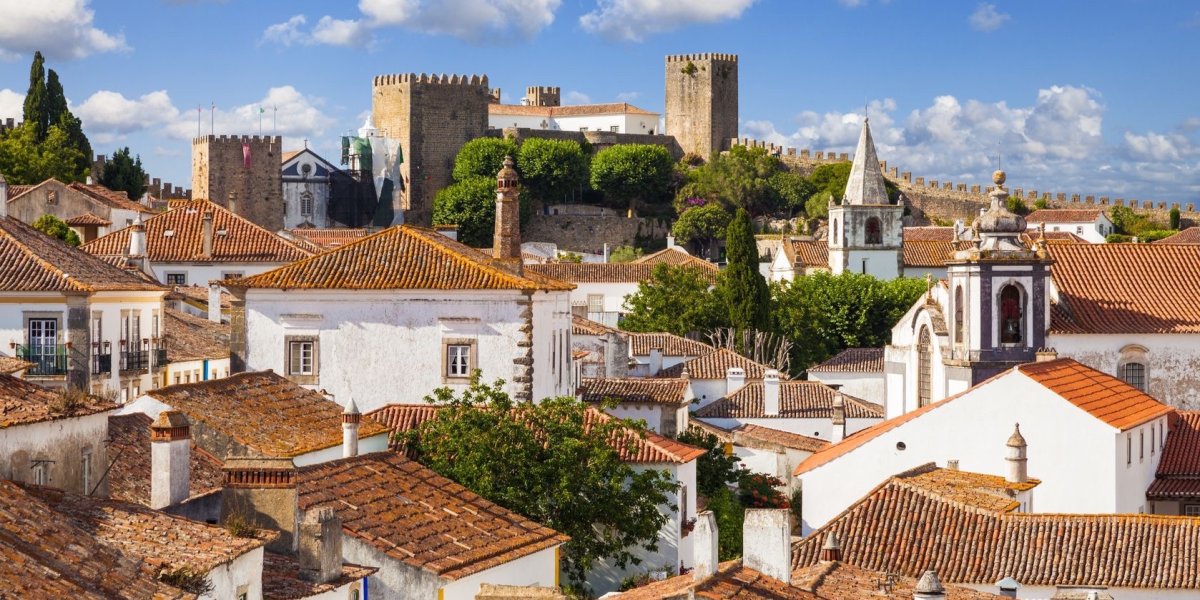
From the bus stop or car park beneath the aqueduct, follow the cobbled ramp uphill for 4 minutes — the medieval walls rise above you and the noise of the modern world drops away. Step through this twin-arched main gate and look up: the inner vestibule is lined with 18th-century blue-and-white azulejos depicting the Passion of Christ, a small chapel built into the gateway itself. Arriving before the first Lisbon coach buses (which roll in around 10:00) means you can stand alone in the tiled chamber for a clean photo with no shoulders in the frame.
Tip: The azulejos face the inside of the gate — turn around AFTER walking through and look back up. Most tourists charge straight ahead onto Rua Direita and miss the tiles entirely.
Open in Google Maps →09:30
Neighborhood
Step out of the gate into the start of Rua Direita, the single cobbled spine that runs the entire length of the town. Drift north slowly — bougainvillea spilling over whitewashed walls trimmed in cobalt and mustard yellow, woven baskets and cork hats in every doorway, the Atlantic wind funneling between the houses. Halfway up, duck into a Ginjinha cellar (Bar Ibn Errik Rex or any shop with a chalkboard out front) and order the local sour cherry liqueur served in a tiny dark chocolate cup — drink the liqueur, then eat the cup. Morning light here is angled and soft; by 11:00 the street fills shoulder-to-shoulder.
Tip: Ginjinha in a chocolate cup costs €1.50–2 everywhere — if a shop quotes you €4 'because it's the premium version,' walk out. Same liqueur, same cup, every doorway.
Open in Google Maps →11:30
Religious
Continue 3 minutes north up Rua Direita until it opens into a small triangular square anchored by a stone pillory and the white facade of Santa Maria church. Step inside (free, takes 10 minutes): the entire interior is wrapped floor-to-ceiling in 17th-century blue azulejo panels — one of the most completely tiled church interiors in Portugal. This is also where King Afonso V was married at age 10 to his 8-year-old cousin in 1441, a strange medieval footnote you can stand inside. Late morning light through the high windows hits the tiles at exactly the right angle.
Tip: The pillory in the square has a fishing-net carving on it — a tribute from Queen Leonor whose son drowned in a nearby river. Most visitors photograph the church and miss the story carved into the stone right behind them.
Open in Google Maps →12:30
Food
From the church, walk 2 minutes back down Rua Direita to a low stone doorway with wine barrels stacked outside. This is a granite-walled tavern with vaulted ceilings, full of locals on workdays. Order the bifana no pao (marinated pork sandwich, around €4.50) or a half-portion of bacalhau a bras (salt cod with eggs and matchstick potatoes, around €9), wash it down with a glass of regional Obidos white. Quick service, real food, no tourist menu in five languages.
Tip: Ask for the 'meia dose' (half portion) — Portuguese half-portions are full meals everywhere else, and they cost about 60% of the full price. Skip any place on the main street with photos of the food on the menu.
Open in Google Maps →14:00
Landmark
Walk 4 minutes further up Rua Direita until it ends at the castle keep — now the Pousada hotel, so the interior is for guests only, but the crenellated exterior and the gateway photograph beautifully against the afternoon sky. From the small square beside it, climb the stone staircase onto the town walls and walk the full 1.5 km circuit clockwise. There are NO handrails on the inner edge and the wall is narrow in places — this is the real reason to come to Obidos. Afternoon is the right time: light hits the red rooftops below from the west, and the windmills on the surrounding hills throw long shadows. The full loop takes about 90 minutes if you stop for photos.
Tip: Walk the walls clockwise starting at the castle — this puts the sun behind you for the postcard view back over the town's white roofs. Anti-clockwise puts you shooting into the glare. Wear closed shoes; the stone is uneven and slick after rain.
Open in Google Maps →19:30
Food
Descend from the walls and exit through Porta Nova at the north end (5-minute walk down a stone staircase outside the walls). This stone-walled regional restaurant just outside the fortifications is where Obidos families come for a proper meal — wood-beamed ceiling, fado sometimes playing low, no tour groups. Order the cabrito assado no forno (oven-roasted kid goat, around €18) or the arroz de pato (duck rice, around €15), and finish with a slice of the local pao-de-lo sponge cake. Reserve the same morning by phone — only about 12 tables, and locals fill them.
Tip: Last buses back to Lisbon (Rodoviaria do Tejo) leave Obidos around 19:00–20:00 depending on day — confirm the return time at the bus stop in the morning BEFORE you sit down to dinner. Tourist trap warning: any restaurant on the main square inside the walls with a sandwich-board menu in English/French/Spanish/Italian is charging double for half the food — the good places are tucked into side lanes or, like this one, just outside the walls.
Open in Google Maps →
Trip builder
Plan this trip around Obidos
Turn this guide into a bookable rail itinerary with FlipEarth.
Keep exploring
Related cities
More in the same country
FAQ
Frequently asked questions
How many days do you need in Obidos?
Most travelers enjoy Obidos in 1 days, with enough time for headline sights and a slower meal or museum stop.
What's the best time to visit Obidos?
The easiest season for most travelers is Apr-Oct, especially if you want good weather and manageable crowds.
What's the daily budget for Obidos?
A practical starting point is about €75 per person per day before hotels, then adjust based on museums, dining, and transport.
What are the must-see attractions in Obidos?
A good first shortlist for Obidos includes Porta da Vila, Castelo de Obidos & The Town Walls Circuit.