City Guide
Locarno
Suiza · Best time to visit: Apr-Oct.
Day-by-day plan
Choose your pace
Duración del viaje
09:00
Religious
Walk three minutes from anywhere in the Old Town to the funicular base on Via Ramogna; the little orange car climbs through chestnut woods in four minutes and deposits you below the saffron-yellow sanctuary clinging to the cliff. Locarno's spiritual postcard since 1480, the church holds Bramantino's tender 1522 fresco of the Flight into Egypt and opens onto a balcony where the whole arc of Lake Maggiore unfolds — palm trees in the foreground, Italian Alps across the water. Skip the funicular for the descent: follow the Via Crucis trail down past fifteen baroque chapels back into town, a thirty-minute walk shaded by laurel.
Tip: Buy a one-way funicular ticket (CHF 6) and walk down — the descent is the experience locals come for. Morning light hits the east-facing sanctuary facade and the lake panorama before any tour buses arrive; by 11:00 the terrace is shoulder-to-shoulder.
Open in Google Maps →11:30
Neighborhood
The Via Crucis trail emerges at Via al Sasso; turn south on Via Cappuccini and weave through the cobbled vicoli for eight minutes until the arcades suddenly open into Locarno's beating heart. A long rectangle of pastel buildings under deep stone arcades, the piazza is paved in pink-grey granite and lined with palm trees that feel impossible at this latitude — Switzerland's warmest microclimate, blessed by Lake Maggiore. This is where the Locarno Film Festival hangs the world's largest open-air screen each August; the rest of the year it's farmers' market on Thursdays, espresso terraces, and arcaded shop windows from a Lombardy that ceased to exist.
Tip: Stand at the western end (near Largo Zorzi) and shoot east at 11:45 — the sun is high enough to light the arcade interiors but still raking enough to throw long shadows of the palms across the granite. The Casa del Negromante (the painted Renaissance house mid-square, with sgraffito devils) is the detail most visitors walk straight past.
Open in Google Maps →12:45
Food
Step inside the Manor department store on the southern arcade of Piazza Grande and ride the lift to the top floor — Manora is Switzerland's beloved self-service chain, and the Locarno branch has a rooftop terrace looking straight onto the square's palm tops. This is where Ticino office workers eat: tray in hand, you pass cooking stations of risotto, polenta, fresh-grilled lake perch, and a salad bar that puts most restaurants to shame. Honest Swiss prices in one of Europe's priciest regions — and you keep moving, no two-hour Italian lunch ritual.
Tip: Order the risotto ai funghi porcini (CHF 14.50) — they stir it to order at the live station — and add a small Ticinese merlot by the glass (CHF 5). Arrive by 12:30 to claim a terrace table; from 13:00 a queue snakes from the cashier to the lift.
Open in Google Maps →14:00
Landmark
Leave Piazza Grande heading west and pick up Via al Castello, a sloping cobbled lane that drops you in five minutes at the moat-less ramparts. Built by Milan's Visconti dukes in the late 12th century and battered by Swiss confederates in 1518, the surviving wing now wraps a quiet courtyard you can wander freely without entering the civic museum — exactly what you want today. The reason to come is the southern terrace: ivy-covered crenellations frame a view straight across the rooftops to the lake, and the rose-pink stucco glows in the early afternoon sun like a Tuscan fresco.
Tip: The Rivellino bastion at the rear (free to enter) was attributed to Leonardo da Vinci in 2002 — a niche claim few visitors know, but the angled corner-cut is unmistakably his school. Walk the courtyard counter-clockwise so you finish facing the lake.
Open in Google Maps →16:00
Park
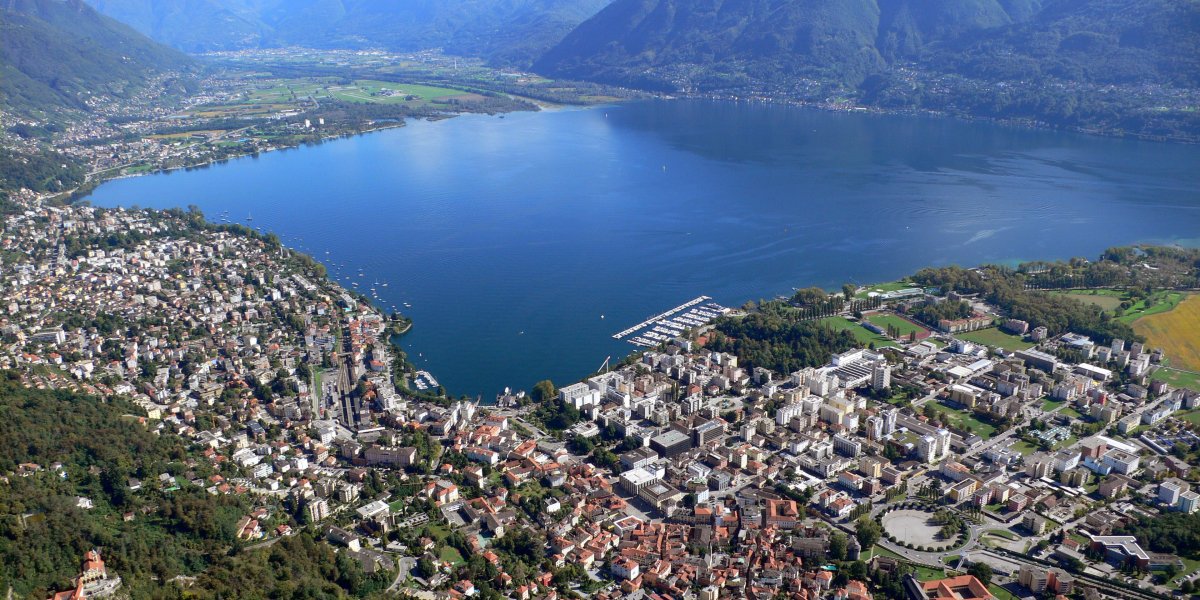
Leave the castle through the southern gate, drop down Via Bartolomeo Rusca for three minutes, and you hit the Debarcadero where the lake steamers come in. From here a continuous lakefront promenade — palms, oleanders, magnolias — runs east for two kilometres past the Parco delle Camelie (Europe's largest camellia garden, eleven thousand plants) all the way to the river mouth at the Maggia delta. This is the walk that explains Locarno: a Swiss town that grows lemons and bougainvillea, with the snow-streaked Italian Alps directly opposite. Late afternoon light turns the water silver and gilds the mountains across the border pink.
Tip: Walk all the way to the wooden pier at the Maggia river mouth and turn around at exactly 18:15 in summer — the sun sets behind the western ridge directly down the lake's axis, lighting the whole shore in copper for about twelve minutes. Most visitors quit at the camellia park and miss this.
Open in Google Maps →19:30
Food
Retrace your steps along the lake to Largo Zorzi, then duck north into the Vicolo della Chiara — a sleepy ivy-walled alley one block off Piazza Grande that most visitors never find, even though it sits sixty steps from the square. Osteria Chiara is a true Ticinese grotto: vine-shaded pergola courtyard, stone walls, paper tablecloths, and a handwritten menu of mountain food the family has cooked the same way since 1957. Order the risotto al merlot (€22) — finished tableside with shavings of Ticino alpine cheese — and the brasato di manzo al merlot (€32), beef braised four hours in the local red until it falls apart with a fork. This is the meal you came to Switzerland for and didn't know it.
Tip: Reserve at least 24 hours ahead (the pergola has only twelve tables) and ask explicitly for the courtyard, not the indoor room. Pitfall warning: never eat at any restaurant whose tables are set directly on Piazza Grande — those are tourist traps charging Zürich prices for microwaved pasta. The real Ticinese kitchens are all hidden one alley inland, exactly like this one.
Open in Google Maps →
Trip builder
Plan this trip around Locarno
Turn this guide into a bookable rail itinerary with FlipEarth.
Keep exploring
Related cities
More in the same country





FAQ
Frequently asked questions
How many days do you need in Locarno?
Most travelers enjoy Locarno in 1 days, with enough time for headline sights and a slower meal or museum stop.
What's the best time to visit Locarno?
The easiest season for most travelers is Apr-Oct, especially if you want good weather and manageable crowds.
What's the daily budget for Locarno?
A practical starting point is about €120 per person per day before hotels, then adjust based on museums, dining, and transport.
What are the must-see attractions in Locarno?
A good first shortlist for Locarno includes Castello Visconteo.