City Guide
Tokaj
Hungary · Best time to visit: Sep-Oct.
Day-by-day plan
Choose your pace
Trip length
07:30
Landmark
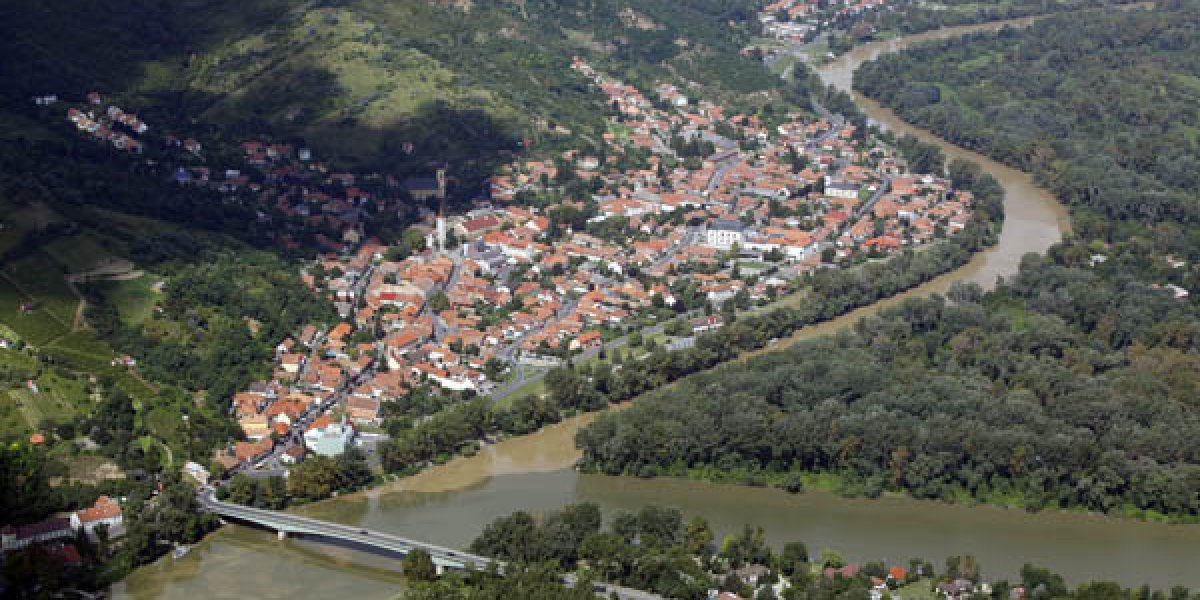
Start at the train station and follow the yellow trail markers south up the loess slope — the path climbs straight through the Király, Mézes Mály, and Szarvas first-growth parcels, the exact rows that supply Royal Tokaji and Disznókő. After 90 minutes of switchbacks you reach the 514 m summit, marked by a Soviet-era TV tower. The Tisza valley unrolls below: ochre vineyards stitched between two rivers, with the Great Hungarian Plain stretching unbroken to the south horizon.
Tip: Leave town before 08:00 — by 10:00 the unshaded loess paths radiate heat, and you'll miss the morning mist burning off the Tisza, which is the shot you came for. Skip the marked viewing platform halfway up; the unmarked rock outcrop 200 m before the summit gives a cleaner foreground with no safety railing in frame. Wear grippy soles — volcanic dust turns to slick paste after the lightest rain.
Open in Google Maps →12:00
Food
Descend via the eastern vineyard track — 40 minutes through the Mézes Mály parcels drops you straight onto the Tisza embankment, where this no-frills riverside fish shack has fed wine workers their lunch for three generations. Order the catfish-and-carp halászlé (Hungarian river-fish paprika soup, 3,800 HUF ≈ €10) with a glass of dry Furmint (€3); pay at the counter, grab a wooden bench two metres from the water, eat fast. Bread is unlimited and the soup is fiery enough to reset your legs for the afternoon.
Tip: Say "erős" (spicy) when you order — they default to the tourist version. Choose harcsa (catfish) over ponty (carp) unless you've deboned a paprika fish before; carp pins are brutal and will eat into your afternoon. Cash gets you served twice as fast as card.
Open in Google Maps →13:30
Neighborhood
Walk 400 m west along Bethlen Gábor utca — you'll pass the 18th-century Greek Merchant's House (now the Tokaj Museum) and a row of pastel baroque facades on your left. The square is a long pedestrian strip anchored by the bronze Bacchus astride a wine barrel, the photograph every guidebook puts on its first page. Loop the Roman Catholic Church behind the square (admire the buttercup-yellow facade, don't enter), then duck into the courtyard of Rákóczi Pince at number 15 for a free look at the wrought-iron gate of Hungary's most famous cellar — the underground tour eats two hours, so we stay above ground today.
Tip: Bacchus's left flank catches direct sun until 14:30 — shoot from the south-west corner with the church bell tower behind for a clean composition. The hand-painted ceramic wine flasks in the souvenir shops on the square run 4,500 HUF; the identical ones at the Tisza market two blocks north sell for 2,800.
Open in Google Maps →15:00
Religious
Two minutes north on Hős utca — the salmon-pink neoclassical synagogue (built 1890, restored 2010) rises above its low neighbours, its twin Tablets of the Law facade the most photographed Jewish monument in northern Hungary. Walk all four sides: the rear garden once held the mikveh, and a bronze plaque at the entrance names the 2,500 Tokaj Jews deported in 1944. We stay outside today — the interior is now a cultural centre and the facade alone earns the stop.
Tip: West-side light around 15:30 in summer sculpts the rosette window — shoot from the opposite pavement with a vertical frame to fit the full facade without phone-lens distortion. Don't bother circling for the "side door" angle; it's a blank wall.
Open in Google Maps →16:30
Park
Continue 900 m north on the embankment path, passing the yellow Erzsébet Chain Bridge (1934, the first suspension bridge over the Tisza). Where the slow brown Tisza meets the lighter, faster Bodrog, a grassy gravel spit forms Tokaj's mythic geography — every Tokaji wine label you've ever held shows this exact wedge of land. Walk down to the beach for the classic frame: Mount Kopasz vineyard hill on the right, two rivers braiding on the left.
Tip: Cross the chain bridge to the east bank for the postcard angle of Mount Kopasz rising directly behind the town spires — golden hour starts 18:30 in midsummer, 16:30 in October. Bring a 24-35 mm equivalent if you have one; phone wide-angle bows the hill unnaturally. Avoid the kayak-rental touts on the east bank promising "sunset paddle €30" — they don't carry the legally required confluence permit and the bridge police occasionally turn them back mid-river.
Open in Google Maps →19:30
Food
Walk 1.2 km south on Bajcsy-Zsilinszky út back into the old town — the timber-clad inn with red shutters on Hajdú köz has been run by the same family for thirty years and is Tokaj's most consistent kitchen. Order the venison stew with túrós csusza (sheep's curd egg noodles, 8,200 HUF ≈ €21) and a 1-dl pour of 5-puttonyos Aszú (€7) for dessert — sweet wine on curd noodles is the exact pairing Louis XIV paid royal sums to keep on his table. Average dinner with two glasses: €38.
Tip: Call in the morning to reserve and ask for the courtyard table under the walnut tree, not the carved-pine indoor room. Pitfall warning: every Rákóczi út restaurant with "Tokaji Wine" hand-painted on the awning is a tourist trap — they decant cheap Aszú into open carafes long past its drinking window. Real cellars serve Aszú by the sealed half-litre or 1-dl glass with the vintage on the menu; if you only see "carafe price," walk out.
Open in Google Maps →
Trip builder
Plan this trip around Tokaj
Turn this guide into a bookable rail itinerary with FlipEarth.
Keep exploring
Related cities
More in the same country
FAQ
Frequently asked questions
How many days do you need in Tokaj?
Most travelers enjoy Tokaj in 1 days, with enough time for headline sights and a slower meal or museum stop.
What's the best time to visit Tokaj?
The easiest season for most travelers is Sep-Oct, especially if you want good weather and manageable crowds.
What's the daily budget for Tokaj?
A practical starting point is about €85 per person per day before hotels, then adjust based on museums, dining, and transport.
What are the must-see attractions in Tokaj?
A good first shortlist for Tokaj includes Tokaji-hegy (Mount Kopasz) Summit Hike.