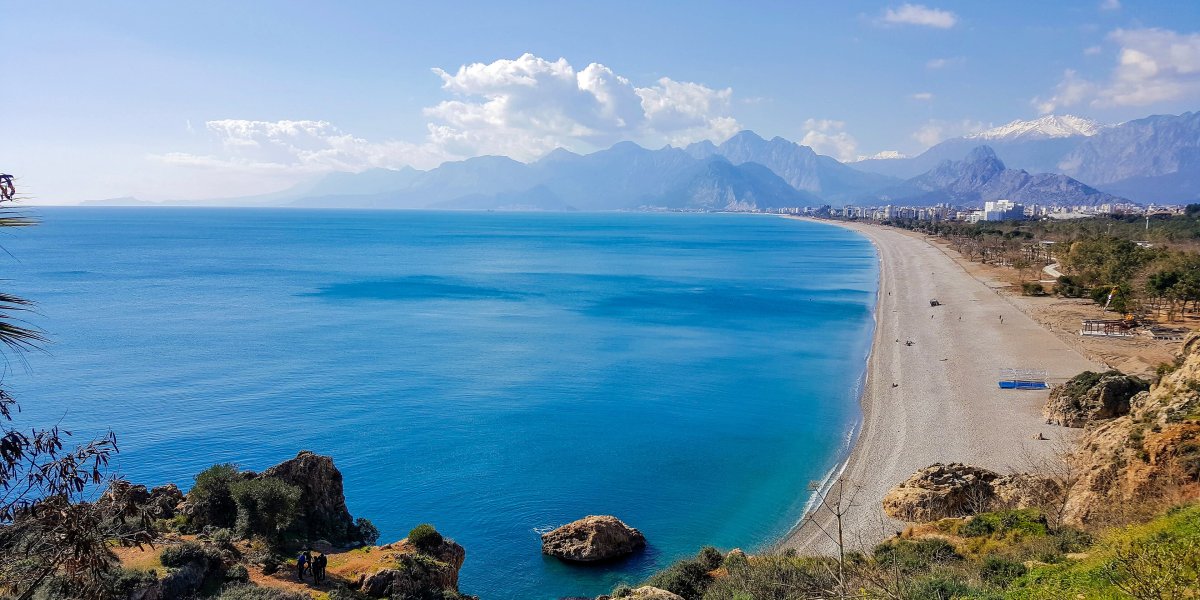
City Guide
Antalya
Türkiye · Best time to visit: Apr-Oct.
Day-by-day plan
Choose your pace
Trip length
09:00
Landmark
Start on Atatürk Caddesi at the southern edge of Kaleici — the triple-arched marble portal rises directly from the modern street, built for Emperor Hadrian's visit in 130 AD. The eastern face catches the morning sun at this hour, and you'll have it almost to yourself before the cruise-ship groups arrive around 10:00. Step through to the original Roman pavement still visible under glass — your feet are on the same stones the emperor crossed.
Tip: Best photo is from the north side (inside Kaleici) at 09:00-09:30 — the morning light streams east through the three arches and the cobblestones are still damp from overnight cleaning, giving them a mirror sheen. Entry is free with no ticket booth; ignore anyone offering 'guided tours' here — they're freelancers, not officials.
Open in Google Maps →10:30
Religious
From Hadrian's Gate, walk 8 minutes northwest along Atatürk Caddesi past the tea gardens until the fluted red-brick minaret spears the skyline. Built by the Seljuks in 1230, it has been Antalya's silhouette for 800 years — the eight half-cylinders that give it its name glow rust-red against the morning sky. Skip the mosque interior (active prayer site) and circle the small courtyard for the angle that frames the minaret against the Mediterranean below.
Tip: The 'gold hour' for the minaret is 10:00-11:00 — rust-red brick against deep blue sky. Stand at the southwest corner of the courtyard for the iconic shot with the old town descending behind it. Don't pay anyone offering 'minaret access' — the tower is closed to visitors, and the offer is a scam.
Open in Google Maps →12:00
Landmark
Plunge into Kaleici from Yivli Minare — 10 minutes weaving downhill through cobbled lanes of restored Ottoman houses, jasmine spilling over the walls, until the cliff opens and the horseshoe Roman harbor appears 30 meters below. This was Antalya's only window to the sea for two thousand years; from the upper Mermerli terrace you see the entire bowl — fishing boats, the cliff wall, and the Beydağları mountains beyond. The harbor at water level is touristy, but stay on the rim for the photo and descend only briefly.
Tip: Skip the harbor boat tours (1-hour cruises pushed by touts at the marina for 300-500₺ — overpriced and most of the time is spent inside the harbor itself). The single best harbor view costs nothing: the Mermerli terrace at the cliff top, 50 meters east of the main descent path — most photographers shoot from here, not from the dock below.
Open in Google Maps →13:30
Food
Climb back up from the harbor and cross to the Tahıl Pazarı bazaar streets — 12 minutes uphill — to a smoke-filled counter where lamb rotates horizontally over a wood fire on its own sword. Order one cağ kebabı portion (≈150₺) served on the sword, a side of piyaz (Antalya's white-bean-tahini-egg salad, ≈50₺), and an ayran — the standard local lunch. Budget 200-300₺ (6-9€) for one person; arrive by 13:00 to beat the queue, no reservations, no English menu needed — just point at the rotating meat.
Tip: Order only what locals order: one cağ kebab + piyaz + ayran is the complete combo, and the waiter will try to upsell soup, dessert, and extra skewers — you don't need any of it. The piyaz here is Antalya's regional version with tahini and hard-boiled egg, very different from the Istanbul style; try it before judging — most foreigners are surprised.
Open in Google Maps →15:00
Landmark
From the kebab counter, walk south through Kaleici back to the cliffs — 15 minutes through narrow lanes until the squat round Roman tower appears framed by date palms. Built as a tomb in the 2nd century and later used as a lighthouse, Hıdırlık marks where the city walls meet the sea; from here follow the cliff edge west into Karaalioğlu Park and keep going. The Konyaaltı Falezleri cliff path runs unbroken for 4 km along the Mediterranean, and most tourists turn back after the first 200 meters — the next 3 km are yours alone, with views straight down to turquoise water and the Beydağları mountains rising across the bay.
Tip: The best cliff overlook is roughly 1 km west of Karaalioğlu Park where a lone pine tree marks a wooden bench — photographers know this spot. Arrive by 17:00 in shoulder season (16:30 in October, 18:00 in July) for the descending sun on the water below; the cliff path is unfenced in several sections, so stay one meter from the edge, particularly past Karaalioğlu where erosion is active.
Open in Google Maps →19:30
Food
End the cliff walk at the eastern edge of Atatürk Cultural Park — 7 Mehmet has occupied this terrace since 1937, the Beydağları mountains glowing pink as the sun drops behind Konyaaltı Beach. Order the lamb tandır (slow-cooked in a clay pit, ≈500₺) and the manti (lamb-stuffed dumplings under garlic yogurt, ≈250₺); fresh sea bass from the morning catch runs ≈600₺. Reserve a terrace table for sunset one day ahead by phone or Instagram — without a reservation past 20:00 you'll wait an hour. Budget 800-1500₺ per person (25-45€).
Tip: Pitfall warning for Kaleici: avoid the harbor-front restaurants with photo menus in three languages, English-only signs, and waiters waving you in from the street — these are textbook tourist traps with 2-3x markup and frozen fish marketed as 'today's catch.' Real Antalya dining is in Tahıl Pazarı (lunch) and Konyaaltı (dinner); 7 Mehmet has been the same family for three generations and is where the city's old guard still eats on Sundays.
Open in Google Maps →Jump to day
09:00
Museum
Take a 10-minute taxi west along Konyaaltı Bulvarı and arrive at the museum gate before it opens — this is the only Antalya sight that genuinely rewards the first hour. The world-class galleries hold the marble cream of the Pamphylian plain: statues from Perge, mosaics from Seleukia, sarcophagi from Aspendos. By the time tour buses from the resorts arrive at 10:30, you will already be walking out.
Tip: Head straight to the Hall of Gods (Salon 4) first — the Hadrian, Aphrodite and Hermes statues from Perge are the collection's masterpieces and tour groups jam this hall by 10:30. Photography is allowed without flash; the natural skylight above the Hermes is best between 09:30 and 10:00.
Open in Google Maps →11:15
Landmark
Exit the museum east and follow the Konyaaltı seafront promenade for 25 minutes — the Mediterranean on your right, the Taurus range rising behind you, the old town walls finally appearing at Atatürk Caddesi. The three marble arches were built in AD 130 for Emperor Hadrian's visit, and 1,900 years of carts have worn deep wheel grooves into the original Roman paving still underfoot. Late morning is right: high sun fires the coffered ceiling above the arches.
Tip: Most tourists photograph from the south (street) side, where the light is flat. Cross under the arches into Kaleici and shoot from inside facing out — the marble glows backlit and the wheel grooves frame the foreground. The deepest cart-rut is under the northern arch, just before the inner step.
Open in Google Maps →12:30
Food
Walk 4 minutes east from the gate along Cumhuriyet Caddesi to a courtyard tucked beside an old hammam — Parlak has rotated charcoal-roasted chickens since 1959, and Antalya court workers eat lunch here. Order the piliç çevirme (half rotisserie chicken, 250 TL ≈ €7), a bowl of ezogelin soup (80 TL), and pilav with cacık on the side. Average lunch: 400-500 TL per person (≈ €11-14).
Tip: Arrive by 12:15 to claim a shaded courtyard seat — by 13:00 the municipal workers fill every table. Order half (yarım) portion, not full; the bird is enormous. Pay in cash for a 5% discount the menu does not advertise.
Open in Google Maps →14:30
Neighborhood
From lunch, walk 6 minutes north up Yenikapı Caddesi — Kaleici's lanes are designed to confuse, but the fluted brick minaret rises above the rooftops as your compass. Antalya's oldest Islamic monument (1230, Seljuk-era) anchors the upper old town; from here, drift south through Kesik Minare (a Roman temple turned Byzantine basilica turned mosque, stripped open to the sky), down the cobbled Mermerli lanes lined with Ottoman bay-windowed houses. Mid-afternoon shadows make the limestone walls glow honey-gold.
Tip: Skip the wide carpet-shop lane (Hesapçı Sokak) — the unmissable block is Hıdırlık Sokak's tiny offshoot marked 'Sokak 22', where the Ottoman wooden balconies cantilever over the alley. Locals consider this the single most photogenic block in Kaleici. Visit on the way down, not on the way back.
Open in Google Maps →17:30
Landmark
Continue south down Kaleici's stepped lanes — 8 minutes — and the round 2nd-century Roman tower appears at the cliff edge, Mediterranean opening below. Sunset here is theatrical: the sun drops behind Tünektepe's headland to the west, the Taurus mountains glow pink to the east, and the call to prayer from Yivli Minaret floats over the cliffs. The park promenade fills with multi-generational Turkish families on their evening walk.
Tip: The cliff edge beside Hidirlik fills with selfie crowds. Walk 2 minutes north into Karaalioğlu Park to the small balcony just before the children's playground — it is the only spot framing both the tower silhouette AND the harbor in one shot, and stays empty at golden hour. PITFALL: every café directly behind Hidirlik triples its prices for the view and serves industrial frozen mezze — walk back into Kaleici proper before sitting down anywhere.
Open in Google Maps →20:00
Food
Walk 7 minutes back up through Kaleici's lanes to the Tuvana Hotel — Seraser hides in the courtyard of a 200-year-old Ottoman mansion, lit by glass lanterns hung from a single fig tree. Ottoman-Mediterranean cooking with one signature: slow-braised lamb shank in rosemary-pomegranate jus (900 TL ≈ €25), the bone served upright at the table for a marrow scoop ritual. Saffron sea bass at 750 TL is the second order. Average dinner: 1200-1500 TL per person (≈ €33-40).
Tip: Reserve a courtyard table by phone the day before (not email — they ignore the inbox) and specifically ask for under the fig tree. Order the lamb shank; the wine list is heavily marked up so request homemade ayran or pomegranate sherbet instead. Skip dessert here and walk 3 minutes to Cafe Veranda for künefe — better and a third of the price.
Open in Google Maps →09:00
Park
Take a 25-minute taxi 14 km north to the Düdenbaşı park gate — be at the entrance when it opens, because the resort tour buses crowd the parking lot by 10:30 and the cave passage becomes single-file traffic. A river emerges from a cave mouth and cascades through a forested gorge; you can walk behind the main fall through a stone passage where water drums overhead and rainbows form in the spray. The morning sun angle (8:30-10:00) is the only window with light reaching the cave's rear wall.
Tip: Enter the cave passage from the upstream side first — the descent stones get slippery and walking down beats walking up wet. The viewing platform halfway through is the single photo spot capturing both the cascade and the cave roof; the deeper interior is too dark for a hand-held shot. Wear closed shoes — the rock floor is mossy.
Open in Google Maps →11:30
Landmark
Taxi 25 minutes southeast to the Lara cliff park — the journey crosses the city and follows the same Düden river south to the point where it now leaps off a 40-meter sandstone cliff straight into the Mediterranean. This is the postcard image of Antalya. The park's eastern viewpoint shows the falls fanning out into a curtain of mist; the western terrace shows the cliff face head-on. Midday sun lights the spray rainbows directly.
Tip: Boats run from Kaleici harbor to view the falls head-on from the sea — skip it. The crowds, the diesel smell, and the rocking ruin the photo. Walk instead to the park's far eastern terrace (look for the small tea garden under the pines) for a three-quarter angle that captures the curtain, the turquoise sea, AND no tourists in the frame. This is the photographer's secret.
Open in Google Maps →13:30
Food
Walk 8 minutes inland from the Lara cliff park to Kayseri Sokak — Hasan Usta operates from a no-frills storefront where Antalya businessmen eat lunch without their suit jackets. Order Konya-style tandır kebab (lamb slow-cooked in a clay-pit oven for six hours until it slides off the bone, half portion 350 TL ≈ €10) and etliekmek (lamb flatbread fresh from the wood oven, 180 TL). Average lunch: 400-500 TL per person (≈ €11-14).
Tip: Order 'yarım' (half) tandır — full is for two people sharing. Pair it with şıra (fermented grape juice, 60 TL) rather than the standard ayran; locals say it cuts the lamb fat better. Arrive by 13:15 if you want a shaded outdoor table; the room fills sharply at 13:30 and the inside has no AC.
Open in Google Maps →15:30
Park
Walk 12 minutes east from the restaurant through the pine grove to the public beach access at Lara Halk Plajı. Lara is one of the rare soft-sand stretches on this coast (most of the Turkish Riviera is pebbles), and the water shades from turquoise through aquamarine to deep blue within a 20-meter swim out. Mid-afternoon water temperature is at its warmest peak; the late-day breeze from the Taurus mountains starts around 16:30 and makes the swim noticeably crisper.
Tip: Public beach (Halk Plajı) entry is free with showers and toilets. Pay-loungers in the central commercial section cost 300 TL/day and aren't worth it. Walk 5 minutes east from the public entrance past the rocky outcrop — there's a stretch where locals swim, the water is cleaner (less sunscreen runoff), and a roadside tea cart sells cold drinks at half the boardwalk price.
Open in Google Maps →17:30
Entertainment
Taxi 35 minutes across the city to Tünektepe's lower station — the route winds through the Konyaaltı palm boulevards and rounds the western cape. A 1,700-meter cable car climbs to a 618-meter peak; the summit terrace looks east across the entire Gulf of Antalya, the Bey Mountains rising behind, and the city lights flickering on as the sun drops behind the Lycian coast to the west. This is the only place to see Antalya whole.
Tip: Take the second-last cable car up (around 18:30 in summer) so you arrive 20 minutes before sunset and ride down after full dusk — the return cars run until 22:00. The summit restaurant is overpriced; order only a Turkish tea (50 TL) to legitimately claim a railing seat. The best viewing platform is BEHIND the radio tower on the western side, not the restaurant terrace where everyone crowds — fewer people, and you get the sun directly without the railing in your shot.
Open in Google Maps →20:30
Food
Ride the cable car down at 19:45 and taxi 15 minutes to 7 Mehmet, perched at the cliff edge of Atatürk Cultural Park — founded 1962, run by the same family for three generations, the defining meze experience of Antalya. A cart wheels 30+ small plates to your table; the kitchen's signature is levrek tuzda, sea bass baked in a salt crust cracked open at your table (1,200 TL for two ≈ €33). Average dinner: 1,000-1,400 TL per person (≈ €28-38).
Tip: Reserve a cliff-edge terrace table 48 hours ahead and specifically request 'kayalık tarafı' (the rocky-cliff side). When the meze cart arrives, point to 5-6 plates only — locals' unwritten rule is that empty plates earn judging looks from the waiters. The salt-crust sea bass must be ordered when you reserve, not at the table; they prep only a limited number daily. PITFALL WARNING: every 'panoramic restaurant' along Konyaaltı's beach strip is a tourist trap — 3x the price, frozen fish, and the views are usually blocked by parked cars. 7 Mehmet has the same Gulf view at half the price with three generations of credibility.
Open in Google Maps →Jump to day
09:00
Landmark
Three marble arches built in 130 AD to welcome Emperor Hadrian — the only surviving section of Antalya's ancient defensive wall. Step through into the labyrinth of Kaleici: whitewashed Ottoman mansions with carved wooden bay windows, narrow cobblestone lanes that twist toward the sea, the slender 13th-century Yivli Minaret rising above red-tiled rooftops. Morning light cuts through the central arch at this hour, and the cruise-ship tour groups don't filter in until 10:30.
Tip: Look down at the marble threshold under the central arch — Romans laid it 1,900 years ago and you can still see the parallel ruts cut by chariot wheels. Pass through the central arch, not the side ones: in Roman times only the emperor used the centre. From the gate, take the narrow lane Hesapci Sokak (not the wider tourist street) — it leads past the best-preserved Ottoman wooden houses, almost all still inhabited.
Open in Google Maps →12:00
Food
Walk back out through Hadrian's Gate and turn right onto Kazim Ozalp Caddesi — three minutes to the unmarked side alley that every taxi driver in Antalya knows. Parlak has been spit-roasting whole chickens over oak charcoal since 1957; you smell it a block away. Order piliç çevirme (charcoal-roasted half chicken, €7), a plate of piyaz (the cold white-bean salad Antalya invented, €4), and house ayran from a copper churn. Three generations of local families eat here on Sundays.
Tip: Arrive before 12:30 — the lunchtime queue stretches into the street by 13:00 and they don't take reservations. Order the chicken 'çıtır' (extra crispy) and ask for the piyaz with extra cumin, the way locals eat it. Skip the kebab restaurants inside Kaleici that have laminated menus in English, German and Russian — their meat is pre-cooked and reheated.
Open in Google Maps →14:30
Landmark
Re-enter Kaleici and walk south through wooden-balconied lanes for ten minutes until the alleys suddenly open onto open sky — the cliff edge. The cylindrical Hidirlik Tower (2nd century AD, likely a Roman lighthouse, possibly a mausoleum) stands at the corner where the old walls once met the sea. From its base, the Karaalioglu Park cliff path unrolls south: an 80-metre drop to turquoise water below, the snow-capped Taurus Mountains closing the bay across the water. Afternoon sun lights the cliff face westward at this hour, so the panorama photographs from the south end.
Tip: Walk the cliff-edge path all the way to the small white pavilion 400 metres south of the tower — most visitors stop at the tower and miss the best photograph: from the pavilion you frame the Roman tower, the old city walls, the Taurus snow, and the Konyaalti coast curve all in one shot. The benches under the umbrella pines mid-park are the local couples' spot at sunset; tea from the kiosk is €1.
Open in Google Maps →16:30
Landmark
From Hidirlik, follow the cliff-top path north for five minutes, then take the switchback stone steps down through bougainvillea-draped ramparts — twelve minutes downhill to the marina. This crescent of stone-walled harbour was Antalya's only port from the 2nd century BC until the 1980s; the dark Roman blocks at the waterline are still original. Wooden gulets bob against the quay, painted yellow and blue. Build in 30 minutes of free strolling time — find a cliff-base teahouse, watch the light go gold on the harbour wall.
Tip: Ignore the boat-tour touts shouting 'Duden Waterfall cruise!' — every boat runs the same cooperative route at the same price; just choose the one with the smallest engine (less diesel haze on the open sea). If you skip the boat, the stone bench inside the ruined arch at the harbour's southern end is the only spot in Kaleici that locals actually call 'günbatımı yeri' — the sunset place. Almost no tourists find it.
Open in Google Maps →19:30
Food
Climb back up from the harbour through Kaleici's lantern-lit alleys — ten minutes uphill, passing the Kesik Minare (Truncated Minaret: a 2nd-century Roman temple turned 5th-century church turned 13th-century mosque). Seraser occupies the inner courtyard of the Tuvana, an 18th-century Ottoman governor's mansion. The chef, Istanbul-trained, applies modern technique to forgotten Ottoman court dishes — try the slow-cooked lamb tandir (€32), the stuffed Ottoman quince (€18), and the rose-water muhallebi (€10). The wine list is the deepest in Antalya.
Tip: Reserve at least 24 hours ahead and specifically request the courtyard, not the indoor dining room — the marble fountain and the open sky make the meal. Skip the 'Antalya Tasting Menu' at €85; the à la carte is better, cheaper, and uses fresher seasonal cuts. Pitfall warning for Kaleici nights: any restaurant with food photographs on a placard outside, multi-language laminated menus and a man at the door pulling you in is overpriced and aimed at one-night cruise tourists — locals call them 'paparazzi lokantalari'. Antalya's good Kaleici restaurants never need to advertise.
Open in Google Maps →09:00
Landmark
A 45-minute drive east from Antalya through cotton fields and citrus groves; ask the driver to enter on the back road past the aqueduct columns for the first glimpse of the stage building rising from the plain. Aspendos is the most completely preserved Roman theatre on earth — built around 155 AD under Marcus Aurelius, capacity 12,000, with the original scaenae frons (stage wall) still standing 22 metres high. Opening hour means you have the orchestra circle to yourself for the first 90 minutes — the acoustics are intact: drop a coin on the centre stone and someone in the top row will hear it ring.
Tip: The site opens at 09:00 (08:30 in high summer) — be at the gate at opening, because cruise-ship coaches from Antalya port arrive at 10:30 and the silence breaks. Climb to the very top row of the cavea and sit dead-centre on the axis: you'll feel the same chest-resonance Roman audiences felt. Ask the driver to detour five minutes north on the way out — the Aspendos aqueduct ruins (almost no tourists) march across two kilometres of plain and photograph spectacularly against the Taurus.
Open in Google Maps →12:00
Food
Ten minutes back along the Aspendos access road, on a wooden platform built directly over the Koprucay — the ancient Eurymedon River, where Cimon's Athenian fleet smashed the Persians in 466 BC. You eat barefoot on cushions over the river; trout swim under the floorboards between your feet. Order trout grilled whole (€14, caught from the river that morning), gözleme cooked on a saç griddle in front of you (€5 with cheese and spinach), and ice-cold ayran from a copper churn. The dolma here is made by the owner's mother, and the menu won't tell you that.
Tip: Order the trout grilled with butter and salt only — they offer to fillet it 'for tourists' but the local way is whole, head on, eaten with the fingers. Tell them up front that you continue to Side after lunch and they will skip the tea-and-baklava upsell that otherwise adds 30 minutes. Avoid the larger glass-fronted restaurant directly opposite — same name, different management, frozen fish.
Open in Google Maps →14:30
Landmark
Thirty-minute drive east through Manavgat onto the Side peninsula. Park outside the gate (cars are banned inside) and walk in along the colonnaded main street — the marble pavement is original Roman, and you can still see the ruts where ox-carts ground grooves into the stone. The ruins thread strangely through a working village: ice-cream shops occupy 2nd-century shopfronts, the agora opens beside a swimsuit boutique, the Vespasian Gate frames a restaurant terrace. Afternoon sun makes the limestone glow honey-gold from now until sunset.
Tip: The cheap 'Side Otopark' at the village gate charges €4 vs €8 for the lots inside — drivers will insist there's no space inside (there isn't anyway). Walk the eastern shore path from the Theatre toward the temple headland — it follows the ancient harbour wall above the sea, almost no tourists take it, and it brings you to the temple area from the dramatic side. Build 20 minutes of free strolling time around the agora; the boutiques actually use the ancient walls as their back walls.
Open in Google Maps →17:30
Religious
Five-minute walk through the village from the agora to the headland tip — the Temple of Apollo (2nd century AD, five Corinthian columns re-erected in the 1990s) stands alone on a low promontory with the Mediterranean wrapping it on three sides. Settle on the flat rocks west of the columns about 30 minutes before sunset. The sun drops directly behind the temple at this season; the columns turn black against the gold sky and the call to prayer rises from the village mosque behind you. It is the most photographed moment on the Turkish Riviera, and it earns it.
Tip: Check the local sunset time the morning of (around 20:15 in June, 17:15 in October) and aim to be in position 30 minutes before. The official viewing area has a railing — for the iconic shot, walk 50 metres further west to the lower flat rocks and frame the columns with the temple's own reflection in a tidal pool. Bring a thin jacket: the headland wind picks up the moment the sun drops.
Open in Google Maps →19:30
Food
Two minutes' walk back from the temple, on a wooden deck cantilevered over the rocks where the waves break — you hear them through the floorboards during the entire meal. Soundwaves is the seafood house Antalya's own chefs eat at on their day off: levrek tuzda (sea bass baked in a salt crust, €38 for two, cracked open theatrically at the table), grilled octopus carpaccio (€18), and the cold meze plate (€15, the smoked aubergine and lakerda — cured bonito — are why you order it). Finish with kaymakli kayisi tatlisi: dried apricots stuffed with thick clotted cream (€8).
Tip: Reserve the front-row 'sahil masasi' (sea-rock terrace), not the indoor dining room — there are only six tables on the rocks themselves and they go to whoever asks first; phone same-day from the temple to lock one. Pitfall warning for Side dinner: harbour-street restaurants advertising 'fresh fish daily' in five languages serve frozen fillets at triple price — if the fish display has no melting ice underneath, walk away. The actual catch boats unload at the Manavgat river, not the Side harbour.
Open in Google Maps →09:00
Museum
Ten-minute taxi from Kaleici west along Konyaalti Caddesi to the museum gate — one of the three most important archaeological museums in Turkey, holding most of the marble that should still be at Perge and Aspendos but was lifted here in the 1920s. The Hall of Gods is the unmissable room: Hadrian himself, Athena, Hermes, the Three Graces, the Sleeping Eros, all life-size, almost all original. Arrive at opening — by 11:00 the cruise groups fill the galleries and the marble starts feeling crowded. Allow two hours; serious museum people stay three.
Tip: Closed every Monday — do not put this day on the wrong weekday. Walk the rooms in reverse order: start in the Byzantine icon hall (room 13) and work back to the Gods (room 5). Same content, half the crowd, because every tour group enters left-to-right. If you bought the Museum Pass yesterday for Aspendos and Side, today is free. Photograph the Three Graces from the south end of the hall — the side window light at 10:30 falls exactly across their faces.
Open in Google Maps →12:00
Food
Exit the museum and walk east through Ataturk Park along the cliff-side path under umbrella pines — fifteen minutes that the locals consider the best free walk in Antalya. The path opens onto the panoramic terrace of 7 Mehmet, a kebab institution running since 1937 (the original tiny corner shop is in the bazaar — this is the cliff branch with the bay view). Order Antalya tandir kebabi (slow-cooked goat, €18), domates kebabi (skewered lamb with tomato confit, €16), and the cold meze tray (€12). The terrace looks across the entire Konyaalti bay; the Taurus mountains close the frame to the west.
Tip: Ask specifically for the lower outdoor terrace, tables 1–6 — the cliff-edge seats have the bay view, the indoor section has a wall view at the same price. Skip the 'set menu' card the waiter offers first; order à la carte and pay half. Order the künefe (€6) at the start of the meal, not the end — it's made fresh from Hatay cheese with a fifteen-minute wait; the pre-made wedge they default to is half as good.
Open in Google Maps →14:00
Park
From the 7 Mehmet terrace, switchback stairs descend the cliff face directly to the seafront — five minutes down through tamarisk and pine. Konyaalti is a 3-kilometre arc of clean grey pebble beach with the Taurus Mountains rising straight from its western end, snow on the peaks even into May. Walk the wooden boardwalk west toward the Bogacayi river-mouth (1.2 km), dipping feet in the water along the way; clarity peaks at the river-mouth itself. Build in 30 minutes of free strolling time, find a sun-bleached deck café, order a fresh pomegranate juice, and do nothing.
Tip: The beach is pebble, not sand — bring water shoes for swimming, or walk to BeachPark and rent neoprene slippers for €3. Skip the 'sunbed café' clusters at the main entrance (€15 per chair, two-drink minimum) — walk 600 metres west toward Mermerli where the public stretches still offer free chairs with a single drink order. The shower posts every 200 metres are free.
Open in Google Maps →16:30
Park
Konyaalti to Lower Duden is across the city — a 20-minute taxi (€10) east through Lara. Duden Park sits on the limestone cliffs of Lara, exactly where the Duden river makes its final 40-metre plunge straight off the headland into the open Mediterranean. The viewing platform sits at the cliff edge; between 16:00 and 18:00 the western sun strikes the cascade head-on and rainbows form continuously in the spray. This is the last cinematic moment of the trip — water, light, sea, and the cliff drop all in one frame.
Tip: Two viewpoints exist — the upper park platform (every tour group) and the lower headland path (almost no one): walk south for five minutes from the main platform along the headland and the falls re-frame with the open Mediterranean behind them instead of the cliff face. It's the better photograph by a wide margin. Skip the 'boat tour to see the waterfall from the sea' offered by hawkers here — those boats actually depart from Kaleici harbour, the cliff view above is the real angle, and you've already passed Kaleici from the water yesterday.
Open in Google Maps →19:30
Food
Fifteen-minute taxi west from Duden back to Kaleici; exit at the old harbour steps where the trip began on day one. Club Arma occupies a 19th-century stone-vaulted warehouse on the Roman harbour quay — a marine fuel depot until 1985, then carefully converted with the rusted iron arches left in place. The kitchen is the most ambitious seafood operation in Antalya: levrek pilakisi (sea bass slow-cooked in olive oil and white beans, €34), karides güveç (prawns clay-baked with peppers and feta, €28), and the daily catch shown bedside. The wine list reaches deep into small Aegean producers no other restaurant here carries.
Tip: Reserve a table on the outdoor harbour terrace specifically — the wooden gulets lit up alongside you at night are the whole point; the indoor arches are atmospheric but you came to Antalya for the sea. Order the priced à la carte fish — the menu's 'sea bass €15 per 100g' wording is a known trap that turns a single fish into a €90 entrée. Pitfall warning for the old harbour at night: hotel touts sell 'sunset dinner cruises' on the harbour boats at €60 per head that actually serve frozen calamari off a chafing dish in the dark — you came too far on this trip for that. Walk past them, eat properly, end well.
Open in Google Maps →
Trip builder
Plan this trip around Antalya
Turn this guide into a bookable rail itinerary with FlipEarth.
Keep exploring
Related cities
More in the same country
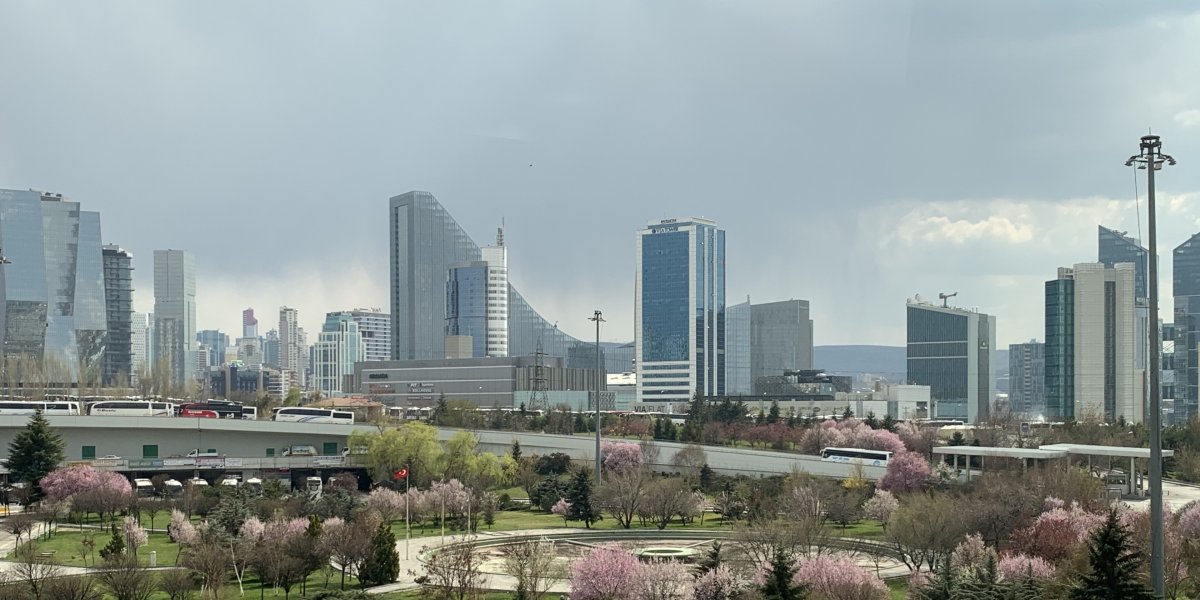
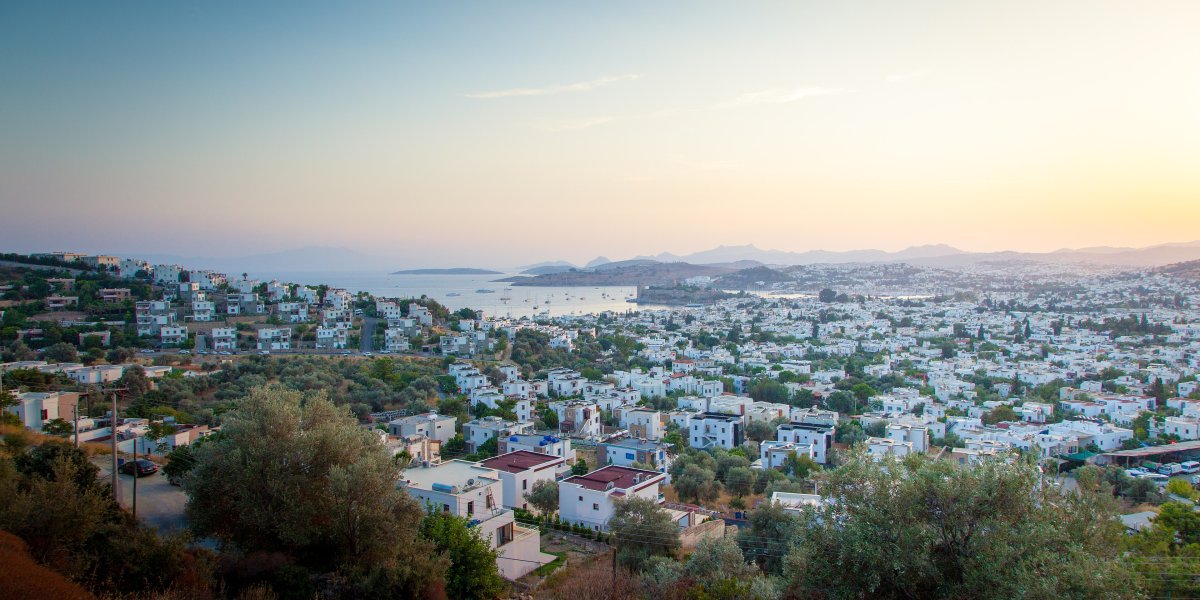
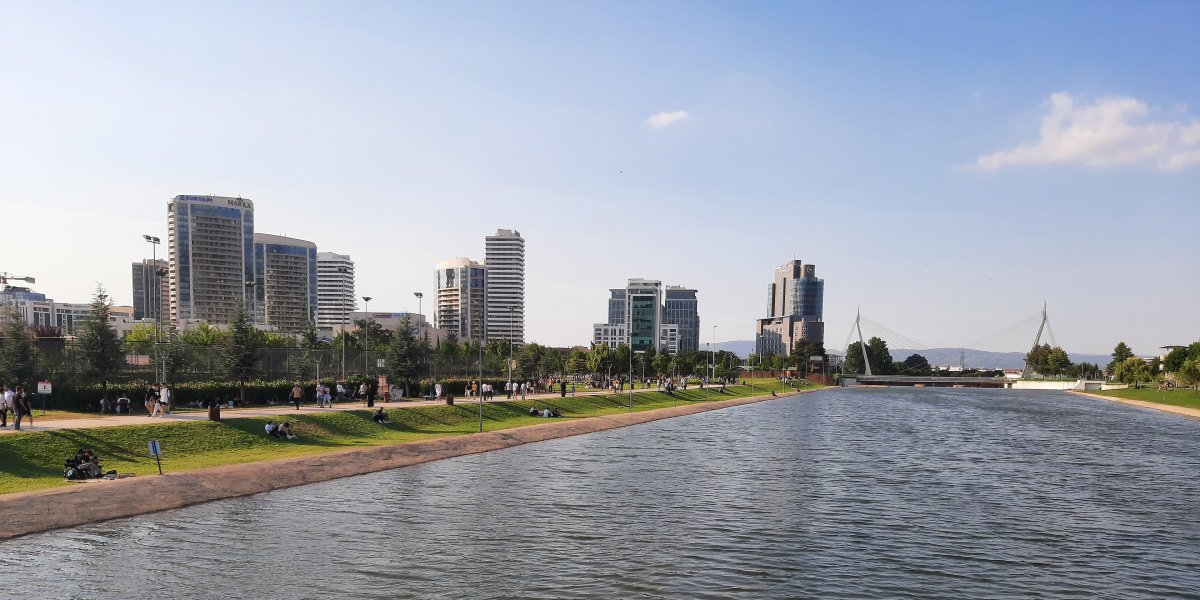
FAQ
Frequently asked questions
How many days do you need in Antalya?
Most travelers enjoy Antalya in 1 days, with enough time for headline sights and a slower meal or museum stop.
What's the best time to visit Antalya?
The easiest season for most travelers is Apr-Oct, especially if you want good weather and manageable crowds.
What's the daily budget for Antalya?
A practical starting point is about €80 per person per day before hotels, then adjust based on museums, dining, and transport.
What are the must-see attractions in Antalya?
A good first shortlist for Antalya includes Hadrian's Gate (Hadrianus Kapısı), Kaleiçi Old Harbor (Roman Harbor), Hıdırlık Tower & Konyaaltı Cliff Park.