City Guide
Visby
Schweden · Best time to visit: Jun-Aug.
Day-by-day plan
Choose your pace
Reisedauer
09:00
Landmark
From the ferry terminal or airport bus stop, walk ten minutes north along the harbor and you'll see the great limestone arch of Söderport rising ahead — the medieval southern gate. Climb the rampart stair just inside Söderport to begin the loop along the 3.4 km Ringmuren, the most complete medieval city wall north of the Alps. The early sun rakes east across the cobbles, throwing every one of the 27 surviving towers into sharp relief before the cruise-ship crowds spill in around 10:30.
Tip: Enter the wall via the small staircase on Söderport's eastern flank (free, signposted 'Murvandring') — most visitors instinctively try the harbor side first and bounce off a locked gate. Walk the wall outside the ring, not inside; the towers photograph dramatically against the bare cliff face from the moat path.
Open in Google Maps →10:00
Landmark
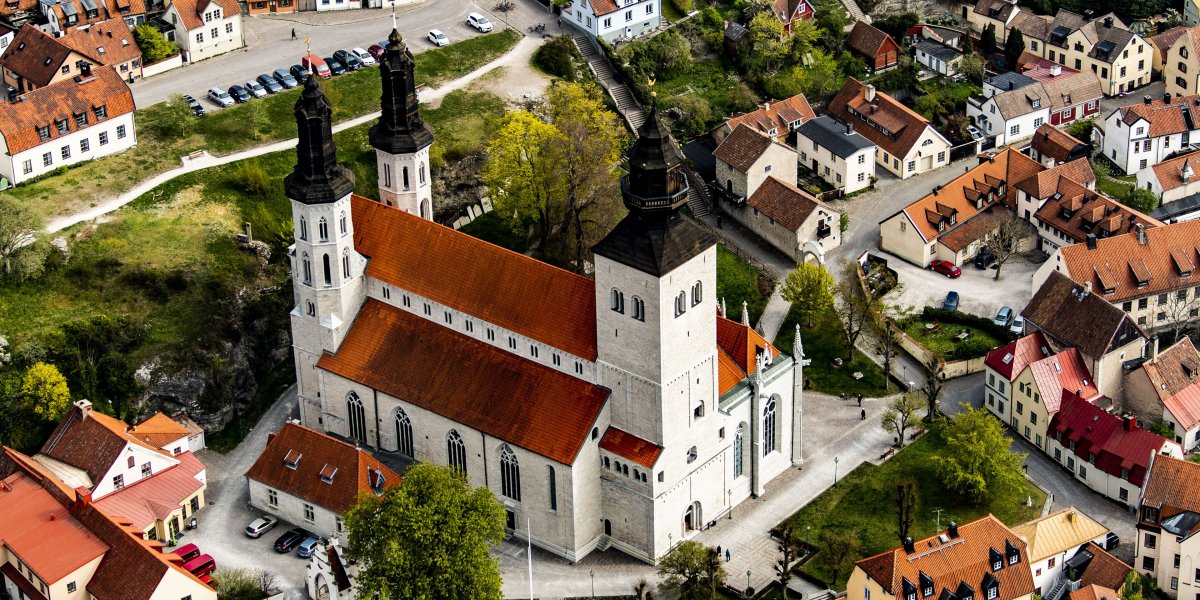
Drop off the wall at Söderport, follow Specksrum uphill heading north, then cut west onto Fiskargränd — Sweden's most photographed alley, where 18th-century cottages vanish under cascading climbing roses by late June. Continue uphill to Sankta Maria Domkyrka, the only intact medieval church left standing in town, and finish at Stora Torget, the main square ringed by the haunting roofless arches of Sankta Karin's 14th-century ruin. The whole cluster is one ten-minute walking loop and forms the visual heart of Visby.
Tip: Shoot Fiskargränd looking downhill (roses on the left wall, sea peeking through the bottom) before 11:00 while the lane is still sunlit — by noon the western wall throws the alley into deep shade. The cathedral interior is plain; skip it and walk the bell-tower terrace instead, the best free panorama of the red rooftops.
Open in Google Maps →12:30
Food
One block west of Stora Torget on Hästgatan — three minutes on foot from the Sankta Karin ruin. A surfer-themed grill that has quietly become a Visby institution for honest, fast food in a town where lunch can cost as much as dinner. Order at the counter and eat on the cobbled terrace tucked between two timber houses.
Tip: Order the Gotland lamb burger (about 195 kr) with a draft Wisby Pils — the lamb is raised on the island and they sell out by 14:00 in summer. Skip the harbor-front seafood restaurants on Strandvägen entirely; their fish is no better and the bill is doubled.
Open in Google Maps →13:30
Park
Walk five minutes north from Surfers along Smedjegatan; the wrought-iron gates appear on your right where the medieval lanes give way to sea air. Founded in 1855 by the merchant society DBW, this walled garden holds more than 300 rose varieties planted around the roofless arches of Sankt Olof's church — peak bloom is the first three weeks of July, when the entire ruin disappears under pink and white. Mulberries, walnuts and figs grow here too, surprising at this latitude.
Tip: Enter via the eastern Strandgatan gate and circle anticlockwise — you'll reach the Sankt Olof ruin with the afternoon sun behind you, the only angle that doesn't backlight the arches. Free; open until dusk. The little Café Strykjärnet by the north hedge is fine for kaffe and saffron buns if you need a sit-down.
Open in Google Maps →15:00
Landmark
Slip out the garden's northern gate and the squat Kruttornet — the Powder Tower, built around 1150 and the oldest preserved secular building in Scandinavia — stands a hundred meters dead ahead at the cliff edge above the harbor. Follow the path outside the wall westward, then curve north along the cliff-top stretch where the ring is at its most theatrical: bare limestone, raging sea wind, and tower after tower until you reach Jungfrutornet (Maiden's Tower) on the northwest corner. Stay there for the long Baltic sunset — this is the most cinematic vantage in the city.
Tip: The northern walls face west, so stay outside the ring on the seaward path — the setting sun (about 21:50 in midsummer, 18:30 in early May or late September) lights the towers gold against the open Baltic. Bring a windproof layer; sea wind picks up sharply after 17:00 even in July. Watch the worn limestone steps near Jungfrutornet — they're slick after any drizzle.
Open in Google Maps →19:00
Food
Walk back south through the old town to Stora Torget — twelve minutes downhill along Norra Kyrkogatan, the streetlamps just coming on. Tucked into the square's southeast corner, Bakfickan ('the back pocket') is where Visby locals eat the day's Baltic catch at a curved zinc bar and a handful of dark-wood tables. The room is tiny, loud, lit by candles — exactly what you want at the end of a long Gotland day.
Tip: Reserve ahead for 19:00 in summer (bakfickanvisby.se); walk-ins after 20:00 wait 45 minutes on the cobbles. Order the SOS-plate (smör, ost, sill — a herring sampler, around 215 kr) and the saffranspannkaka with dewberry jam for dessert; the saffron pancake is Gotland's signature dish and nowhere off the island makes it right. Pitfall warning: ignore the 'medieval-themed' taverns near the harbor with sandwich-board menus in five languages — they triple prices during Medieval Week in early August and quietly keep them high the rest of summer.
Open in Google Maps →Zu Tag springen
09:00
Religious
Begin where medieval Visby itself begins — the 1225 Sankta Maria, the only church inside the Ringmuren still in active use. Arrive at 9:00 sharp when the doors open: the Baltic sun fires the eastern stained glass amber and the nave is yours before the cruise crowds land at 10:30. Step out the south door to see the cathedral's three black spires line up against the red-tile rooftops sloping toward the sea.
Tip: Walk around to the small graveyard on the cathedral's south flank — the only burial ground inside the walls — for the postcard angle of all three spires framed against the cobblestoned street, clean of tourists before 10:00.
Open in Google Maps →10:15
Museum
Walk down the cobbled slope of Norra Kyrkogatan and turn south along Strandgatan — five minutes past restored Hanseatic step-gables to Sweden's finest regional museum, set inside an 18th-century distillery. The star is the Spillings Hoard: the largest Viking silver treasure ever unearthed (67 kg, found in a Gotland field in 1999), shown alongside 8th-century picture stones carved with sailing ships and warriors. The chronological loop carries you from Bronze Age through the Hanseatic golden age in 90 tight minutes.
Tip: Head straight to Hall 6 (Spillings Hoard) and Hall 2 (picture stones) — those are the world-class rooms; everything else is supporting cast. Skip the audio guide, all signage is in English, and 90 minutes is plenty before the lunch crush hits Stora Torget.
Open in Google Maps →12:45
Food
Walk up Hästgatan for four minutes to Stora Torget, Visby's medieval main square. Bakfickan is the unfussy lunch counter locals queue at: order the saffron-scented fiskgryta — cod, salmon and shellfish in a tomato-saffron broth, the island's most-eaten lunch dish (245 SEK / ~22€). Pair it with a Gotland Bryggeri lager and you've eaten like a Visbybo.
Tip: Arrive at 12:45 sharp — the line forms by 13:15 and they refuse reservations. Order the fiskgryta, skip the smörgås board (overpriced for what arrives), and ask for the small jar of pickled samphire on the bar shelf — most tourists miss it.
Open in Google Maps →14:15
Landmark
Cross the square in 60 seconds to the soaring shell of Sankta Karin, a 13th-century Franciscan church burned in 1525 and never rebuilt. At 14:30 the afternoon sun pours straight through the empty rose window and pools on the grass floor between the gothic arches. It's the most photographed ruin in Visby — and the only place inside the walls where you stand surrounded by 800-year-old stone with sky overhead.
Tip: Stand at the western entrance looking east — the alignment of the three nave arches with the broken rose window above is the architectural shot, not the wide-angle ground view most visitors take. The ruin is free and stays open to walk in until dusk.
Open in Google Maps →15:45
Neighborhood
Walk south down Adelsgatan, the medieval high street lined with artisan boutiques and woolen-goods shops worth a window-graze, then turn right onto Fiskargränd — a sloping 50-meter cobbled lane where every wooden house is smothered in climbing roses. At 16:00 the west-facing walls catch full afternoon light, turning the rose petals translucent against weathered timber. This is the single most photographed lane in Sweden, and you'll understand why within ten steps.
Tip: Shoot from the bottom of the lane (sea-end) looking up, not the top looking down — the converging walls and tilted cobbles create the depth shot you've seen on Instagram. Peak rose bloom runs late June through early August; outside that window the lane still charms but loses its magic.
Open in Google Maps →19:30
Food
Walk back up Adelsgatan for seven minutes to Lindgården, set inside a 17th-century merchant's house with a hidden walled rose garden behind. This is where Gotlanders bring out-of-towners they want to impress: order the juniper-braised Gotland lamb shank (295 SEK / ~27€) and finish with saffranspannkaka with salmbärsylt — the island's signature saffron pancake with dewberry jam (125 SEK / ~12€). Budget 45-65€ per person with a glass of wine.
Tip: Book a garden table 2–3 days ahead at lindgarden.com — it's the best dinner setting in the old town and books out by 15:00 the same day in summer. Avoid the row of restaurants facing the cruise dock at the south harbor; they live off one-time foot traffic, prices run 30% above the inner town, and the kitchens recycle frozen herring as 'Baltic special.'
Open in Google Maps →09:00
Landmark
Start at Nordergravar, the grassy moat-side park at the north gate, and walk the outside of the Ringmuren from east to west. This 3.4-km medieval wall with its 27 surviving towers is the best-preserved in Northern Europe — at 09:00 the morning sun rakes the limestone face while the moat-side grass is still in shadow, making the stones look freshly carved. The dark, brooding Jungfrutornet at the NE corner carries the city's grimmest legend: a young woman bricked alive inside for opening the gate to the Danes in 1361.
Tip: Walk the wall from the outside, not the inside — Visby's Ringmuren was meant to be seen as the medieval enemy saw it, and from inside you mostly see backs of houses. Cover only the north and west stretch (80–90 minutes); the southern half is repetitive and saving the energy matters.
Open in Google Maps →10:45
Park
Cut south through the gate at Studentbersgatan and walk six minutes into DBW's Botaniska Trädgård, founded in 1855 by the Visby merchants' society. The garden hides 1850s mulberry trees, a walnut grove, ancient ginkgos, and 200+ rose varieties that peak in late June through July. Locals come here for fika, not Instagram, so mornings are blissfully unhurried under the lime-tree canopy.
Tip: Walk to the back-right corner where the limewashed wall meets the original 1855 mulberry — there's a single wooden bench locals use for morning coffee. Café Botan inside the garden bakes the island's best kanelbulle; order one to eat now and a second wrapped to-go for the wall.
Open in Google Maps →12:30
Food
Walk west through the inner-town lanes of S:t Hansgatan and down Hamngatan — ten minutes to the harbor edge. Surfers occupies a glass-walled space at the marina with an outdoor deck on the water: order the Gotland räksmörgås, an open-faced shrimp sandwich piled with hand-peeled North Sea prawns on dark rye with lemon-dill mayo (185 SEK / ~17€). It's the harbor lunch every cruise passenger wishes they'd found in time.
Tip: Grab a deck table on the harbor side — cruise ships tie up 200 meters away, and watching the ropes go on is great free theater while you eat. Skip the inside seating; even at noon it's dark and loud, and the deck breeze keeps the herring gulls at a polite distance.
Open in Google Maps →14:15
Landmark
Walk north along the harbor promenade for five minutes to the squat, weathered Kruttornet — the oldest part of the Ringmuren, built around 1150 as a coastal watchtower before the rest of the wall existed. Climb the three internal floors via the original stone stairs; the top platform gives the cleanest aerial view of the wall snaking south and the cathedral's three spires inland. It's the single best wall photograph in Visby.
Tip: Buy the combined wall-towers ticket (75 SEK) at the entrance hut — it covers Kruttornet plus three other open towers if you have time afterward. The internal stairs are steep, narrow and without a handrail; take them slowly and lose the backpack at the ground floor.
Open in Google Maps →16:00
Park
Walk south along the harbor promenade for five minutes — past the small marina chandlery and the old customs house. Almedalen is Visby's lush waterfront park (willows, duck pond, lawns sloping into the Baltic) and the site of Sweden's national political week each July, where Olof Palme gave his most famous open-air speeches. At 16:30 the willows throw long shadows and locals spread picnic blankets; this is the city's living room before dinner.
Tip: Cross the small wooden footbridge at the south end of the duck pond — it lines up with Sankta Karin's broken bell tower in the middle distance for a softer, lower-angle take on the medieval skyline than the wall-top views earlier. Free public toilets sit at the park's north entrance — a useful note before the dinner walk back uphill.
Open in Google Maps →19:30
Food
Walk inland from Almedalen up Donnersgatan — five minutes uphill to Donners Brunn, a 17th-century merchant's house on the medieval well square (Donners Plats) where chef Bo Hellström has cooked for 25+ years. Order the Gotland lamb tenderloin (369 SEK / ~33€) and finish with the saffranspannkaka — budget 55-80€ per person with wine. It's still the table Gotlanders book when there's something to celebrate.
Tip: Reserve the small upstairs dining room via donnersbrunn.se — five tables under the original 1600s timber ceiling, the quietest seats in the house. Pitfall warning: during Medieval Week in early August, avoid the costumed 'tavern' restaurants along Adelsgatan and around Stora Torget; they triple their prices for the festival and most reheat frozen prep — Donners Brunn refuses to dress up and keeps its kitchen honest year-round.
Open in Google Maps →
Trip builder
Plan this trip around Visby
Turn this guide into a bookable rail itinerary with FlipEarth.
Keep exploring
Related cities
More in the same country




FAQ
Frequently asked questions
How many days do you need in Visby?
Most travelers enjoy Visby in 1 days, with enough time for headline sights and a slower meal or museum stop.
What's the best time to visit Visby?
The easiest season for most travelers is Jun-Aug, especially if you want good weather and manageable crowds.
What's the daily budget for Visby?
A practical starting point is about €145 per person per day before hotels, then adjust based on museums, dining, and transport.
What are the must-see attractions in Visby?
A good first shortlist for Visby includes Söderport & the Southern City Wall, Sankta Maria Domkyrka, Fiskargränd & Stora Torget, Kruttornet, the Northern Walls & Jungfrutornet Sunset.