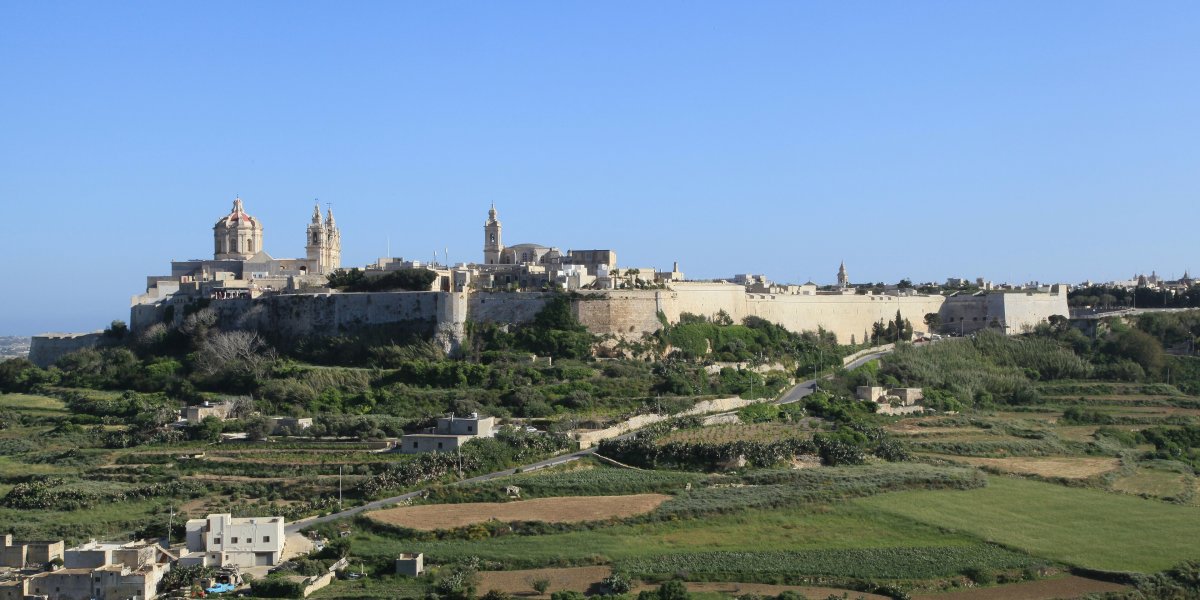
City Guide
Mdina
Malta · Best time to visit: Apr-Jun, Sep-Oct.
Day-by-day plan
Choose your pace
Reisedauer
09:00
Landmark
From Mdina's car park or bus stop, follow the gentle slope down toward the dry moat — a 4-minute walk that reveals the full Baroque facade rising from the bastion in one cinematic sweep. This is the gate Game of Thrones used as the entrance to King's Landing in Season 1, and at 09:00 the eastern sun hits the limestone at a low angle that turns it the color of melted butter. The two stone bridges, the carved coat of arms of Grand Master António Manoel de Vilhena, and the moat below all line up in a single frame here.
Tip: Stand on the outer stone bridge facing the gate between 09:10 and 09:30 — the first tour coaches don't arrive until 09:45, so you have a clear shot of the gate with zero people. Avoid the 'horse carriage rides' that gather here at €40+ per loop; the entire walled city is only 900 meters across and faster on foot.
Open in Google Maps →10:00
Religious
Walk straight through the gate and follow Triq Villegaignon, Mdina's main artery — 6 minutes up a single shaded street, past palazzos whose dolphin and lion brass door knockers have been polished mirror-bright by 500 years of hands. The street opens suddenly onto Pjazza San Pawl, where Lorenzo Gafà's 1702 Baroque cathedral stands on the exact spot where Roman governor Publius is said to have met the shipwrecked St. Paul. At this hour the facade is in full frontal light — by noon the square goes into harsh top-light and the carving flattens out, which is why morning is non-negotiable.
Tip: Shoot the facade from the southwest corner of the square, near the iron gate — the diagonal angle catches both bell towers without the modern lamppost in the frame. Skip paying for the cathedral museum unless you have 90+ minutes; the exterior and the marble tombstone floor inside (free to peek at) are the actual highlights.
Open in Google Maps →11:30
Landmark
From the cathedral, head north up the narrow alley behind the apse — 3 minutes through a corridor so tight you can touch both walls with your elbows — and the city suddenly ends at a stone parapet looking out over all of central Malta. From here you see the dome of Mosta Cathedral, the patchwork fields, Valletta in the haze, and the Mediterranean beyond. The morning humidity has burned off by 11:30 but the brutal afternoon heat hasn't arrived yet — this is the visibility window.
Tip: Walk 80 meters east along the wall to the smaller Bastion of St. Peter and St. Paul terrace — 95% of visitors stop at the main square and miss this quieter ledge, which actually has the better angle on Mosta's enormous dome. Bring water; there is no shade on the bastions.
Open in Google Maps →12:45
Food
Exit Mdina through Greeks' Gate, the small side door in the southwest wall, cross the little square in Rabat, and the unassuming corner bar with plastic stools is right in front of you — 4 minutes total. This is the most famous pastizzeria in Malta, open 24 hours, and the place where Maltese taxi drivers, priests, and construction workers all eat the same lunch at the same counter. The pastizzi (flaky diamond-shaped pastries) come out of the oven every 20 minutes and are eaten with your fingers, wrapped in a square of brown paper.
Tip: Order 2 pastizzi tal-irkotta (ricotta, €0.40 each) and 2 tal-piżelli (mushy peas, €0.40) — that is the locals' combo. Add a coffee (€1.50) or a small bottle of Kinnie, Malta's bitter-orange soda (€1.20). Pay at the counter, point at what you want, eat standing outside leaning on the wall — no one sits down. Total under €5 and you will be full. Avoid the tourist cafés on the Mdina side of the wall charging €4 for the same pastizz.
Open in Google Maps →14:00
Neighborhood
Re-enter Mdina through the Main Gate, turn immediately left onto Triq Mesquita — 5 minutes of weaving through alleys that are quite literally silent because cars are banned and only the 300 residents have keys to drive in. By 14:00 the day-tour buses have left for Valletta and the city becomes what its Maltese nickname promises: Citta Notabile, the noble silent city. Loop through Pjazza Mesquita (the Littlefinger's brothel scene from Game of Thrones), past the carved corner Madonnas, the exterior of Palazzo Falson (the oldest house in Mdina, 13th century), and finish at the Mdina Glass showroom on Triq Villegaignon to watch artisans hand-blow the cobalt-and-amber pieces the island is known for.
Tip: Between 14:30 and 16:30 is the magic photo window — the limestone walls reflect onto each other in narrow streets like Triq San Pawl and Triq Inguanez, giving every shot a warm side-glow no filter can replicate. At Mdina Glass, the small €15-25 pieces are made on site; the cheap €5 souvenirs on the front rack are imported, ask the staff to show you the workshop pieces in the back room.
Open in Google Maps →19:00
Food
Walk 4 minutes north from the cathedral up Triq Bastjun, climb the worn limestone staircase, and you arrive on a rooftop terrace built directly into the northern city wall — your dinner table is on the bastion itself, with all of Malta spread out below and the sun setting behind Mosta. Fontanella has been run by the same family for 50 years; they invented the now-famous Maltese chocolate cake and locals still come here to celebrate engagements. The view alone justifies the price, but the food holds up.
Tip: Arrive at 18:45 — sunset is between 19:15 and 20:00 depending on season, and the terrace seats fill in 20 minutes once the light starts turning. No reservations for the wall-side tables, walk-in only, so be there early. Must-orders: the bragioli (Maltese beef olives stuffed with bacon and egg, €18) and a slice of the original chocolate fudge cake (€5.50, the slab is the size of a brick) with a glass of Marsovin Cabernet (€6). Pitfall warning for the end of your day: ignore the lace shops near the main gate selling 'handmade Maltese lace' for €40-200 — almost all of it is Asian machine import at 5x markup. Genuine bizzilla is only sold by registered cooperatives in Gozo and Żejtun, never inside Mdina's tourist core.
Open in Google Maps →
Trip builder
Plan this trip around Mdina
Turn this guide into a bookable rail itinerary with FlipEarth.
Keep exploring
Related cities
More in the same country
FAQ
Frequently asked questions
How many days do you need in Mdina?
Most travelers enjoy Mdina in 1 days, with enough time for headline sights and a slower meal or museum stop.
What's the best time to visit Mdina?
The easiest season for most travelers is Apr-Jun, Sep-Oct, especially if you want good weather and manageable crowds.
What's the daily budget for Mdina?
A practical starting point is about €80 per person per day before hotels, then adjust based on museums, dining, and transport.
What are the must-see attractions in Mdina?
A good first shortlist for Mdina includes Mdina Main Gate (Vilhena Gate), Bastion Square.