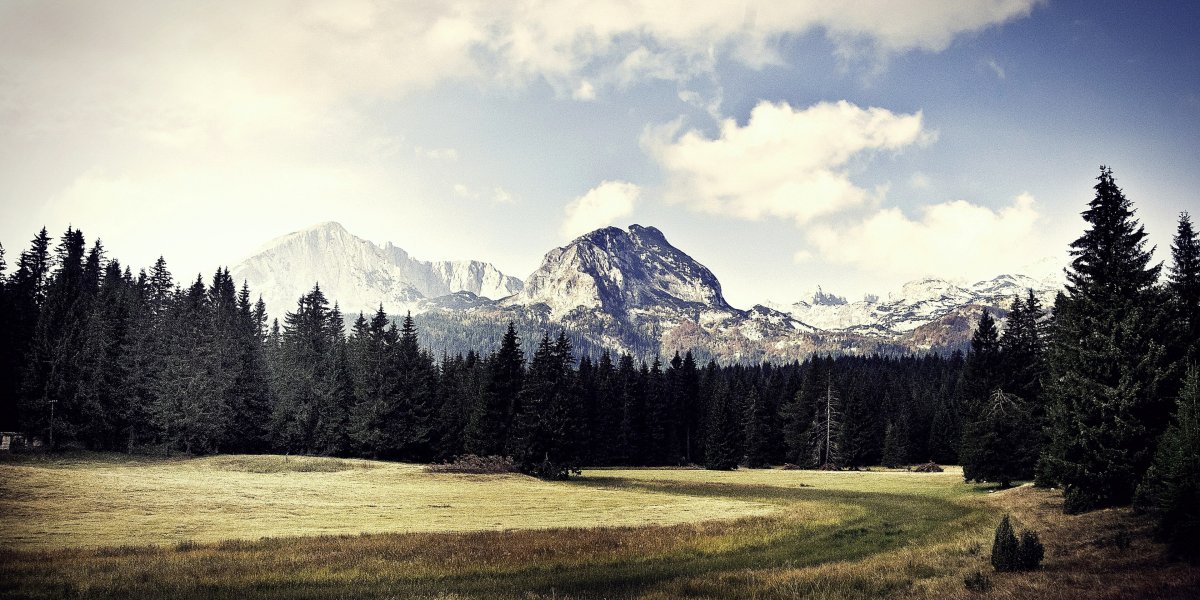
City Guide
Durmitor
Montenegro · Best time to visit: Jun-Sep.
Day-by-day plan
Choose your pace
Reisedauer
08:30
Landmark
From Žabljak's main square, follow the signed asphalt path west through pine forest for 30 minutes (3 km) — the forest opens onto the lake all at once, and that first view is the moment people remember Durmitor for. Two glacial lakes joined by a narrow channel sit beneath the sheer 2,287 m wall of Meded peak, which rises straight from the water like a curtain. Walk the 3.5 km loop counterclockwise: the eastern shore catches the morning light first and the surface is mirror-still until the breeze picks up around 10:00.
Tip: The sharpest reflection of Meded is from the wooden footbridge between Veliko and Malo Jezero between 09:00 and 09:30 — shoot before the wind starts. Skip the lakeside paddle-boat rental (€10/30 min): the lake is too small to row meaningfully and the photo angles are worse from the water than from the shore path.
Open in Google Maps →11:00
Park
From the wooden bridge at Black Lake, take the red-and-white-blazed trail south into the firs for 25 minutes (1.5 km) — you'll likely pass no one, because this is exactly where Black Lake's day-trip crowds turn back. "Snake Lake" is a tiny, almost-secret hollow of glass-still black water ringed by old-growth fir, named for the harmless grass snakes that sun on its banks. There are no facilities, no boats, no signage — just the canopy reflected so cleanly you can't tell where the trees end and the water begins.
Tip: Walk one full loop (15 minutes) — the far western shore has a flat granite slab that's the best quiet spot on the entire day's route. The snakes are non-venomous water snakes and slip away long before you reach them; the real thing to watch for is bear scat on the trail in late summer, which just means stay on the marked path.
Open in Google Maps →13:00
Food
Retrace the forest path northeast back to Žabljak (3 km, ~45 min) — you'll exit the park boundary onto Njegoševa, the main street, and the restaurant is on your right just past the bus station. This is the casual lunch spot the local ski and rafting guides use between shifts: fast, honest, and half the price of the touristy places one block north. Order the kačamak (€7) — whipped Montenegrin polenta folded with kajmak cream and aged sheep cheese — the mountain dish every hiker eats here. Wash it down with a homemade lemonade (€2).
Tip: Sit on the small terrace facing Savin Kuk. The kitchen turns kačamak around in 10 minutes but grilled meat takes 35+ — order polenta if you're racing daylight. Don't bother with the pizza; everyone in Žabljak knows Mali Princ does mountain food well and Italian food badly.
Open in Google Maps →14:30
Landmark
From the restaurant, walk north past the bus station onto the signed forest road to Ćurevac — the 4 km path climbs steadily through beech and fir for about 1h15, gaining 200 m, blazed in red-and-white the whole way. At 1,625 m you step out of the trees onto an unfenced cliff lip looking 1,300 m straight down to the green Tara River — this is Europe's deepest canyon, and from up here it genuinely looks bottomless. Mid-afternoon light strikes the opposite wall directly, lighting the limestone bands and the river bend below.
Tip: There are no guardrails and the edge rock is loose — stand back from the lip and crouch for photos. The cleanest framing of the river meander is from a flat slab about 20 m left (north) of the main outlook, not the rope-marked viewpoint. Turn back by 16:30 — once the canyon falls into shadow the depth disappears in photos and the trail down gets slippery in poor light.
Open in Google Maps →17:30
Neighborhood
Descend the same Ćurevac trail back to town (4 km, ~1h, mostly downhill on tired knees) — the trail ends two minutes from the square. The heart of Žabljak — the highest town in the Balkans at 1,456 m — is a compact stone plaza anchored by a small partisan monument and ringed by guesthouses, craft shops, and one bakery that's been there since the 1970s. Late golden light hits Savin Kuk's western face directly behind the square; this is the moment to slow down, sit on the low stone wall, and watch the alpenglow climb the peak.
Tip: The small wooden shop on the south side of the square sells hand-knit wool socks (€8) from a Žabljak women's co-op — these are the one souvenir worth carrying home; the goat-horn shot glasses and "Montenegrin" magnets on the racks near the bus station are imported from Albania at triple the production cost.
Open in Google Maps →19:30
Food
From the square walk two minutes west along Njegoševa — you'll spot the old wooden waterwheel on your right and hear the stream before you see the door. Žabljak's most beloved restaurant is built around a working 19th-century watermill, with stone walls, a low timber ceiling, and an open hearth at the back. Order the lamb cooked under the bell (jagnjetina ispod sača, €22) — slow-roasted for two hours under a cast-iron dome heaped with embers until it falls off the bone — paired with a glass of domestic Vranac red (€4). Finish with priganice, small fried doughnuts soaked in mountain honey and crushed walnuts (€5).
Tip: Real ispod sača takes 90+ minutes, so the kitchen pre-fires a batch for the 19:00–20:00 post-hike rush — call by 17:00 to reserve a portion or you'll be told it's sold out by 20:30. Pitfall warning: any restaurant in Žabljak advertising "traditional ispod sača ready in 20 minutes" is serving stewed lamb under a lid — the real thing simply cannot be made that fast, and the price (€10–12) gives it away. Also ignore the touts at the bus station offering "private rafting tours for tomorrow" at half-price; the legitimate Tara rafting operators are licensed, easy to book online via Žabljak's tourist office, and never solicit on the street.
Open in Google Maps →Zu Tag springen
08:30
Landmark
From your Žabljak guesthouse, head west on Njegoševa Street and follow the marked forest path through pine stands for 35 minutes — you will smell resin before you see water. At 08:30 there is no wind yet and the surface is perfect glass: Meded Peak (2,287 m) inverts itself in the lake stone-for-stone. Walk the 3.5 km loop clockwise so the sun stays behind your shoulder on the famous western shore, and pause at the narrow isthmus where the lake splits into Veliko and Malo Jezero in late summer.
Tip: Mirror conditions only hold from 07:30 to 09:30 — after 10:00 the daily mountain breeze ripples the surface and the reflection is gone for the day. National park entry is €3 cash only at the booth on the access road; bring exact change to skip the line.
Open in Google Maps →11:45
Landmark
From the south end of the Black Lake loop, follow the gravel road south for 1.5 km (20 min) past the wooden ski school until you emerge at the meadow with the rusty chair cables. The single-chair lift creaks slowly to 2,015 m in fifteen unhurried minutes — and that slowness is the point: forty-eight peaks above 2,000 m unfold around you, Bobotov Kuk's saw-tooth ridge sits directly opposite, and on a clear day the Adriatic glints beyond Mount Lovćen.
Tip: Sit on the right side going up for the valley view down to Žabljak. The summit café charges tourist prices for cold sandwiches — skip it and save your appetite for Mamma Mia in town. Chairlift runs only June–September, 09:00–16:00, €10 return.
Open in Google Maps →13:30
Food
Back at the chairlift base, walk east on the asphalt road for 25 minutes into Žabljak — you pass converted katuns (shepherd huts) now selling honey and wool socks. Mamma Mia is on the main pedestrian street and the name lies on purpose: behind the Italian sign they cook the best kačamak (cornmeal whipped with goat cheese and kajmak, €8) in town, and lamb under the sač iron dome (€18) that needs 90 minutes' notice. Budget €20–28 per person with a glass of wine.
Tip: Order the lamb under the sač the moment you sit down — by the time you finish the kačamak it will be ready, and walk-ins after 13:00 are usually turned away from it. Pair it with a glass of Vranac, the local Montenegrin red (€4). Skip the pizza section entirely — Italian sign or not, this kitchen is about mountain lamb.
Open in Google Maps →15:30
Landmark
From central Žabljak drive 12 km north on the Pljevlja road, then 1 km onto a gravel spur to the unmarked parking — a 5-minute walk through low pines delivers you to the cliff edge. At 15:30 the afternoon sun reaches all the way down 1,300 m to where the Tara River is a jade thread on the canyon floor, and you hear nothing but wind and ravens. There are no railings, no fee, no tour bus has ever stopped here.
Tip: The cliff is sheer and the rock crumbles — stay 2 m back from the edge, especially with children. Morning visits are wasted: the canyon sits in shadow until 13:00 and photographs come out flat. Bring a wide-angle lens; the canyon is wider than your phone camera will admit.
Open in Google Maps →17:30
Landmark
On the drive back toward Žabljak, watch the right side of the road 2 km before the village for a small wooden sign reading 'Grčko Groblje' — pull onto the gravel shoulder. Walk 80 m into the meadow and you are standing among thirty medieval stećci, monolithic limestone tombstones from the 13th–15th centuries, UNESCO-listed and carved with dancing figures, suns, deer, and crescent moons. At 18:00 the low sun rakes across the carvings sideways and lifts the patterns out of the stone the way no midday light ever can.
Tip: The site is unfenced and free to enter, but never sit or stand on the stones — these graves remain consecrated. The largest stone at the far north end carries the famous deer-and-hunter carving; circle it slowly to find the small runner figure cut into its north face.
Open in Google Maps →19:30
Food
From the stećci field, drive 5 minutes into central Žabljak — Hotel Soa is the wood-and-stone building at the south end of Tripka Đakovića Street. The dining room seats 24, the menu turns over weekly, and what everyone orders is the slow-roasted veal under the sač (€22). Start with Durmitorski sir, the local mountain cheese aged in a wooden barrel (€6), and finish with the forest-blueberry rakija (€3 a shot, on the house if the chef takes a liking).
Tip: Reserve by 17:00 through your guesthouse or walk in before 19:00 — by 20:00 the dining room fills with Pljevlja weekenders. PITFALL: avoid the 'authentic rakija' sold in plastic bottles by the souvenir stalls on the main street — most is industrial alcohol with food colouring. For a bottle to take home, buy at the small grocery 'Mara' on Njegoševa Street for half the price and ten times the quality.
Open in Google Maps →08:30
Landmark
Drive 23 km north from Žabljak on the Pljevlja road — at 08:30 you walk across the 365 m concrete arch in near-silence, an hour before the tour buses arrive from Kotor. Park on the north side and walk the full span: 172 m of nothing drops straight to the Tara River below your boots, and the bronze plaque on the south abutment commemorates Lazar Jauković, the engineer who dynamited his own bridge in 1942 to slow the Italian advance and was executed for it. The Yugoslavs rebuilt it concrete-for-concrete in 1946.
Tip: Be on the bridge before 09:15 — the first Kotor tour bus arrives at 09:30 and from then until 17:00 the bridge is shoulder-to-shoulder with selfie sticks. The signature photograph is from the north abutment looking south: the bridge curves and you catch all five arches in a single frame.
Open in Google Maps →09:45
Entertainment
From the north end of the bridge, walk 50 m along the cliff to the zipline platform on the canyon rim — you cannot miss it; two parallel cables are strung 170 m above the river to the opposite wall. The 818 m crossing takes 50 seconds at 60 km/h and you fly forward in a harness, facing the canyon: from the air the Tara is a jade thread and the bridge looks like a Lego model. Return ticket €25 — the return cable is steeper and faster than the outbound.
Tip: Cross before 10:30 — the queue triples after the Kotor tour buses arrive. Wear a long-sleeved shirt or windbreaker even in July; the wind chill at 60 km/h cuts through a t-shirt. Tuck your phone deep into a zipped pocket — phones fly out of harness pockets here regularly and no phone has ever been recovered from the bottom of the Tara.
Open in Google Maps →11:30
Park
From the bridge, drive 5 km north on the road toward Šćepan Polje and pull off at the wooden 'Crna Poda Strict Nature Reserve' sign; a marked footpath drops 200 m through the forest to a wooden viewing platform among the trunks. These are European black pines (Pinus nigra) up to 400 years old and 50 m tall — the oldest still-living pine forest on the continent, untouched since the medieval period. Walk the 1 km loop slowly: the silence under that canopy is a thing no city traveler has ever heard before.
Tip: The reserve is genuinely strict — do not step off the marked path, do not pick anything, do not fly a drone. Sundays in July–August can draw small tour groups; weekdays before noon you will have it to yourself. Bring a light jacket — under the canopy it stays 10°C cooler than on the road.
Open in Google Maps →13:30
Food
Drive 5 km back south to the bridge and pull into the parking on the south side — Restoran Tara is the stone building with the wooden balcony cantilevered over the canyon. The seat to ask for is on the balcony, where you eat lunch 172 m above the river. Order the Tara trout grilled with garlic and rosemary (€14, pulled from the river that morning) and the priganice — fried dough balls with kajmak and honey (€5). Budget €18–24 per person.
Tip: Ask specifically for a 'sto na terasi' — table on the terrace. The indoor room is fine but the balcony is the whole point of coming here. Trout is fresh only at lunch service; by dinner the kitchen runs out and switches to frozen. Service is slow in a good way — you have 90 minutes before rafting briefing, do not rush the priganice.
Open in Google Maps →15:00
Entertainment
From the restaurant, the rafting van shuttles you 4 km north to the Splavište put-in at Brstanovica — operators issue wetsuits, helmets, and dry bags on site. The half-day descent runs 18 km from Brstanovica to Radovan Luka in 3 hours: twenty-one named rapids, walls rising 1,000 m on either side, and pools so clear you see trout four metres down. The water is glacier-fed and stays 9°C even in July — the wetsuit is not optional.
Tip: Book at least three days ahead — the responsible operators (Tara Tour, Kamp Grab, Highland Rafting) cap each raft at six people and weekend slots vanish a week in advance. Wear a swimsuit under the wetsuit, leave everything else in the dry bag. When the guide offers a swim at the calm pool below Lever Tara halfway through, say yes — it is the photograph of the trip.
Open in Google Maps →19:30
Food
After rafting, the van drops you back in Žabljak around 19:00 — walk 5 minutes from the centre to Restoran Park on Tripka Đakovića Street, the timber-framed house with the garden terrace. The wood-fire oven is the reason to come: order the Njeguški pršut platter (dry-cured ham from the Bay of Kotor, €10) and the slow-braised wild boar with mashed potato and forest mushrooms (€19). Finish with the medovina — honey wine the owner makes himself (€4 a glass).
Tip: After a day on the Tara your legs are jelly and your appetite is enormous — take a terrace table rather than climbing the steep stairs to the indoor room. PITFALL: skip the 'national park souvenirs' on Žabljak's main street tonight — 'genuine bear-tooth necklaces' are dog teeth at best, and 'handmade wool blankets' are factory imports from Turkey; for a real Durmitor keepsake, buy a jar of forest honey from the elderly women selling at the bus station in the morning.
Open in Google Maps →
Trip builder
Plan this trip around Durmitor
Turn this guide into a bookable rail itinerary with FlipEarth.
Keep exploring
Related cities
More in the same country
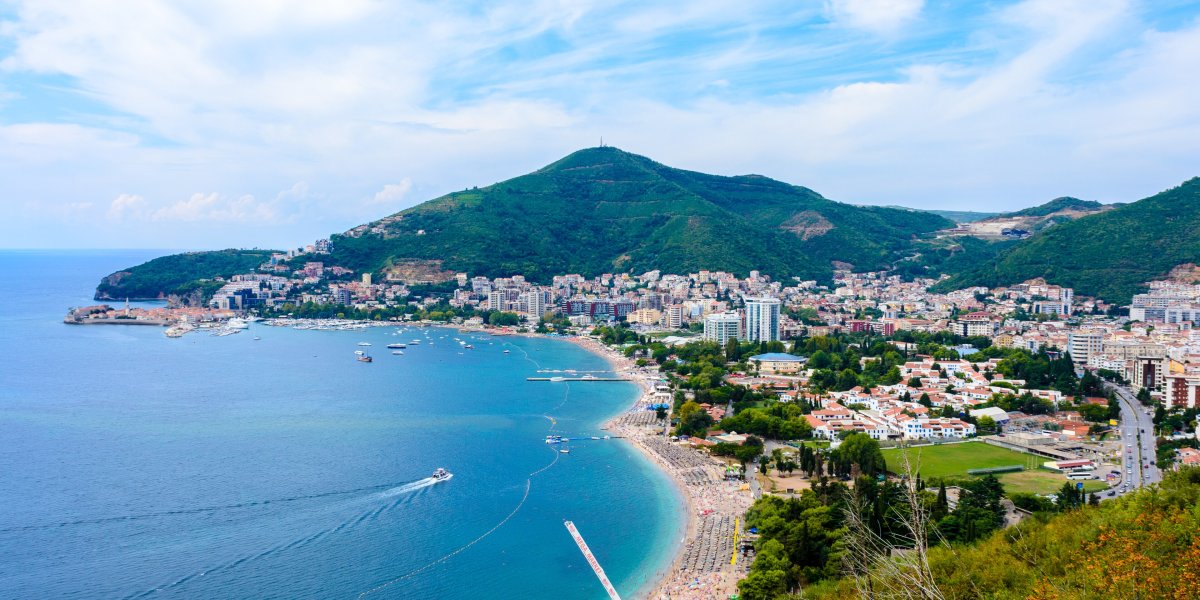
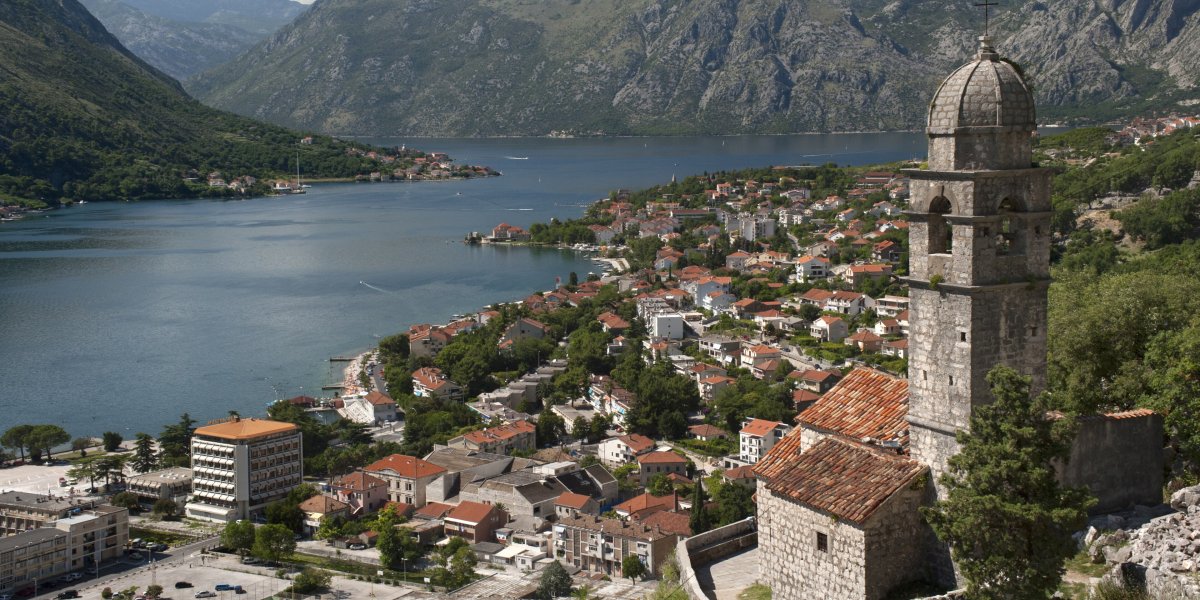
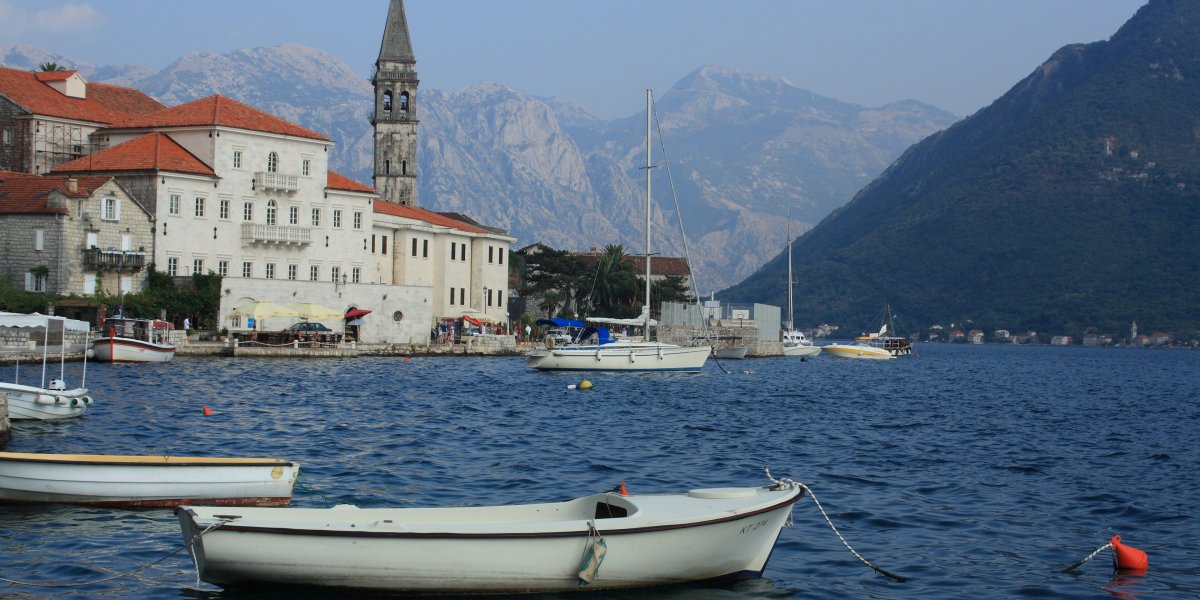
FAQ
Frequently asked questions
How many days do you need in Durmitor?
Most travelers enjoy Durmitor in 1 days, with enough time for headline sights and a slower meal or museum stop.
What's the best time to visit Durmitor?
The easiest season for most travelers is Jun-Sep, especially if you want good weather and manageable crowds.
What's the daily budget for Durmitor?
A practical starting point is about €120 per person per day before hotels, then adjust based on museums, dining, and transport.
What are the must-see attractions in Durmitor?
A good first shortlist for Durmitor includes Black Lake (Crno Jezero), Ćurevac Viewpoint (Tara Canyon Overlook).